The N1.62 trillion budget appropriation, which Enugu State governor, Peter Mbah, presented to the state House of Assembly for consideration, has shown that the governor is in for good and big things to happen in the state.
A whopping N1.3bn, representing about 80 percent of the budget, is for capital expenditure, leaving only 20 percent for recurrent. This clearly demonstrates the governor’s strong inclination towards wealth creation and growing the state’s economy.
Read also: 2026: Mbah presents ‘Renewed Momentum and Optimism’ budget proposal of N1.62trn to Assembly
The major components of this capital expenditure are roads/infrastructure, which are the main drivers of real estate growth and property value appreciation. Building roads means linking communities and making movement from one part of the state to another not just easy, but also cheap.
This will have a ripple effect of encouraging investment in real estate. With good roads and other critical infrastructure like light and water in locations other than the city centre, people will be encouraged to live in the hinterlands and commute to work from there.
A huge chunk of the budget was allocated to the economic sector, including roads and the infrastructure sector, where the governor plans to construct 1,200 urban roads and a significant number of rural roads.
The governor also wants to complete the ongoing 40-kilometre Owo-Ubahu-Amankanu-Neke-Ikem dual carriageway, dualisation of the Abakpa Nike – Ugwogo Nike – Ekwegbe – Opi-Nsukka Road, and the 21.65-kilometre Enugu-Abakaliki Expressway.
BusinessDay had, in an earlier report, disclosed that Governor Mbah is restless with building infrastructure in pursuit of his quest to raise the state’s Internally Generated Revenue (IGR) and GDP to new levels, noting that the governor flagged off the rehabilitation of 141 urban roads across 13 zones with N183 billion allocation.
Read also: Gov Mbah launches hi-tech drones, equipment, patrol vans to boost security
According to the report, these, coupled with statewide urban renewal that has seen many ancient markets and motor parks give way to modern ones, have impacted land prices, not only in the urban centres, but also in the semi-urban and rural areas.
“In the last two years, we have seen land prices jump by over 100 percent, depending on location. In the Nike Lake Resort axis, by 2023/2024, a plot of land was selling for between N8 million and N11 million. Today, a plot of land in that same location goes for between N20 million and N25 million,” Kennedy Chukwuemeka, an Enugu-based land agent, told BusinessDay.
Chukwuemeka affirmed that demand is quite high from diaspora buyers who are attracted by improved security and infrastructure development, adding that there is also demand push from Enugu indigenes residing in other Nigerian cities like Lagos and Abuja.
It is expected that with the value of economic activities that will be generated by the huge capital expenditure, more real estate assets—residential, commercial and industrial—will be needed in the state, leading to more investment in that sector.
This will, in turn, create jobs that will give individuals the purchasing power to rent, buy or build houses, thereby enhancing economic well-being and social security in the state.
Read also: Mbah’s 33.2% allocation to education attracts commendation
Another component of the budget that has positive implications for real estate is transportation. The governor said that there are plans to build five more transport terminals in Emene, Udi, Awgu, Four-Corners (Ozalla), and Obollo-Afor.
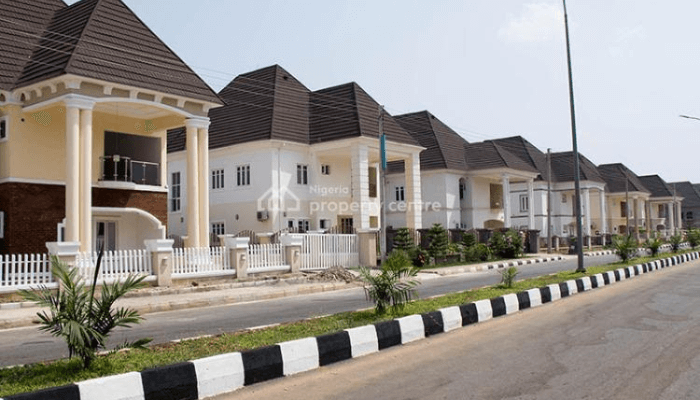
The budget also provides for 15,000 mass housing units, while ramping up infrastructural development at the New Enugu City. 15 per cent of the budget has been set aside for providing all these.
With the state’s internally generated revenue set to exceed ₦400 billion by the end of the year, it is expected that more projects will be executed and more economic activities will be generated, leading to job creation and improved livelihoods.