2
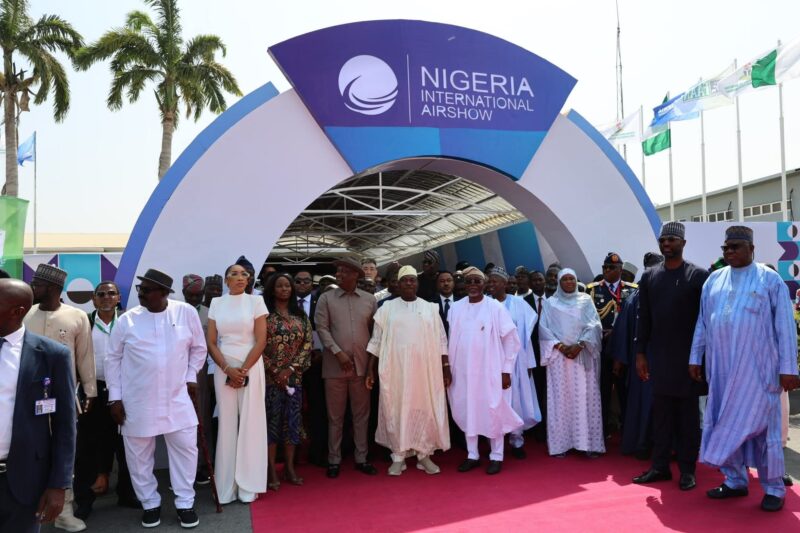
Nigeria has formally taken its place on the global aviation stage, as President Bola Ahmed Tinubu and the Minister of Aviation and Aerospace Development, Festus Keyamo, jointly heralded the maiden Nigeria International Airshow as a transformative milestone for the nation’s aviation sector.
The historic event, which mirrors world-renowned showcases such as Farnborough, Paris, Dubai, and Singapore, marks Nigeria’s long-anticipated entry into the international aviation exhibition circuit.
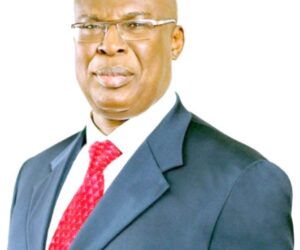
Speaking on behalf of President Tinubu at the opening ceremony, the Secretary of the Government of the Federation, Senator George Akume, described the Airshow as a defining moment that signifies Nigeria’s readiness to innovate, collaborate, and compete globally.
“This airshow places Nigeria firmly on the global aviation map,” he said, noting that the event coincides with the nation’s celebration of 100 years of aviation history.

The President emphasised that Nigeria’s aviation journey, which began with modest foundations, has evolved into one marked by ambition, investment, and international engagement.
Festus Keyamo, writing in the foreword of the inaugural Airshow Magazine, echoed this sentiment, describing the event as a “historic leap” that answers long-standing questions about when Nigeria would join the global aviation showcase community.
He acknowledged that the debut edition may not be perfect but insisted that Nigeria is taking “baby steps with courage, conviction, and clarity of purpose,” with the vision of making the Airshow a permanent fixture on the global aviation calendar.
Both leaders highlighted the major strides made in the aviation sector under the current administration. Nigeria’s passenger traffic continues its upward trajectory, rising to 15.89 million passengers in 2023, with projections by the NCAA indicating a sharp increase to 25.7 million by 2029.
This growth is expected to generate annual revenues exceeding $2.58 billion, underscoring the sector’s expanding economic footprint. Aviation now contributes 2.5 per cent to Nigeria’s GDP and is supported by 20 airports, 23 domestic airlines, and thousands of skilled professionals.
President Tinubu pointed to ongoing infrastructure modernisation, including the N712 billion refurbishment of Lagos’ Murtala Muhammed Airport and upgrades to multiple runways across the country.
Keyamo reinforced this, noting that several terminal improvements, runway rehabilitation projects, and cargo infrastructure reforms are either completed or in progress – all aimed at enhancing passenger experience and boosting regional competitiveness.
Safety and regulatory enhancements also featured prominently in their remarks. Nigeria has risen to become Africa’s number one nation in compliance with international aviation standards, with its Cape Town Convention score improving from 49.5 per cent to 75.5 per cent.
The Minister attributed this progress to rigorous oversight by the NCAA, improved recertification processes, upgraded Instrument Landing Systems, advanced surveillance technologies, and strengthened airport security architecture aligned with ICAO requirements.
In the area of maintenance and operational efficiency, Nigeria is taking bold steps to reduce capital flight. The government has secured partnerships with Boeing and Cranfield University to develop state-of-the-art Maintenance, Repair and Overhaul (MRO) facilities, a move expected to significantly cut the over $200 million spent annually on foreign aircraft maintenance.
Local carriers such as Aero Contractors and XEJet are already developing new hubs in Lagos and Abuja. Meanwhile, NAMA has deployed modern communication, navigation, and surveillance systems and upgraded radar coverage nationwide.
Keyamo also highlighted ongoing efforts to strengthen airline operations through a national aircraft leasing programme and increased engagement with manufacturers and global financiers to support fleet renewal.
Nigeria’s expanding Bilateral Air Service Agreements have enabled the return of major carriers such as Emirates and Uganda Airlines, while Air Peace has resumed its Lagos–London route after a five-year hiatus, further enhancing international connectivity.
Training and capacity building are central to the administration’s long-term aviation vision. At the Nigerian College of Aviation Technology (NCAT), simulator upgrades and expanded programmes are preparing a new generation of aviation professionals, while public-private partnerships are driving projects such as cargo terminals, MRO hubs, and aviation city developments.
Both Tinubu and Keyamo reaffirmed Nigeria’s commitment to becoming the aviation hub of West and Central Africa. Through investments in technology, infrastructure, training centres, and plans for domestic aircraft component manufacturing, the government aims to build a sustainable aviation ecosystem that creates jobs, fosters innovation, and strengthens the national economy.
They emphasised that Nigeria’s recent participation in global platforms, such as the Dubai Airshow, demonstrates its readiness to collaborate on defence systems and next-generation aerospace technologies.
Describing the Nigeria International Airshow as more than an exhibition, Keyamo called it “a statement of intent” that signals Nigeria’s ambition to lead Africa’s aviation future.
The event, he said, offers a unique opportunity for manufacturers, regulators, investors, airlines, and enthusiasts to exchange ideas, showcase cutting-edge technologies, and inspire young Nigerians to pursue careers in aviation, aerospace engineering, drones, defence systems, and emerging technologies.
Both leaders commended the organisers, aviation agencies, stakeholders, and industry partners whose combined efforts brought the inaugural Airshow to life. They urged patience and continued collaboration as the country refines future editions.
“Together, we will continue to soar higher,” President Tinubu said, “ensuring that Nigeria is not only a participant but a leader in global aviation.”