The Chairman of the Presidential Committee on Fiscal Policy and Tax Reforms, Taiwo Oyedele, has clarified that Nigeria’s new Tax Reform Act exempts religious institutions from taxation.
PREMIUM TIMES reported that the reforms consolidate four major legislations: the Nigerian Tax Act (NTA), the Nigerian Tax Administration Act (NTAA), the Nigerian Revenue Service (Establishment) Act (NRSEA), and the Joint Revenue Board (Establishment) Act (JRBEA).


Under the new framework, the NTA and NTAA are expected to take effect on 1 January 2026.
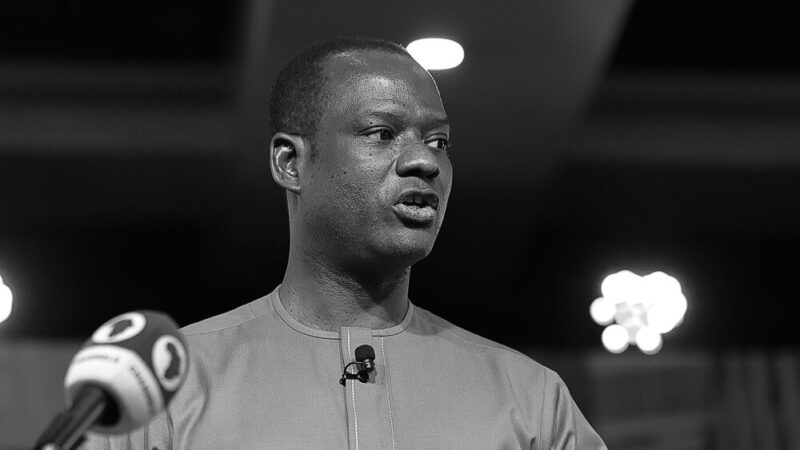
In a viral video on Friday from his interview on the “MIC ON podcast” with Seun Okinbaloye, Mr Oyedele explained that although churches and mosques remain tax-exempt as institutions, pastors and imams are not exempt as individuals.
He said: “The salary of pastors and imams is income, and what the law says is that the church and the mosque will not pay tax unless they start doing business as an institution or organisation. Anybody they pay, whether it is a pastor, a choir member, or anyone else, is working in God’s vineyard.
“The person selling food and the farmer who goes to the farm so people can eat are also doing the work of God. So, everybody pays, because the only difference is that if the amount you’re earning is below the taxation threshold, you’re exempted — whether you’re an Imam, a Pastor, or you don’t believe in God.”

Threshold
He added that anyone who exceeded the threshold would be required to pay tax.
According to Mr Oyedele, the law is concerned solely with whether an individual falls into the low-income, middle-class, or upper-class category.
“We can’t create a society where we say some religions are superior to others. I may decide that I don’t believe in God and I’m Yoruba, and I want to believe in Babalawo. And you shouldn’t punish me. Why should I pay tax when other people are not paying? Therefore, the tax law is neutral in this sense — neutral with respect to gender, race, religion, and belief.
“If you are a low-income earner, from next year, you will pay no personal income tax. You are exempt from tax. If you are middle-class, your tax will decrease. If you are high income, your tax will go up”, he added.
READ ALSO: Tinubu approves tax policy implementation committee
This newspaper reported that during a session on “Tax Compliance and Planning” with the Redeemed Christian Church of God (RCCG) in September, Mr Oyedele emphasised that anyone providing a service is liable to pay tax.
He noted that sex workers, often referred to as “runs girls”, would also fall within the scope of the government’s efforts to broaden Nigeria’s revenue base.
Mr Oyedele specifically stated: “If someone is rendering a service, such a person will pay tax. There’s this extreme example that you probably should not even say in a church, but to bring it home, if somebody is doing runs with girls. They go and look for men to sleep with. You know, that’s a service. They will pay tax on it.”