Science, Technology, Engineering and Mathematics — better known as STEM — is more than a collection of school subjects. It is a way of learning and thinking that emphasises inquiry, experimentation, problem‑solving and the application of practical skills. In a world rapidly transformed by technology, economies built around knowledge, innovation and engineering reap enormous benefits.
For a country like Nigeria, with a youthful population and urgent need for infrastructure, education in STEM is not a luxury — it is an imperative. And at the heart of efforts to institutionalize this imperative is the National Agency for Science and Engineering Infrastructure (NASENI), which over the years has quietly but steadily positioned itself as a key pillar in the nation’s drive toward technological self-reliance and infrastructural growth.
STEM education, in its ideal form, does not segregate disciplines. Rather, it creates a continuum: a learner experiments in a physics lab; uses math to model results; draws on engineering thinking to design a solution; applies technology to build or simulate it. Such an integrated approach turns students into innovators capable of thinking across boundaries.
SPONSOR AD
In countries where STEM is vigorously promoted, it underlies industrial growth, high-tech economies and vibrant innovation ecosystems. For Nigeria — where challenges such as unreliable power supply, limited access to modern laboratory infrastructure, and dependence on imported equipment have long hampered progress — embedding a robust STEM culture offers the promise of homegrown solutions tailored to local realities.
It was in recognition of Nigeria’s unique challenges and opportunities that NASENI was established. Since 1992, the Agency has been the Federal Government’s purpose-built instrument for advancing science and engineering infrastructure across the country.
Its founding followed the recommendations of a national committee on engineering infrastructure, which recognized the urgent need for a dedicated institution to champion industrialisation based on indigenous technological capacity.
NASENI’s mission has been to nurture a dynamic science and engineering infrastructure base that enables home-initiated and home-sustained industrialisation through development of relevant processes, capital goods, and equipment necessary for job creation and national progress. Its vision is clear: to fuel Nigeria’s innovation for a sustainable future.
Over the decades, NASENI has organized its mandate through a network of Institutes across the country — each charged with a specialised area such as materials engineering, scientific equipment, power systems, and advanced manufacturing technologies.
These Institutes do not exist merely as academic or research outlets; they are production engines designed to design, build and deliver real, usable tools and equipment for Nigeria’s schools, industries, laboratories, and communities.
What this means in practice is that NASENI does more than dream of local technological independence: it builds it. Recognizing that one of the greatest barriers to STEM education in Nigeria has been lack of access to practical equipment and materials — whether scientific instruments, laboratory supplies, or functional computing devices — NASENI has taken concrete steps to fill this gap with locally produced alternatives.
Through Institutes such as the Scientific Equipment Development Institute (SEDI) in Enugu and Minna, the Engineering Materials Development Institute (EMDI) in Akure, and others specialising in power equipment, manufacturing, and design engineering, the Agency has engaged in reverse engineering, production of laboratory kits, equipment for schools and industries, and local manufacturing of capital goods.
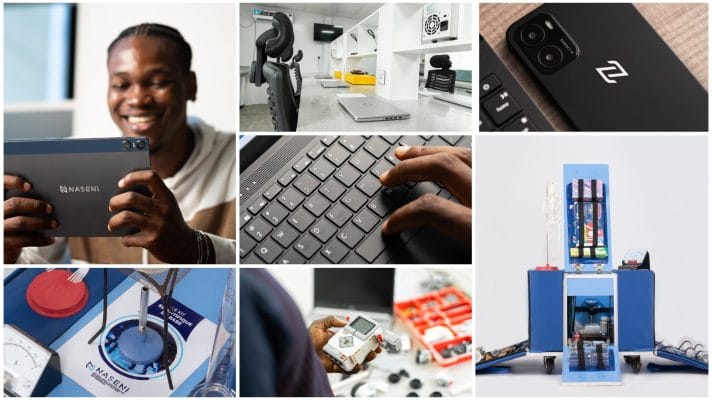
Among the items that NASENI has produced are school science kits — portable, affordable tools intended to demystify science for students. Recognising that many Nigerian schools, particularly in rural or under-resourced areas, lack proper laboratories, NASENI’s science kits provide a way for learners to carry out basic experiments in physics, chemistry, and biology — even without a fully equipped fixed laboratory.
The kits include apparatus such as test tubes, pipettes, measuring instruments, and other essential laboratory supplies. These efforts have been explicitly described as part of NASENI’s strategy to promote scientific literacy and practical science education nationwide.
Beyond basic science kits, NASENI has ventured into digital tools and computing devices. Its 14‑inch professional laptop, assembled locally in partnership with private sector firms, has been advertised as a durable and affordable option that could close Nigeria’s digital divide, enabling both students and working professionals to access technology without the prohibitive cost and logistical challenges associated with imported devices.
In recent years, under the leadership of its current Executive Vice Chairman and Chief Executive, Khalil Suleiman Halilu, NASENI has undergone a notable transformation. The Agency has expanded its reach, adding new research centres, agritech parks, innovation hubs, and emerging‑technology institutes.
Among these is a facility dedicated to robotics, artificial intelligence, smart manufacturing and advanced materials — signalling NASENI’s ambition to lead Nigeria into the era of the Fourth Industrial Revolution. This transformation has coincided with a conscious shift from being a primarily research-oriented outfit to becoming a production-intensive engine aimed at delivering tools and products that meet the real needs of schools, industries and communities.
The Agency has restructured many of its internal processes, introduced project implementation offices, and pursued collaborations with both domestic and international partners to secure investment and technical know-how. Within a short period, these reforms have drawn attention in government and development circles as a promising model for public-sector innovation and impact.
For Nigeria to reap the full benefits of STEM education — to build roads, power infrastructure, manufacturing plants, renewable energy systems, medical and scientific facilities — it needs more than good curriculum. It must provide the means by which theory can be translated into practice. And that is where a body like NASENI becomes indispensable.
When students are taught only in theory, their understanding remains abstract. But when they hold testing tubes in their own hands, wire circuits, try out designs, operate locally built digital devices, or use technical demonstration kits in a workshop — they begin to see what is possible.
They begin to believe that a physics equation can power a solar panel; that a material science lesson can yield a metal part for a machine; that programming class can lead to devices assembled in Lagos or Enugu rather than imported from abroad. That belief in possibility — in Made-in-Nigeria technology — is perhaps the most important seed of industrial transformation.
Global experience shows that countries that invested in STEM education and aligned that investment with manufacturing and industrial strategy over decades have achieved huge success.
Singapore invested heavily in science, engineering and technological education, producing a globally competitive workforce and high-tech economy. Scandinavian nations such as Sweden and Norway built research-oriented education systems linked directly with industry, while China turned its massive investment in STEM and manufacturing into global dominance in electronics, machinery and infrastructure.
In Europe and the United Kingdom, strong collaboration between academia and industry has enabled innovation-driven growth. For Nigeria, adopting this model means more than importing curriculum. The country must localise inputs, provide schools with practical tools, and ensure that theory is matched with experience.
NASENI stands ready to provide those tools, but its impact depends on adoption. NASENI itself has acknowledged this by urging its institutes to support one another and by calling on schools, regulators and private-sector organisations to adopt its products.
Public and private schools are encouraged to integrate NASENI’s science kits, STEM boxes, laptops and laboratory tools into their classrooms. Regulators at both federal and state levels should ensure that education procurement policies favour locally produced STEM equipment. Universities, polytechnics and colleges of education must see NASENI as a strategic partner in providing affordable and adaptable learning infrastructure.
Increased demand will not only enhance STEM education across Nigeria but also strengthen NASENI’s commercialisation capacity. Higher patronage will enable the Agency to scale production, invest in more advanced research, and convert more prototypes into homegrown products capable of competing with imports.
If every Nigerian school had access to NASENI’s science kits, if every polytechnic workshop used locally developed mechanical tools, and if Nigerian universities filled their laboratories with equipment engineered within the country, a new generation of scientists, engineers and innovators would emerge — a generation equipped with both theoretical knowledge and practical ability.
Nigeria’s future depends on technological independence, industrial expansion and infrastructure built on local expertise. STEM education is the bedrock of that future, and NASENI is one of its strongest pillars.
The time has come for schools, regulators, private-sector organisations and the general public to support the Agency. With stronger patronage, NASENI will be able to commercialise more research outputs, expand its capacity, and strengthen Nigeria’s technological foundation.
Supporting NASENI means supporting Nigeria’s future — a future where innovation is local, skills are homegrown and infrastructure is built by Nigerian hands.
As a Nigerian living here or in the diaspora, DO YOU HAVE A PLAN B? Just in case anything goes wrong, is there a side business you can fall back on? We show you step by step how you too can start earning US Dollars consistently. Nigerians can now make as much as $20,000 to $35,000 with premium domains. Ideal for business owners, entrepreneurs, and workers.
Click here to find out how it works