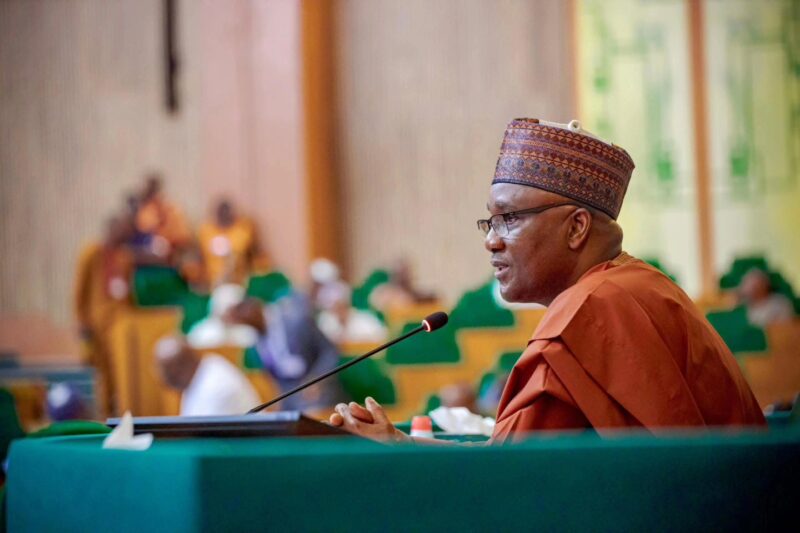
Speaker Abbas Tajudeen and alleged ₦18.6bn contract scandal
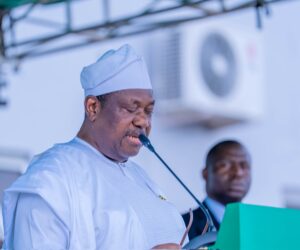
The week opened with Speaker Abbas Tajudeen’s rejection of reports linking him with the alleged failure to account for ₦18.6 billion reportedly earmarked for constructing the National Assembly Service Commission (NASC) headquarters.
An organisation, Socio-Economic Rights and Accountability Project (SERAP), had, in a letter dated 18 October, accused the leadership of the National Assembly of failing to properly disclose details of the project.


The organisation demanded the publication of the name, address and corporate profile of the construction company allegedly paid the ₦18.6 billion, insisting that transparency was essential to prevent abuse of public resources.
When the seven-day ultimatum SERAP issued expired without any public clarification, the organisation filed a lawsuit seeking judicial intervention.
In a statement signed by his media adviser, Musa Krishi, on Tuesday, Mr Tajudeen said the allegations originating from a petition by SERAP were “incorrect, misleading and a distortion of how procurement functions within the National Assembly bureaucracy.”
However, the Speaker’s office stressed that he plays no role directly or indirectly in procuring or supervising contracts within the National Assembly. Procurement processes, according to him, are fully handled by the administrative arm of the legislature and the leadership of its various agencies, who operate through statutory committees and designated accounting officers.


Constitution Review shifted
The long-awaited debate on the constitution amendment bills stalled on Thursday after lawmakers suspended proceedings to allow more time to study the comprehensive documents.
Deputy Speaker Benjamin Kalu, who chairs the Committee on Constitution Review, had earlier announced that the House would devote Tuesday, Wednesday and Thursday to clause-by-clause debate before adopting a final position the following week. But legislative momentum faltered when the chamber shifted focus on Tuesday to routine bills and motions, leaving the constitution review items for later.
On Wednesday, Mr Kalu laid the committee’s report before the House, and Speaker Abbas Tajudeen confirmed that detailed consideration would begin on Thursday. However, the exercise met a sudden roadblock.
Shortly after the House dissolved into the Committee of the Whole for the clause-by-clause session, Inuwa Garba (PDP, Gombe) raised a point of concern, stating that many lawmakers had only just received printed copies of the extensive amendments. He argued that the late distribution rendered it impossible for members to make informed and meaningful contributions on matters of national importance.
Several lawmakers echoed his concern, stressing that the constitution review process should not be rushed or handled casually, given its long-term implications for governance, federalism, justice administration and political participation.
Only a handful objected to the call for a suspension when Mr Kalu put the matter to a voice vote.
Ogijo Lead Poisoning: Reps declare environmental disaster a national emergency
On Tuesday, the House discussed the severe lead poisoning outbreak in Ogijo, Shagamu LGA of Ogun State, declaring it a national emergency and calling for an exhaustive investigation into the environmental and public health failures that enabled the crisis.
The motion, sponsored by Ayoola Elegbeji (APC, Ogun), drew attention to what she described as “systemic and persistent environmental abuses” by factories operating without adequate oversight. She argued that these abuses have now escalated into a direct threat to citizens’ constitutional rights.
In her presentation, Ms Elegbeji noted that lead exposure presents irreversible consequences, including cognitive impairment in children, neurological disorders, organ failure, reproductive complications, cancers and premature death.
She further expressed concern that although some harmful factories were previously shut down and the government temporarily banned the export of lead ingots, many of those measures were later relaxed. Such inconsistency, she warned, paints a picture of a system prioritising short-term economic gains over long-term public safety.
The House resolved to set up an ad-hoc committee to investigate the crisis, review relevant environmental and health laws, assess community impacts and report back within eight weeks. Lawmakers also called for a temporary moratorium on the export of recycled lead ingots until a full audit of the industry is concluded.
Insecurity: Lawmakers demand immediate naming and prosecution of terror financiers
The House, on Wednesday, urged the federal government to publicly identify, sanction and prosecute individuals and entities financing terrorism and banditry.
The call followed consideration of the full report from last week’s special security session, which was held over three days in response to worsening national insecurity.
The report, which was adopted, warned that continued anonymity for financiers fuels criminal operations, undermines counterterrorism efforts and erodes public trust.
Lawmakers argued that the government’s failure to disclose identities of those allegedly bankrolling terror networks leaves communities vulnerable and emboldens militants who already operate with relative impunity.
The House recommended the establishment of a specialised court dedicated exclusively to terrorism, banditry and kidnapping cases. The aim is to fast-track prosecutions, avoid jurisdictional delays and ensure a more transparent and coordinated approach to handling high-risk cases.
Lawmakers also pushed for a nationwide digital tracking system to monitor all arms and ammunition in the custody of security agencies. Members said the absence of such a system has contributed to weapon leakages, unexplained stock movements and heightened criminal access to firearms.
In addition, the House demanded a comprehensive improvement in salaries, equipment and welfare conditions for security personnel, noting that overstretched and poorly remunerated operatives cannot deliver optimal results against increasingly sophisticated criminal threats.
NSIPA’s $30bn funds
Concerns over funds recovered from the National Social Investment Programme Agency (NSIPA) were addressed during Tuesday’s plenary, with lawmakers warning that the continued withholding of more than ₦30bn threatens the country’s flagship poverty-alleviation schemes.
Saidu Abdullahi (APC, Niger), who moved the motion, said credible intelligence indicates that the recovered monies have not been remitted to a designated Treasury Single Account (TSA). The delay, he said, has crippled critical interventions under NSIPA, including GEEP, the Home-Grown School Feeding Programme and the Grant for Vulnerable Groups.
According to him, millions of vulnerable Nigerians are being deprived of the support they are entitled to, worsening poverty levels at a time when inflation and economic shocks already strain households.
He cautioned that the lack of clarity regarding the location of the funds, who controls them and what decisions are being taken raises serious questions about administrative transparency. “This is not just a bureaucratic delay,” Mr Abdullahi said. “It is a direct threat to the integrity of the federal government’s social support programmes.”
Deputy Speaker Benjamin Kalu announced that the House will set up an ad-hoc committee to investigate all funds recovered from NSIPA between 2024 and 2025 and report back with recommendations.
Power sector probe deepens as Reps summon BPE and core investors
The House of Representatives Ad-hoc Committee investigating expenditure in the power sector directed the Bureau of Public Enterprises (BPE) to appear with core investors in Nigeria’s generation and distribution companies. The directive came during the committee’s continued investigative hearing at the National Assembly on Thursday.
Committee Chairperson, Ibrahim Aliyu, said the investors must account for the state of their operations and justify the confidence and resources invested in them during the sector’s privatisation.
He stressed that Nigerians continue to endure chronic outages, tariff hikes and an unstable grid despite years of reforms and substantial public funds committed to s sector.
During his presentation, the BPE Director-General, Ayodeji Gbeleyi, said power generation from Kainji and Jebba hydro plants has increased from about 600 MW at privatisation to about 1,100 MW today—representing nearly 20 per cent of current supply to th e national grid. He also disclosed that all six turbines at Egbin Power Plant, previously operating at reduced capacity, are now functional.
However, Mr Gbeleyi revealed that the Nigerian Bulk Electricity Trading Company (NBET) owes operators over ₦4tn, an amount far exceeding the sector’s revenue of ₦1.7tn for 2024. He said revenue is projected to reach ₦2.3tn by the end of the month, but the liquidity crisis remains one of the biggest constraints to improving electricity supply.
The committee is expected to question the investors on efficiency levels, investment commitments, grid performance, tariff structures and the use of intervention funds received since privatisation.