
By Taiye Olayemi
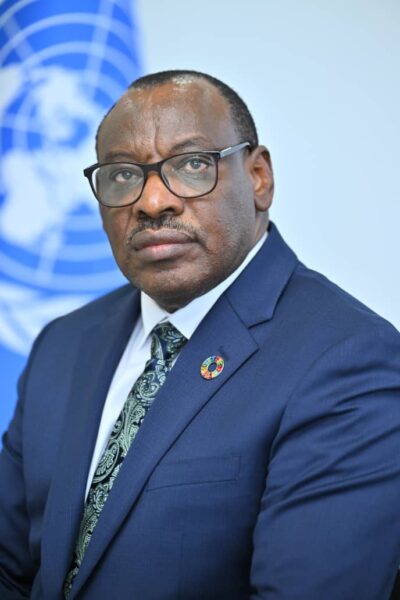
Mr Claver Gatete, the Executive Secretary of the Economic Commission for Africa (ECA), says reparations must transform global systems that still restrict Africa’s development.
He made the call in an op-ed shared with the News Agency of Nigeria (NAN) by the ECA Communications Section on Tuesday.
He said the African Union had placed reparations at the centre of its 2025 agenda, marking a historic shift in continental priorities.
Gatete explained that reparations should correct structural imbalances so Africa’s land and resources supported shared prosperity rather than entrenched inequality.
He noted that Africa continued to operate within a global order shaped by enslavement, colonisation and dispossession, with extractive logic now seen in unfair trade regimes.
He added that unequal finance, inflated borrowing costs and flawed credit ratings still undervalued African economies in global assessments.
According to him, land governance, justice and reparations are not backward-looking themes but essential tools for renewal and sustainable development.
He recalled that the 2025 Conference on Land Policy in Africa had placed land at the centre of discussions linking past injustice and current exclusion.
“The conference had framed reparations as a forward-looking agenda connecting land rights, fair finance, climate resilience and industrialisation.
“Africa holds large mineral reserves and vast arable land yet remained a minor player in global trade and manufacturing,” he said.
The ECA boss cited estimates suggesting that the continent lost 88 billion dollars annually to illicit financial flows, limiting prospects for structural transformation.
He said stakeholders had agreed that transformative reparations must address the rules and institutions that kept Africa at the bottom of value chains.
He argued that African countries should no longer export raw cocoa, lithium or crude oil when value-added production was possible locally.
Gatete said reparations should enable African states to generate and retain value instead of surrendering it to external processing firms.
He added that strong land governance and secure tenure, especially for women and youth, should anchor any credible reparations agenda.
He noted that transparent land systems underpinned food security, investment, stability and peace, making them essential to development.
Gatete said land reforms needed to reflect national laws, local contexts and community priorities rather than externally imposed models.
He explained that digital tools and climate-smart approaches could modernise land administration and protect vulnerable communities.
He identified African universities as crucial institutions for generating knowledge and innovation to support land justice and industrial growth.
“Universities should align training with future industries and draw on indigenous knowledge to address development challenges.
“The African Continental Free Trade Area (AfCTA) offers the scale required to build regional value chains and competitive industries.
“Reparations have to link with regional integration to create jobs, expand markets and strengthen Africa’s economic autonomy,” he said.
Gatete added that the diaspora should be regarded as a strategic partner whose capital and expertise could support industrial and digital transitions.
He said Africa also needed policies that protected diaspora rights, recognised their contributions and integrated their interests.
He explained that reparations would be meaningful only when they rebalanced power over land, capital, technology and knowledge.
The ECA chief said true progress would emerge when finance became fair, land rights inclusive and African industries processed African resources.
He stated that, in such a future, land would serve as the foundation of a just, prosperous and confident Africa. (NAN) (www.nannews.ng)
Edited by Kamal Tayo Oropo