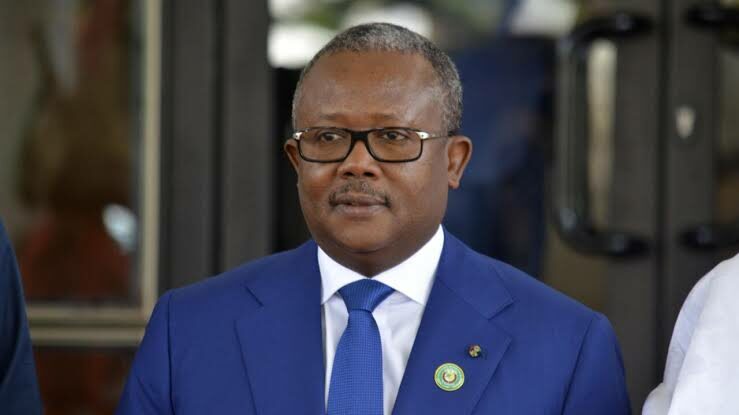
Ousted Guinea-Bissau’s President Umaro Sissoco Embalo has arrived safely in Senegal after being detained during a purported military coup earlier this week, the Senegalese government confirmed on Thursday.
His relocation came amid heightened political tensions following Sunday’s presidential and parliamentary elections.
The so-called coup unfolded just a day before provisional election results were due.
Soldiers claimed to seize power early Thursday, appointing the army’s chief of staff, General Horta N’Tam, as the new leader for a one-year transitional period.
N’Tam was sworn in at military headquarters, declaring his assumption of leadership over the High Command.
Opposition candidate Fernando Dias da Costa, who claimed to have won the presidency with approximately 52 per cent of the vote, accused Embalo of orchestrating a coup to block him from taking office. Speaking from hiding, Dias insisted, “There wasn’t a coup. It was organised by Mr Embalo.”
Also, one of the members of West Africa Elders Election Observers, formed President Goodluck Jonathan of Nigeria, has corroborated Dias’ claim.
Embalo’s government was swiftly dismantled, and Domingos Simoes Pereira, a key opposition figure barred from the elections but supportive of Dias, was also arrested.
Meanwhile, General Tomas Djassi, formerly Embalo’s personal chief of staff, was named head of the armed forces.
The capital, Bissau, was largely shut down on Thursday, with shops and markets closed as heavily armed soldiers patrolled the streets.
The new military leadership banned media programming and prohibited protests, claiming the takeover was needed to “block operations that aimed to threaten our democracy.”
Officials also cited an alleged plot involving “drug lords” and weapons smuggling as a trigger for the intervention.
Despite the upheaval, borders sealed on Wednesday were reopened, curfews lifted, and schools, markets, and private institutions were ordered to resume operations.
Regional and international reactions were immediate.
The African Union (AU) condemned the coup and demanded Embalo’s release, while ECOWAS chair Julius Maada Bio described the events as a “grave violation” of Guinea-Bissau’s constitutional order.
The European Union (EU) also called for a swift return to democratic governance.
Guinea-Bissau, a small nation bordered by Senegal and Guinea, has a long history of political instability, having witnessed four successful coups and several attempts since independence in 1974.
Many citizens are frustrated by the recurring crises.
“Every time we feel hopeful about the country, a crisis occurs. This can’t go on,” said Mamadou Woury Diallo, a soap seller in Bissau.