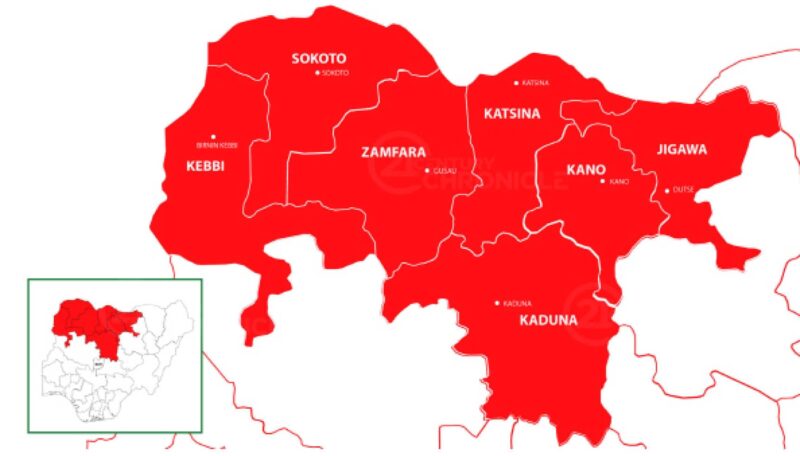
Leaders from government, defence institutions and academia have agreed on the need for a coordinated regional approach to address the worsening security situation in the North West.
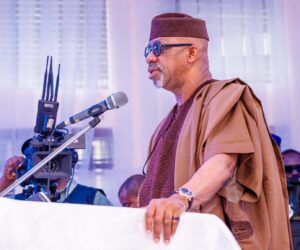
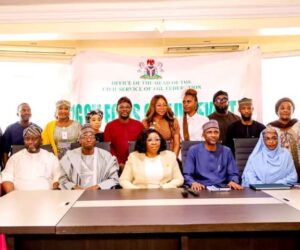
At the North West Zonal Security Summit held in Kaduna, Governor Uba Sani of Kaduna State, Minister of Defence Mohammed Badaru Abubakar and security scholar Prof. Muhammad Kabir Isa offered perspectives on how to dismantle banditry and terrorism that have affected the region for years.
Governor Sani called for an integrated security framework that combines military action with community engagement and sustainable development.
SPONSOR AD
He said addressing insecurity goes beyond the use of force, warning that “military might alone cannot win the battle” and stressing the importance of rebuilding trust between citizens and the state.
A key element of his proposal is the creation of a North West Theatre Command to unify the Nigerian Army’s 1st and 8th Divisions under a single operational structure.
According to him, this would ensure quicker and more effective responses to security threats, noting that a unified command “will accelerate intelligence sharing, enhance coordinated operations, and dismantle cross-state criminal networks more effectively.”
The governor also urged the Federal Government to strengthen border security through deeper multinational collaboration, calling for the expansion of the Multinational Joint Task Force (MNJTF), currently operating around the Lake Chad Basin, to cover the North West border with Niger Republic.
He explained that such move “will disrupt arms trafficking routes, deny criminals cross-border sanctuaries, and weaken the networks that sustain their operations.”
Beyond military measures, Sani emphasised the role of communities in tackling insecurity, proposing the establishment of permanent Security Committees at state and local government levels, comprising traditional rulers, religious leaders, women and youth groups, civil society organisations and security agencies.
These bodies, he said, “will serve as early-warning systems, conflict-resolution platforms, and bridges of trust between citizens and the state.”
He also renewed calls for the creation of State Police, arguing that Nigeria’s highly centralised policing system is overstretched, noting that with “fewer than 400,000 police officers nationwide, many rural communities are left without meaningful protection.”
In his remarks, Defence Minister Mohammed Badaru Abubakar reaffirmed President Bola Tinubu’s resolve to ending insecurity, stating that the President has directed the creation of a “strong, yet adaptive, national security architecture.”
The minister highlighted achievements recorded through joint military operations, noting that major routes in Kaduna, Zamfara, Katsina, Sokoto and Kebbi States have been reopened.
He added that markets in Kaura Namoda, Shinkafi, Batsari, Giwa and Kajuru are recording increased activity, while several displaced communities have returned home.
According to him, many schools previously closed due to insecurity have also resumed academic activities under improved security conditions.
The minister, however, acknowledged that “the Northwest continues to face lingering threats from bandits, terror cells and organised criminal networks,” despite sustained military efforts.
Delivering the keynote address, Prof. Muhammad Kabir Isa of Ahmadu Bello University argued that previous security interventions failed largely because they were “limited by fragmentation, inadequate coordination weak intelligence systems, humanitarian constraints, and the absence of a comprehensive regional architecture.”
He noted that even where tactical gains were achieved, they rarely translate into lasting peace because “structural drivers of insecurity remain unaddressed.”
Earlier, the Chairman of the Organising Committee, Senator Babangida Hussaini, said the summit was convened “to frankly discuss the increasing and alarming rates of insecurity” in the region and to develop inputs ahead of the National Security Summit scheduled to hold on December 1 in Abuja.
He described the President’s commitment as a clear indication that no option was being ignored in the search for lasting solutions and commended Governor Sani for his “overwhelming support,” which he said was crucial to the success of the summit.
As a Nigerian living here or in the diaspora, DO YOU HAVE A PLAN B? Just in case anything goes wrong, is there a side business you can fall back on? We show you step by step how you too can start earning US Dollars consistently. Nigerians can now make as much as $20,000 to $35,000 with premium domains. Ideal for business owners, entrepreneurs, and workers.
Click here to find out how it works