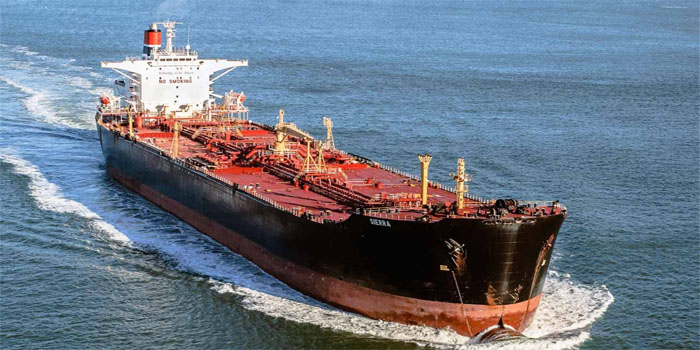
Nigeria imported ₦12.8 trillion worth of Premium Motor Spirit (PMS), better known as petrol or fuel, between August 2024 and October 2025, according to a detailed analysis of the Nigerian Midstream and Downstream Petroleum Regulatory Authority (NMDPRA) factsheet.
Using an average landing cost of ₦829.77 per litre, the import value was calculated from the agency’s record of 15,435,000,000 litres brought into the country during the 15-month period.
The breakdown shows that September 2024 recorded the highest petrol import volume at 1.52 billion litres, a time when no local production was available. It was followed by August 2024 with 1.38 billion litres, and December 2024 with 1.31 billion litres.
In October 2025, import volumes stood at 1.17 billion litres, dropping slightly to 1.12 billion litres in November. The figure fell sharply to 765.7 million litres in January 2025, before edging up to 770 million litres in February and 889.7 million litres in March.
Importation hit 861 million litres in April, surged to 1.19 billion litres in May, reduced to 978 million litres in June, rose again to 1.11 billion litres in July, and later dropped to 818.4 million litres in August, 663 million litres in September, and 855.6 million litres in October 2025.
Dangote Supplies All 7.2 Billion Litres Of Local PMS
Naija News understands that local supply for the period totalled 7,208,280,000 litres, all sourced solely from the Dangote Refinery.
There was no local supply in August 2024, but production resumed in September 2024 at 102 million litres, rising to 300.7 million litres in October and 558 million litres in November.
Production declined to 306.9 million litres in December 2024, before rising to 592.1 million litres in January 2025, 694.4 million litres in February, and 709.9 million litres in March.
April recorded 645 million litres, followed by 573.5 million litres in May, 543 million litres in June, and 511.5 million litres in July. Supply improved to 613.8 million litres in August, dropped to 528 million litres in September, and ended at 529.48 million litres in October 2025.
The factsheet shows Nigeria remains heavily dependent on imported PMS, despite mounting pressure to end imports and rely on local refining.
The Federal Government earlier imposed a 15% ad valorem tariff on imported PMS and diesel through a presidential directive to the Federal Inland Revenue Service (FIRS) and NMDPRA.
The policy faced intense opposition, with stakeholders warning that Nigeria had not yet achieved self-sufficiency. The government later reversed the directive.
Industry players also warned that banning PMS imports could create a monopoly in favour of Dangote, a situation they argued would undermine energy security.
Dangote Raises Alarm Over Vessel Clearance Delays
The Dangote Refinery has complained of delays in vessel clearance, saying the bottlenecks are disrupting operations and affecting customers.
In a letter addressed to the NMDPRA Chief Executive, the refinery’s CEO, David Bird, said the delays were adding “unnecessary costs and inefficiencies”.
He wrote: “We continue to experience delays in vessel clearance which impacts not only the refinery operations but also our customers, adding unnecessary costs and inefficiencies.”
Bird said the refinery remains fully positioned to meet Nigeria’s PMS needs.
According to him: “Dangote refinery is ready and able to supply 1.5 bln litres of PMS per month (50mln litres/day) in December and January followed by 1.7 bln litres per month (57mln litres/day) from February 2026 onwards.”
He requested the Authority’s support in enabling the refinery to import crude and feedstocks “unhindered” and facilitating product lifting by vessels.
Bird added: “Please allow the ‘Nigeria First’ policy to work to the benefits of all Nigerians.”
He also asked the regulator to deploy officials onsite from December 1 to validate and publish the refinery’s daily supply volumes, promising full transparency through daily publication of production and stock figures.
Why Nigeria Still Needs Fuel Importation – Experts
Director, Institute for Energy and Extractive Industry Law, Henry Adigun, said Nigeria cannot stop PMS importation yet because local refining capacity is not sufficiently diversified.
He explained that Section 317(9) of the Petroleum Industry Act (PIA) empowers the regulator to issue import licences to companies with active local refining licences or proven records in global crude and product trading to address supply gaps.
Adigun noted that current fuel importers naturally buy from the Dangote refinery when its prices are more competitive.
He, however, cautioned that the refinery cannot continue reducing PMS prices unless supported by favourable international market conditions.
He said Dangote’s recent price cut, reducing ex-depot petrol from ₦880 per litre to ₦865, was driven by falling global crude prices and expectations around a potential crude-for-naira agreement.
Petroleum economist, Prof. Wumi Iledare, said the commencement of domestic petroleum supply from the Dangote Refinery has reshaped Nigeria’s downstream operations by reducing imports, enhancing stability, and testing regulatory provisions under the PIA 2021.
He said the benefits include foreign exchange savings and moderation of inflation, though challenges such as crude supply reliability, infrastructure bottlenecks, regulatory overreach and market concentration remain.
According to him: “Priority actions include operationalising transparent supply arrangements, enforcing PIA provisions, de-bottlenecking logistics, overseeing competition, and ensuring data transparency through public dashboards.”
He said Nigeria must monitor refinery output, pricing patterns, import volumes, scarcity incidents and logistics KPIs to ensure a balanced downstream market.
© 2025 Naija News, a division of Polance Media Inc. Contact us via [email protected]