
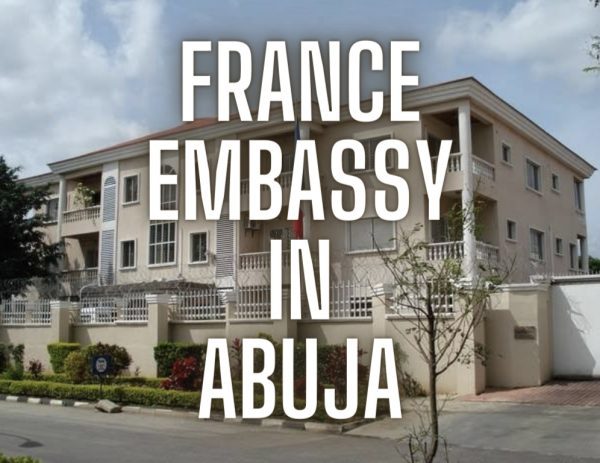

France’s Embassy in Nigeria has announced the French Embassy Fund for Civil Society Organisations (FEF-OSC) Programme, a flagship initiative dedicated to promoting gender equality and the economic empowerment of women and girls across Nigeria.
Launched as part of France’s “feminist diplomacy,” the FEF-OSC is a testament to the power of co-construction and local ownership, demonstrating that community-driven solutions yield high impact and extraordinary social retums, Blueprint.ng reports.
Speaking at a press conference on Thursday in Abuja, the Ambassador, Embassy of France to Nigeria, Marc Fonbaustier, said the FEF-OSC programme, designed in close partnership with Nigerian Civil Society Organisations (CSOs) and the Federal Ministry of Women Affairs, has supported 21 diverse projects across 16 states.
“These projects address critical areas including economic empowerment, climate resilience, peacebuilding, and GBV prevention,” the envoy said.
According to him, the key finding of the dissemination event is the programme’s exceptional efficiency and long-term value creation; high Social Return on Investment (SROI): The average SROI for the projects stands at 4.3.
“This means that for every 1 Naira invested by the FEF-OSC, 4.3 Naira in value was generated or saved for women, families, and local administrations.
“Sustainability through Partnership: The CSOs secured an impressive 546 formal partnerships with Federal and State Ministries, private sector actors, and traditional rulers, anchoring their solutions deeply within local institutional and market ecosystems,” the ambassador said.
Fonbaustier, said France has long been a committed partner in Nigeria’s development landscape.
According to him, the EFF-OSCE initiative reflects France’s priority of promoting equitable partnerships in Africa.
He explained that the project’s methodology was intentionally new and original, built through a co-creation process rather than a top-down model.
“We selected 21 projects across 16 states, but this was not imposed by France or based on a preconceived vision of what Nigeria or the OSCEs need. We co-built the project with the OSCEs under the patronage of the Ministry of Women Affairs,” he said.
The Ambassador emphasised the importance of working directly with OSCEs to understand their needs and targets.
He also highlighted the necessity of having strong institutional backing within Nigeria.
“We would be foolish to pretend that France can simply arrive and operate directly without official blessing and coverage,” he said.
He described the collaboration process as constructive and fruitful, leading to the selection of the 21 projects.
“I’m very proud of what has been achieved,” he noted.
He stressed that future French-supported projects in Nigeria will continue to follow a model of co-construction, ensuring that interventions are tailored to local needs and expectations.
Addressing the focus on civil society, he said the featured project places OSCEs at the center because they are often the most present and connected actors in local communities.
According to him, the success of the project reinforces France’s commitment to scaling up future work with civil society organisations.
“OSCEs cannot be the exclusive partners, but their skills, location, and agility make them irreplaceable,” he said.
Responding to a question on lessons for donor agencies especially regarding gender equality and economic inclusion, Fonbaustier said the program demonstrates why donors must work directly with OSCEs to ensure responsive, sustainable, and context-specific interventions.
The Ambassador appreciated the work of journalists.
“If you do your work well, people receive the right information. I have tried to be clear and truthful. What we want is the good of the people and communities of your country they deserve it,” he said.