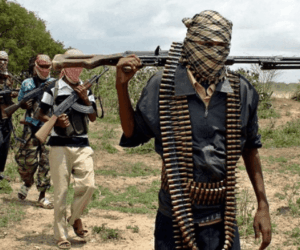

As insecurity in many parts of Nigeria continued to pose serious challenges, a new international study has spotlighted that many journalists covering these crises now face overwhelming social, psychological, and emotional trauma.
The study, titled “Silent Echoes and Deafening Silence: A Mixed Methods Evaluation of Trauma Journalism in Nigeria’s Ethno-Religious Crises”, appeared in the first volume of ‘Navigating Trauma in African Journalism’, a newly released scholarly collection published by Springer Nature.
It revealed that many Nigerian journalists who cover violent conflicts experience severe emotional distress but receive little or no institutional or professional support to cushion its effects.
The study is authored by Emeritus Professor Charles Okigbo, a US-based communication scholar; Blessing Ekene Okafor, Assistant Professor of Communication Studies at Illinois State University, United States; Dr Habib Yakoob, Acting Director of Information and University Relations at the University of Abuja, Nigeria, and Richard Adeyinka Emmanuel, a doctoral student at the University of Ibadan.
Edited by Kealeboga Aiseng and Chikezie E. Uzuegbunam, the volume is part of a two-book project exploring how African journalists experience, report, and survive trauma in some of the continent’s most volatile environments.
It also serves as a pilot project laying the groundwork for a broader, multi-country investigation into trauma journalism in Africa.
It used a mixed-methods approach, including the survey of journalists, the conduct of in-depth interviews, and focus group discussions to gain both quantitative and qualitative insights into how reporters cope with exposure to violence.
“Our study strongly observes that journalists’ good health and well-being cannot be left to individuals alone. A healthy and well-motivated journalist is an asset to the nation and the continent, and you cannot get the best from a mind undergoing serious psychological crisis. This is a pilot study for a more detailed research on trauma,” the authors noted.
The researchers called on media associations, newsrooms, and employers to prioritise journalists’ welfare and mental health by institutionalising psychological support systems for those covering conflict, disaster, and insecurity. They further urged African scholars to collaborate across borders to deepen understanding of trauma journalism as a “global malaise” that hinders the full realisation of a healthy and ethical press in national development.
Although trauma-related research has grown globally, this study represents one of the most extensive analyses of how Nigerian journalists experience and manage trauma while reporting violent ethno-religious crises.
Across the world, and increasingly across Africa, news professionals who report wars, insurgencies, and disasters are frequently exposed to distressing scenes that leave deep emotional scars. Yet, until recently, this phenomenon has received limited scholarly attention on the continent.