2
When the Museum of West African Art (MOWAA) was conceived in 2020, the idea was nothing short of visionary, a bold attempt to position Benin City not only as a historic heart of African artistry but as a global center for the preservation, study, and celebration of West African cultural heritage. Five years down the line, however, that vision has hit a turbulent turn. What was meant to be a triumphant unveiling on November 11, 2025, has been indefinitely postponed amid protests, political tussles, and deep-seated disputes over ownership, governance, and the soul of cultural restitution in Nigeria.
The MOWAA story, from its ambitious beginnings to its present complications, mirrors the complexities of heritage politics in postcolonial Africa, where history, identity, and power collide.
The Museum of West African Art was founded as an independent, non-profit institution in 2020, conceived to preserve, promote, and reinterpret West Africa’s artistic and cultural legacies. With its home in the ancient city of Benin, once the seat of the great Benin Kingdom, MOWAA promised to bridge past and present. Its mission was twofold: to honour the artistic brilliance of ancient African civilizations and to provide a collaborative space for contemporary artists, scholars, and cultural practitioners from across Africa and the diaspora.
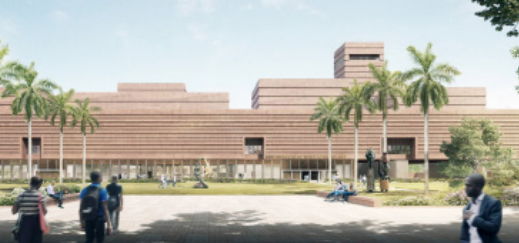
The museum’s 15-acre campus, located within the historic moats of Benin, was envisioned as more than a gallery. It was to be a living ecosystem, featuring artist studios, conservation laboratories, research facilities, and even a boutique hotel. British-Ghanaian architect Sir David Adjaye designed the first structure, the MOWAA Institute, using traditional rammed-earth construction blended with modern aesthetics. The idea was to anchor the institution in both ancestral authenticity and architectural innovation.
MOWAA attracted impressive international partnerships. The Andrew W. Mellon Foundation, the Ford Foundation, the German and Nigerian governments, and the British Museum all lent support. Academic collaborations with Cambridge and Oxford Universities promised to enhance training and research. In many ways, MOWAA was set to become a cultural powerhouse, a new benchmark for how African art could be preserved and reimagined on African soil.
But as the project grew, so did the weight of its symbolism. MOWAA was not just a museum, it became a flashpoint in the broader debate about who controls Africa’s heritage, particularly the repatriated Benin Bronzes. These iconic artifacts, looted by British troops in 1897, have over the past few years been returning from European institutions to Nigeria.
In 2023, then-President Muhammadu Buhari issued a decree recognising the Oba of Benin as the rightful custodian of all repatriated Benin artifacts. That decision, though celebrated by the royal palace and traditionalists, created a legal and administrative quandary for MOWAA, which was largely driven by the Edo State Government under former Governor Godwin Obaseki.
The Oba’s palace viewed MOWAA as encroaching on royal heritage; others saw it as an overdue modernisation of cultural stewardship. What was once a shared dream slowly began to fracture along lines of power, legitimacy, and tradition.
By late 2025, those simmering tensions boiled over. On November 10, just a day before the scheduled grand opening, angry protesters stormed the MOWAA campus in Benin City. Videos of the unrest went viral, showing guests, including foreign dignitaries, being hurriedly evacuated. The museum swiftly announced the indefinite postponement of all preview events scheduled for November 9–11, 2025.
In a statement, MOWAA attributed the unrest to broader disputes between the current Edo State administration and the previous one, insisting that it was an independent, non-profit organisation with no financial ties to former Governor Obaseki.
Still, the optics were troubling. What was meant to be a celebration of African creativity turned into a scene of chaos and embarrassment before a global audience.
The Federal Ministry of Art, Culture, Tourism and the Creative Economy condemned the disruption, calling it “deeply concerning.” It warned, “No right extends to the destruction or desecration of national cultural assets,” while urging peaceful resolution. The Edo State Police later confirmed that normalcy had been restored, with guests safely evacuated. However, by then, the damage, reputational and emotional, had been done.
In the aftermath, Edo State Governor Monday Okpebholo revoked MOWAA’s Certificate of Occupancy, citing lack of due process and consultation with the Oba of Benin. This marked a significant reversal from the previous administration’s enthusiasm for the project. Critics argued that MOWAA had been built on shaky governance, a grand cultural enterprise launched without fully integrating traditional authority structures that are central to Benin’s heritage.
Adding fuel to the controversy was the museum’s location: the former site of the historic Central Hospital in Benin City. For many residents, the demolition of a critical healthcare facility to make way for an elite cultural project symbolized misplaced priorities. In a region where public health infrastructure remains weak, that decision was seen as tone-deaf at best. To
address the uproar, the Edo State Government recently constituted a special committee led by Senator Adams Oshiomhole. The committee’s mandate is clear: ascertain the true legal and operational status of MOWAA, clarify the role of the Benin Royal Palace, and interface with international donors and partners. Other members include General Cecil Esekhaigbe (retd.), Pastor Osagie Ize-Iyamu, Roland Otaru (SAN), and Iryn Omorogiuwa as secretary.
This move, while politically cautious, underscores how deeply MOWAA’s fate has become entangled with politics, identity, and the legacy of colonial plunder. The committee’s task will not be easy, balancing royal authority, state oversight, and international partnerships will require diplomatic finesse.
For all its challenges, MOWAA remains one of the most ambitious cultural projects in Africa today. Its founding idea, to create an excellent institution celebrating West African art on African soil, still resonates. The controversy, if anything, exposes how much is at stake in the broader conversation about restitution, ownership, and self-representation.
The postponement, though painful, may provide an opportunity for reflection and recalibration. The museum must find a way to reconcile modern governance structures with traditional custodianship. Without the active involvement and blessing of the Oba of Benin, MOWAA risks being perceived not as a symbol of cultural pride but as a monument of disconnect.
Equally, the Edo State Government and federal authorities must safeguard such visionary projects from political tug-of-war. The destruction of trust in cultural institutions erodes not only national reputation but also investor and donor confidence.
For local communities, MOWAA’s fate raises bigger questions: How do we develop heritage infrastructure that serves people as much as it preserves history? Can art coexist with social justice in a context where public needs remain unmet?
Five years after its founding, MOWAA stands at a crossroads, between vision and reality, ambition and accountability. The museum’s journey so far captures the tensions of a nation still negotiating how to honor its past while defining its future.
If properly resolved, MOWAA could yet become a model for African-led cultural renewal, a space where scholarship, creativity, and tradition coexist in mutual respect. However, if mishandled, it risks becoming a cautionary tale of how noble intentions can be undone by politics and poor communication.
According to Mr. Edmund Eboighe, a cultural enthusiast, “The world is watching Benin City once again, not for the looting of its treasures, as in 1897, but for how it manages to reclaim, redefine, and rebuild them in 2025”, and noted that “The journey of MOWAA is far from over. It has merely entered its most crucial phase”.