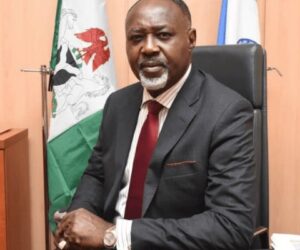
Nigeria’s Minister of Health and Social Welfare, Muhammad Pate, said the federal government is pushing for the highest health allocation in Nigeria’s history, ending wasteful spending practices and strengthening accountability across the system.
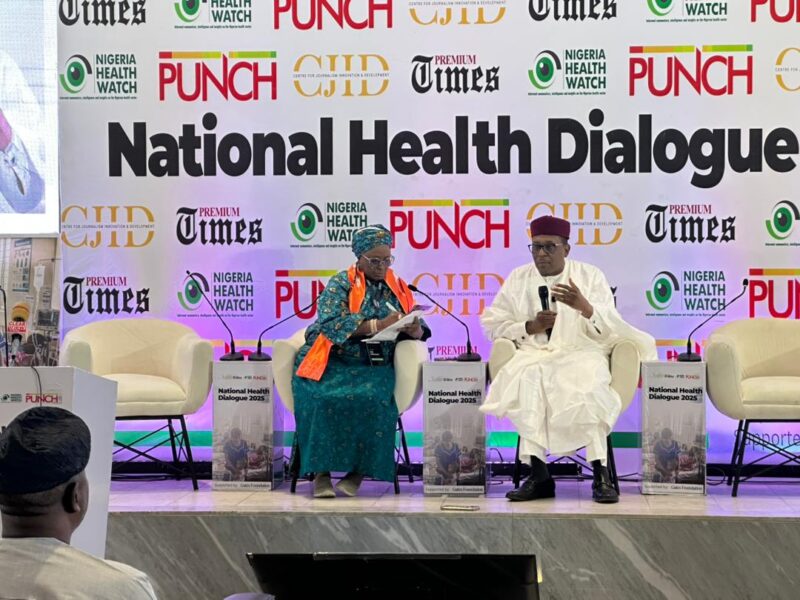
Speaking during a fireside chat at the 2025 National Health Dialogue in Abuja on Thursday, Mr Pate said Nigeria’s poor health outcomes reflect “exactly what the system was designed to produce – inequality and failure.”


He said decades of underinvestment, weak governance and unclear responsibilities have left citizens without reliable care.
The health dialogue was hosted by PREMIUM TIMES in partnership with the Centre for Journalism Innovation and Development (CJID).
It convened government officials, global health leaders, journalists, civil society groups and innovators to examine gaps in Nigeria’s health system under the theme “Evidence, Innovation, and Financing for a Healthier Nigeria.”
Mr Pate called for greater accountability and collaboration across all levels of government. He said the Bola Tinubu administration is working to reposition health as a national priority.


“What has taken decades to atrophy will take time to fix,” he said. “But we are fixing it without distraction.”
Underinvestment and blurred responsibilities
The minister said Nigeria spent less than $8 per person on health for decades, with households, not the government, bearing most of the burden.
“Even today, public spending is only about $15 per person,” he noted, far below “what is required for a population of more than 200 million people.”
He said the effects of this long-term neglect are visible in outdated equipment, weak infrastructure and persistent staffing shortages.
While there are early signs of progress, such as rising primary healthcare utilisation and stronger private-sector interest, he said the improvements remain “too small” compared to the scale of need.
Mr Pate also said roles across federal, state and local governments became blurred over the years. By design, he noted, local governments should handle primary healthcare, states should oversee secondary care, while the federal government manages tertiary services and policy.
“But that is not the case today,” the minister added. “The federal government has no business building primary healthcare in every local government.”
He said the National Health Act of 2014 was designed to provide clear structures for basic healthcare funding, but meaningful implementation only accelerated in the last two years.
“Many federal health contracts from the past decade were executed only recently, often in areas that were not the federal government’s direct responsibility,” he said.
Highest-ever health allocation in view
Mr Pate said he expects Nigeria’s 2026 budget to move closer to a six per cent health allocation, “the highest ever” in federal spending.
“My hope is that we will get close to 6 per cent… which will be the highest ever federal allocation to health. That I will do,” he said.
He added that he was heading to the National Assembly immediately after the health dialogue to engage finance committees and push for increased excise duties dedicated to public health.
Ending waste and strengthening accountability
The minister said the ministry has ended decades-old spending patterns in which much of the health budget went to workshops, meetings and administrative activities.
“In 2023, 61 per cent of the Excel funding went to policy and monitoring workshops. This year… 91 per cent is going directly to service delivery,” he said.
He stressed the need for more efficient spending, with greater emphasis on primary healthcare, hospitals, cancer care, intensive care, and affordability.
To improve governance, he said the Health Sector Renewal Investment Initiative, launched in December 2023, is introducing new transparency and performance systems, including quarterly reviews and joint assessments with states.
“For years, nobody asked us about KPIs, targets or values,” he said. “We introduced these measures so people can see we are trying to meet their needs.”
Rebuilding trust, he added, is essential. “Citizens will only engage if they trust the system.”
BHCPF, maternal health and new investments
Mr Pate said about 8,000 functional primary healthcare centres (PHCs) now receive Basic Health Care Provision Fund (BHCPF) allocations, with 5,000 more PHCs being added to the pipeline.
He cited early gains from initiatives such as Maternal Cash Transfers, though he noted that maternal health is shaped by wider socio-economic factors and requires multi-sectoral action.
He also highlighted a recent rapid allocation of N68 billion for federal health programmes, including immunisation. The funds, now domiciled at the Central Bank of Nigeria, are “fully federal,” he said, requiring no state contributions.
Nigeria’s challenge, he argued, is not only inadequate funding but also inefficient utilisation. He urged civil society to track how money is used, not just demand more resources.
Professionalism, mental health and affordability
Mr Pate said health workers must uphold professional ethics, noting that the system suffers when practitioners neglect duties or refuse essential care.
“We call ourselves professionals, so we must behave as professionals who care about lives and healing,” he said.
He said trust will improve when people experience timely, lifesaving care. “When a woman and her neighbours see that the system responds and saves lives, they begin to trust that the government is investing in their well-being.”
On mental health, he said conditions such as depression and anxiety require empathy, not stigma. The government, he added, is integrating mental-health services into PHCs and training health workers, though shortages of specialists persist.
ALSO READ: 2025 National Health Dialogue: Policymakers, experts discuss innovation, health financing – (LIVE UPDATES)
He identified substance abuse among young people as a major driver of mental-health challenges.
On affordability, Mr Pate said expanding health insurance and increasing public spending will reduce high out-of-pocket costs.
He urged the media, civil society and citizens to hold all levels of government—federal, state, and local—accountable for health financing and service delivery.
“Instead of complaining, we are working with stakeholders to address the health problems,” he said.
About the Dialogue
Other speakers at the Dialogue included the World Health Organisation Country Director, Pavel Ursu; the Director-General of NPHCDA, Muyi Aina; the Director-General of NACA, Temitope Ilori; and several state commissioners of health.
The event opened with investigative journalism exhibitions from PREMIUM TIMES, Nigeria Health Watch and PUNCH, highlighting how accountability reporting exposes systemic failures and drives reform.
Panels throughout the day examined primary healthcare performance, financing gaps, state-level challenges, maternal health and digital health innovation.