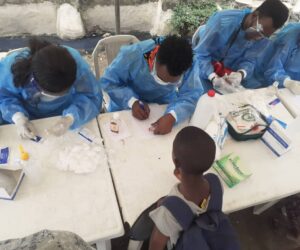

The Gates Foundation says countries could prevent up to 90 per cent of child deaths by investing just $100 per person each year to strengthen primary health care (PHC) systems.
This is according to the foundation’s 2025 Goalkeepers Report, titled “We Can’t Stop at Almost,” which highlights how affordable, front-line health services can save millions of lives at a time of shrinking budgets and rising health demands.


The report noted that primary health care is the “quiet workhorse of every health system; the part that doesn’t make headlines but makes everything else possible.
“It helps mothers deliver their babies safely. It catches pneumonia before it turns fatal. It vaccinates children before outbreaks happen. It spots new threats before they become full-blown emergencies,” it said.
The report also features essays from local leaders, health workers, and researchers in Africa and Asia.
Progress recorded
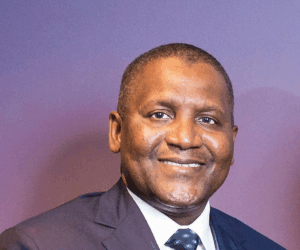
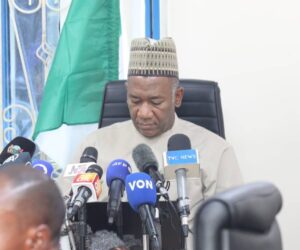
Speaking on pr8ogress through partnership cited in the report, the Governor of Gombe State, Muhammad Yahaya, narrated how identifying gaps in PHC helped transform the state’s health system.


Mr Yahaya noted that Gombe now has at least one renovated or newly built primary health centre across all 114 LGAs, delivering 24/7 services.
He also added that more than 300,000 people are enrolled in the state’s health insurance scheme, and that they have constructed three general hospitals and rebuilt their specialist hospital.
“None of this was done with donor funding but with the budget we already had. We are not alone in this work. The path forward is one we walk together: communities, governments, and global partners, side by side. That’s how real change is built, and how it lasts.”
Next-generation vaccines
Beyond basic health services, the report outlines the potential of a new wave of innovations.
Modelling by the foundation suggests that next-generation pneumonia and Respiratory Syncytial Virus (RSV) vaccines could save 3.4 million children globally by 2045.
The report noted that beyond malaria, Pneumococcal conjugate vaccines (PCV), which protect against pneumonia, the leading infectious killer of children under five, are now being administered in fewer doses.
In March, the World Health Organisation (WHO) updated its guidance, recommending a two-dose schedule instead of the traditional three. The report states that the guidelines promise strong protection while cutting costs, easing logistics, and reducing strain on health systems.
It added that if eligible countries adopt the reduced schedule, they could save around $2 billion by 2050. The savings can then be reinvested to expand vaccine coverage or introduce new vaccines against other childhood killers.
The report also notes that next-generation improved malaria tools, including more effective prevention technologies, treatments, and diagnostics, could save another 5.7 million children globally by 2045.
According to the modelling, the impact of these innovations will depend on whether health systems are strong enough to reach the children who need them.
Critical moment for child survival
The report comes as global health financing continues to decline, with several countries facing tighter budgets, donor cuts, and weakened health services.
The report says a shift toward investments that deliver the highest value, such as primary care and proven child survival tools, could help countries ‘do more with less.’
Globally, the decline in under‑five mortality has slowed since 2015. According to UNICEF data, the annual reduction rate dropped from about 3.7 per cent (in 2000–2015) to roughly 2.2 per cent in 2015–2023.
In the national context, the under-five mortality rate has fallen from 201 deaths per 1,000 live births in 2000 to 110 per 1,000 in 2023. But even with that improvement, the country still loses an estimated 850,000 newborns and under-five children every year to preventable causes.
The federal government now acknowledges that the country remains off track to meet global child survival goals by 2030, revealing the urgent need for stronger primary health care and immunisation services.
Implications for Nigeria, other African countries
Nigeria carries one of the highest burdens of child mortality in the world. Public health experts say the core message of the report speaks directly to the country.
With many Nigerian families relying on poorly equipped PHCs and with shortages of skilled health workers, the findings present both an opportunity and a challenge.
According to the report, relatively modest per-person investments in PHC can transform outcomes, strengthening routine immunisation, improving maternal and newborn care, expanding community health services, and ensuring timely treatment for childhood illnesses.
The report highlights that the new malaria tools and next-generation vaccines could save millions of lives by the 2040s. It stresses that innovations alone are not enough but must be delivered effectively through strong primary health systems and trusted partnerships with local governments and communities.
Need for commitment
Bill Gates, chair of the Gates Foundation, noted in the report that even in a time of tight budgets, everyone can still make a big difference.
“This isn’t just about money. It’s about priorities, commitment, and choices.”
Mr Gates called for strong PHC systems and early preparation for future innovations.
“Then, we need to prioritise innovations that stretch each and every dollar. I’m talking about solutions like vaccines that require fewer doses to give the same—or better—protection as old ones, or smart new uses of data that help ensure the most effective interventions against diseases like malaria are deployed in the exact places that need them the most.”