
By Tahnteh Azal
As the world marked World AIDS Day 2025 under the theme “Overcoming Disruption, Transforming the AIDS Response,” attention was drawn not only to policies, campaigns, and statistics but to the human stories behind the numbers. HIV shapes countless lives in ways no one chooses. Some are born with the virus, others acquire it through circumstances beyond their control, and many continue to face stigma, discrimination, and barriers to care.
This year’s theme calls for more than strengthening health systems—it challenges society to confront the attitudes that isolate people living with HIV. Overcoming disruption requires recognizing their humanity. Transforming the AIDS response means creating a world where no one is shamed, denied opportunity, or left behind because of their status.
SPONSOR AD
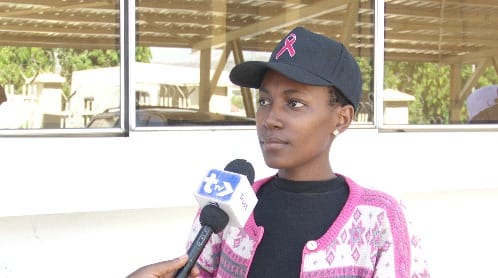
Gogwim Seyilnen knows this reality intimately. At just 20, she speaks with a calm confidence that belies the challenges she has faced. Born premature and placed in special care, she was dependent on a medical system designed to protect her. Yet, in that fragile start, she contracted HIV—long before she spoke her first words or understood what survival meant.
For many, the memory of an HIV diagnosis comes in adulthood. For Gogwim, it was inherited—one she did not choose, did not understand for years, and now carries with courage that defies the shame society tries to place on her shoulders. “My parents and siblings are nonreactive. I was born premature and was infected during my hospital care,” she said.
Growing up, Gogwim noticed whispers, sideways glances, and the way people’s voices lowered when HIV was mentioned. Though the judgment was not openly directed at her, she felt it—the harshness, the myths, the ignorance, the cruelty often wrapped in silence.
When she learnt her status, the world became a different place. She confronted firsthand the stigma people living with HIV face long before anyone considers their story. Yet, rather than shrink under the weight, she chose to rise.
“No matter what you say about stigma and discrimination, there are people who will always stigmatize. Just be the bold one, knowing that no matter what people say, it will not get to you,” she said.
Behind that boldness lies another truth she wants the world to see: “HIV is not visible, and many people are battling silently.”
Her words highlight a reality often ignored: a silent community living with an invisible condition in a world quick to judge. Many wake each day, take medication, attend school or work, and smile through the fear that someone might discover their private struggle. Some conceal their status from friends and family; others avoid treatment due to fear of shame.
Gogwim refuses to be silent. She has chosen visibility—not of the virus, but of her voice. Her story is a statement: silence fuels stigma, and stigma keeps far too many people in the shadows.
Her life is defined not by HIV but by survival, resilience, and the quiet power of a young woman determined to rewrite the narrative society imposes on people like her. She dreams of a world where children born with HIV never have to hide, where teenagers don’t battle fear alone, and where adults are not punished with isolation for conditions they manage courageously.
Gogwim’s journey is a reminder that behind every statistic is a human being with a story, a heart, and hope. HIV is not a moral verdict—it is a medical condition. And most importantly, her story calls for seeing people fully, without the filter of fear or misinformation.
At 20, she embodies the quiet bravery of a young woman choosing to tell her truth in a world that often prefers silence. Her story is not one of tragedy, but of triumph—giving courage to all who continue to fight their battles unseen.
Hospital-acquired HIV in infants: Rare but devastating
While congenital HIV remains the most common cause of infection in infants, Dr. Asmau Ribadu, gynecologist at FMC Abuja, explains that hospital-acquired HIV—though rare—can have devastating consequences. “Most babies who contract HIV do so from their mothers—during pregnancy, birth, or breastfeeding, especially when the mother’s viral load is high,” she said. With proper antenatal care and timely treatment, these risks are largely preventable.
Less common, but more alarming, is infection acquired during hospital care. Preterm infants, requiring multiple transfusions or invasive procedures, are particularly vulnerable if blood screening fails or sterile practices lapse.
Contaminated equipment, improper handling of donor breast milk, or lapses in infection control can create opportunities for transmission.
“Although today’s safety systems make such cases exceedingly rare, gaps in screening, hygiene, or protocol adherence can still leave infants exposed,” Dr. Ribadu warned. Rigorous infection prevention remains essential to safeguard these vulnerable patients and maintain public trust in healthcare facilities.
The emotional toll of HIV
Caregivers and community health workers witness the emotional impact of HIV—not only on those diagnosed but also on individuals who come forward for testing. Fear, sadness, and anxiety are common, and for those living with HIV, the psychological burden can be profound. Trauma, persistent anxiety, and depression are often compounded by stigma.
Misconceptions about transmission—particularly the assumption that it occurs only through sexual contact—can leave those infected through other means questioning themselves: “How did this happen—and will anyone believe me?” For unmarried individuals, the stigma is often harsher, with fears of being labeled immoral or promiscuous. Such assumptions deepen guilt and shame, reflecting the broader societal impact of prejudice, not just the medical reality.
Nigeria’s progress and Africa’s emerging prevention tools
Nigeria continues to strengthen its fight against HIV, while neighboring countries embrace groundbreaking prevention methods.
Dr. Temitope Ilori, Director-General of NACA, noted that national HIV prevalence has dropped to 1.3%, with approximately 1.9 million Nigerians living with the virus. The nation is nearing global 95–95–95 targets, thanks to sustained investments in testing, treatment, and community-led care. New infections have declined sharply, and protection of mothers and infants has improved, with over five million pregnant women tested in 2024 and thousands of HIV-exposed infants receiving early diagnosis.
Innovation has been central. Nigeria is adopting simpler treatment regimens, long-acting therapies, and other emerging tools. Strong political will—including a $200 million domestic investment in HIV, TB, and malaria programs—has ensured continuity and sustainability. The First Lady’s Free to Shine campaign continues efforts to eliminate HIV, syphilis, and hepatitis B among women and newborns.
Meanwhile, South Africa, Eswatini, and Zambia have begun rolling out lenacapavir, a twice-yearly HIV-prevention injection, marking Africa’s first public use of this tool. The drug reduces HIV transmission risk by over 99.9%, making it akin to a functional vaccine. “These marks one of the first real-world uses of the six-monthly injectable in low- and middle-income countries,” Unitaid noted.
Dr. Ilori emphasized that despite ongoing challenges, Nigeria’s commitment remains unwavering. With governments, communities, and global partners working together, the nation—and Africa as a whole—is steadily advancing toward ending HIV as a public health threat and achieving an AIDS-free generation.
As a Nigerian living here or in the diaspora, DO YOU HAVE A PLAN B? Just in case anything goes wrong, is there a side business you can fall back on? We show you step by step how you too can start earning US Dollars consistently. Nigerians can now make as much as $20,000 to $35,000 with premium domains. Ideal for business owners, entrepreneurs, and workers.
Click here to find out how it works