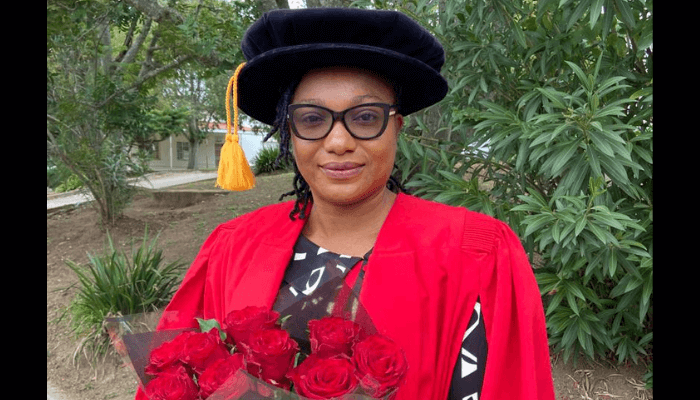
Rebecca Oke is making significant impact in the Nigeria’s healthcare sector, particularly in maternal and child health. Her dedication to improving health outcomes for mothers and children has gained global recognition for her research and digital solutions transforming breastfeeding and maternal care in the country.
In a recent briefing with journalists, she harped that improving maternal and child health in Nigeria requires evidence-based interventions, stronger community support, and policies promoting exclusive breastfeeding.
“Our mothers and infants deserve practical, scalable solutions that bridge knowledge gaps, strengthen family support, and empower healthcare providers,” she noted.
Oke’s pioneering research in Active Management of the Third Stage of Labour has informed national reforms in nursing education and maternal health practice.
Her landmark study in Osogbo, conducted with the University of Ghana, exposed critical gaps in midwives’ adherence to postpartum hemorrhage prevention protocols.
She emphasised in her statement that ”continuous professional training and strict policy enforcement are essential to closing these gaps and saving lives.”
Her most transformative contribution is the Breastfeeding Support App (BFSAPP) and the Ready for Breastfeeding Programmes, a blended digital and community-based intervention designed to improve exclusive breastfeeding rates in Nigeria.
Built on behavioral science and community engagement, BFSAPP offers mothers real-time lactation support, peer networks, family-inclusive tools such as the Fathers’ Corner, and continuous education through mobile technology.
Read also: Pulmonary embolism drives new campaign to cut maternal deaths in Nigeria
Findings from her community-based randomised controlled trial show the intervention’s impact: 98.6 percent of mothers in the intervention group expressed a positive attitude toward exclusive breastfeeding compared with 77.5 percent in the control group; 78.6 percent recorded high breastfeeding self-efficacy against 42.3 percent in the control; and 82.9 percent sustained exclusive breastfeeding without formula supplementation compared with 49.3 percent in the control group.
“These results reinforce the importance of accessible education and support systems in improving breastfeeding outcomes,” she said.
With Nigeria’s exclusive breastfeeding rate still below 30 percent, Oke stressed the need for stronger policy support, including six-month maternity leave, workplace crèches, and improved antenatal breastfeeding education.
She also called for the Ready for Breastfeeding Programmes to be considered as a national framework for maternal and infant nutrition.
She further urged government, healthcare providers, and NGOs to strengthen community-based lactation education and invest in long-term, family-inclusive support structures.
“Collaboration across sectors is essential to reduce maternal and infant mortality and ensure healthier outcomes for our children,” she added in her statement.
A registered nurse, midwife, public health nurse, and midwife educator, Oke’s academic journey spans the University of Fort Hare in South Africa where she obtained PhD in maternal and Child Health Nursing, the University of Ghana for her MSc Nursing Science and Ladoke Akintola University of Technology for her Bachelors of Nursing Science.
Her work continues to inspire nurses, midwives, researchers, and policymakers, demonstrating that homegrown Nigerian innovations can contribute meaningfully to global maternal and child health.