By Angela Atabo
Two groups of persons with disabilities on Monday renewed calls for stronger government action and better coordination to support underrepresented disability clusters.
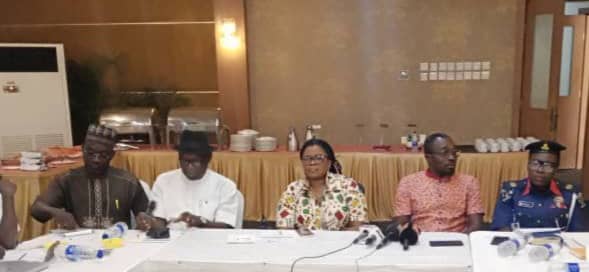
Inclusive Friends Association (IFA) and National Association of Persons with Disabilities (JONAPWD) made the call during a Political Economy and Gender Analysis of Underrepresented Groups in Abuja.
The Executive Director of IFA, Grace Jerry, said the project, funded by the Finnish Government and supported by CBM Global Disability Inclusion, focused on three disability clusters considered the most marginalised within the movement.
According to her, these are: Persons who are deaf, Persons with psychosocial disabilities and persons with intellectual disabilities.
Jerry said the meeting was to also look at the gaps in terms of collaboration with ministries, departments and agencies and other organisations of persons with disabilities.
“When I say underrepresented groups within the disability communities, I am talking about the deaf community, the cluster of persons with psychosocial disabilities and the cluster of people with intellectual disabilities.
“You will agree with me that this cluster of persons with disabilities have not really gained the kind of visibility and attention that we are pushing for within the disability movement.
“That is what this project seeks to attempt, and like I mentioned, the research identified the gaps, so we are calling for collaboration on how MDAs can work closely and come up with tailored interventions that would serve this community.”
Jerry added that the goal is to encourage government policies that address the specific needs of these clusters, emphasising implementable solutions rather than token gestures.
She expressed optimism that the commitments and the actions from the meeting would guide those MDAs and organisations of persons with disabilities to carry the marginalised group and the underrepresented group closely in the effort of leaving no one behind.
The National President, JONAPWD, Abdullah Usman, said the research reinforced long-standing concerns about unequal visibility and limited support for the three clusters.
Usman, who was represented by the North Central Zonal Coordinator of JONAPWD, Mike Gideon, said the groups were the most vulnerable, yet received the least attention.
“So, we as JONAPWD are actually partnering with IFA, an NGO and OPD that has been credible and has been up and down in seeing that persons with disabilities generally are not forgotten.
“This project has come to give attention to them in the area of health, education and observance of their human rights, because the mistake some people make is to see disability rights as a charity, forgetting that the constitution stated some of these fundamental human rights, which also affects persons with disabilities.”
Usman said that the JONAPWD threw its weight behind the project because of its benefits to the disability cluster and thanked CBM Global for supporting the project.
“Validation alone is not enough.We are expecting clear and full implementation of whatever the document contains, because that is where the real impact lies.”
Also speaking, Mr Cedric Owuru, Programme Officer, CBM Global Disability Inclusion, said the findings aligned with long-standing gaps affecting the disability clusters, adding that their advocacy priorities were already supported by law.
According to Owuru, the core mission of CBM as an organisation is ending the vicious circle of poverty, inequality, and disability globally.
He identified the marginalisation and exclusion as the major drivers of poverty and disability, adding that although every group of disability has their peculiar needs, but even among the most marginalised, there were other groups more marginalised.
‘This particular event is focused on submitting advocacy priorities that came out of a detailed research work, which is the political, economic, gender assessment that was conducted.’
Owuru said key demands included the enforcement of the Mental Health Act for persons with psychosocial disabilities and the full implementation of inclusive education policies for persons with intellectual disabilities.
He said another demand was National recognition of sign language to support the deaf community.
According to him, these requests are supported by the National Disability Act, the African Disability Protocol, and the United Nations Convention on the Rights of Persons with Disabilities.
“Our role is to facilitate, but OPDs lead the advocacy. Coordination among MDAs, the National Commission for Persons with Disabilities and OPDs is essential for meaningful change,” Owuru said.
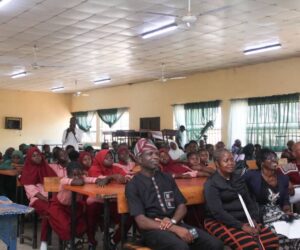
The validation meeting brought MDAs, organisations of persons with disabilities, researchers and development partners together to review the findings and agree on policy and advocacy priorities.(NAN)
Edited by Deji Abdulwahab