
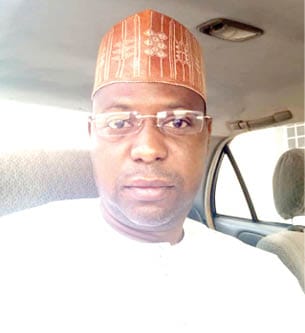
An educationist, Dr Aminu Makama of Abubakar Tafawa Balewa University, Bauchi, has urged governments at all levels to move beyond promises and demonstrate visible measures to protect children in conflict‑prone states. In an interview, he stressed that parents in Kebbi and other vulnerable regions will only regain confidence when they see practical steps such as joint security patrols, improved surveillance, direct engagement with communities, and strengthened school‑based management committees.
Parents conflict-prone states are increasingly fearful of sending their children to school. What immediate steps can be taken to restore confidence?
SPONSOR AD
Well, I think the first thing the government must do is to show action because parents and communities can only gain confidence when they see practical steps and not mere promises. Most of the time the government promises that they are on top of the situation, promising parents that their children will come back. These are just promises that cannot boost parents’ confidence. Parents must see real actions, visible ones.
Quick measures such as deploying joint security patrols around vulnerable schools and also increasing surveillance in communities, improving communication between security agencies and school authorities can send strong signals that children are protected and can be protected. Secondly, I think state governments need to engage directly with parents through town hall meetings, village sensitisation and clear updates on security improvements. This will help reduce fear and rumours because when parents know what is being done, they are more willing to trust the system.
So good communication from time to time or even most frequent must be carried out by the state government along with local governments between these communities or to the communities. Another important step, I think, is strengthening school-based management committees because these committees will allow community leaders, elders, traditional rulers, women groups and parents to play a role in monitoring school environments because their involvement can reassure parents that the community itself is watching over their children.
Finally, I think there is a need for quick support for affected schools, especially through counselling services, temporary relocation if necessary to safer facilities or safer areas and emergency grants that can help in improving basic security upgrades. This will show seriousness and empathy because when people see that we are responding promptly, their confidence grows.
Beyond fencing and security personnel, what practical measures could make schools less attractive targets for abductors?
I think there are several efforts and measures that can be taken, especially ones that can be low cost but are also very effective… Number one, I think the government needs to provide community vigilance as well as earning early warning systems, involvement of local hunters, vigilante groups and community watch groups can be organised to monitor unusual movements around schools, especially at night and during early morning hours. School design should be discreet in a way that the building and location of the schools will not attract the attention of criminals. Also, location of the schools should be close to where communities are located so that children will not have to travel far. Where necessary, community mobilization program can be enhanced to ensure that children in crisis prone communities are escorted to schools to protect them from being intercepted by the armed groups. While, those in boarding should be located close to the town and hostels should be built in a way that children can be protected and emergency exits provided for their safe escape to safety.
Governments and communities can work together to provide specific points or community working groups, which can reduce the chances of children being intercepted on the way to school. There should be a safe school routing where children as well as leaders of the community or members of the community work in groups.
Schools should also adopt strict entry and exit procedures, providing a simple register for visitors. And then during school hours there should be a locked gate, and also access points can be provided, which will make it harder for people to walk in unnoticed.
And then there should be efforts by governments, especially in places that are regarded as high-risk areas, to build schools that should avoid attracting the miscreants’’ attention. With a simple perimeter, even lighting and strategic landscaping can make it hard for abductors to even study the school layout. I think these measures can reduce the attractiveness of schools so that they can stop becoming sub-targets for these abductors.
How can teachers and school administrators be trained or empowered to respond effectively during security breaches?
I think training teachers is just as important as deploying security forces because in many attacks the first respondents are the school staff themselves. And some of the ways I think these teachers and school administrators can be trained are through emergency response and evacuation drills. Teachers should know how to quickly move children to safe locations.
And there should be basic security awareness training so that recognising training or recognising suspicious individuals, reporting early warning signs and understanding the safest escape routes. A well-trained teacher can prevent a crisis from becoming a tragedy if he is well-trained on the security awareness and how to report early warnings and how to report suspicious movements around the school.
And then they should also be trained on communication because schools and teachers must be taught how to use emergency communication channels, especially with local security outposts. Principals, for example, and other administrators should have direct contact with the nearest police base, vigilante group or military checkpoint… they can be able to communicate in emergencies with these security outposts.
Teachers should also be trained on how to keep children calm, how to manage fear and how to guide them during confusion because when a teacher is calm, he can also create an environment or atmosphere that may make the student calm.
And then there should be a need to empower these schools through provisional resources that can help them in communicating in emergencies. Governments should provide items like withers, phase 8 kits, flashlights, as well as solar chargers. Empowerment is not only training, it’s also giving staff the tools to act so that they can be able to use them in order to provide all the necessary phase aid before security agencies can be drafted to take control of the situation.
In your view, what partnerships with civil society, faith-based groups, or international organizations could strengthen the Safe School Initiative?
I think there is a serious need for strong partnership if we want to make the Safe School Initiative sustainable.
Civil society organisations can help with this teacher training that I mentioned earlier, community sensitisation, and also monitoring the implementation of safety guidelines because many civil society organisations already work on child protection and so they can bring expertise directly to schools.
Also, faith-based organisations, religious groups, religious institutions, we know that they have wide influence, especially in northern Nigeria, they can help in educating parents, reducing fear, promoting dialogue, and organizing volunteer community watch groups. They can be used as volunteer community watch groups in most of the schools within our communities. And we know in churches and mosques, there are many ways in which they can come together to provide temporary learning spaces, especially when schools are threatened in communities.
Traditional institutions and traditional rulers can mobilise community policy instructors.. It helps in also strengthening social cohesion. Involvement of traditional institutions in community policy instructors will give the initiative local acceptance.
International organisations can also help a lot. We have UNICEF, we have Save the Children, and other global partners which used to support with funding and technical assistance as well as advanced training. So with this kind of support and guidance, we can help in introducing technology-based safety tools as well as provide international-based practice on school safety.
The private sector can also come in. We have telecommunication companies, for example, which can help in providing communication tools as well as even local businesses can contribute to community watch initiatives. when we bring all these groups together, the safe-school initiative becomes not just a government project, but a community-driven network. School safety can only come from a shared responsibility between governments, communities, as well as other partners in development.
As a Nigerian living here or in the diaspora, DO YOU HAVE A PLAN B? Just in case anything goes wrong, is there a side business you can fall back on? We show you step by step how you too can start earning US Dollars consistently. Nigerians can now make as much as $20,000 to $35,000 with premium domains. Ideal for business owners, entrepreneurs, and workers.
Click here to find out how it works