When Jigawa State was carved out in 1991, it emerged as a largely rural expanse, quiet, underserved, and structurally fragile. With only a handful of semi-urban local governments, the state inherited decades of infrastructural neglect. Transforming such a landscape is not a casual political exercise; it requires vision, discipline, and a deep understanding of the needs of rural communities.
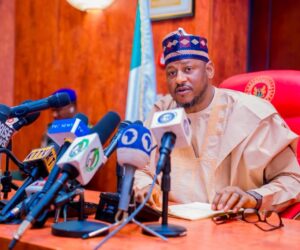
For years, rural infrastructure has remained the missing link in Jigawa’s pursuit of sustainable development. Roads, water systems, healthcare, and education are not luxuries; they are the arteries through which a society grows. Without them, rural economies remain stagnant, social mobility stalls, and communities continue to live on the margins of national progress. It is within this context that Governor Umar Namadi (Danmodi) assumed office, and it is against this background that his administration’s performance must be evaluated.


The administration’s most visible achievement is the unprecedented expansion of Jigawa’s rural road network. In just two years, the government has constructed 74 road projects totaling more than 976 kilometers—an accomplishment unmatched in the state’s history. In rural economies, roads are transformative. They determine whether farmers can get produce to markets, whether pregnant women reach clinics on time, and whether young people can access education and employment beyond their villages.
Some notable projects include the Mallam Madori–Gari Uku–Kanya Babba–Malorin Kasim–Abori–Sumburtu–Diginsa route (34.5 km), Arbus–Girbobo–Garin Bukar (33.5 km), Dundubus–Yanjaji–Wangara (16.65 km), the Jahun–Takalafiya–Zareku–Kafin Hausa road with a spur to Dangyatum (38 km), Kukayasku–Malamaba–Katuka–Garin Kwalandi (34.5 km), and the Farun Daba–Maitsani–Baauzini–Kafin Chiroma–Gallu Babba–Gallu Karama–Karkarna bypass (13.2 km). Each of these projects unlocks economic potential and connects previously isolated communities to broader opportunities.
Beyond road construction, the administration has taken notable steps in water provision and sanitation—areas that are central to rural transformation. Through significant investment in water infrastructure, many towns and villages now enjoy reliable access to potable water. Several local government areas have also attained open-defecation-free status, placing Jigawa among the states leading in public health and sanitation reforms. Though often overlooked, such improvements drastically reduce disease burdens and enhance quality of life.
Education and healthcare, two pillars of human development, have also received meaningful attention. In the education sector, teacher quality, long identified as a major challenge, has improved through targeted recruitment, training, and support. Schools across the state are beginning to reflect an environment more conducive to learning. The healthcare system has similarly been remodeled. Upgraded facilities, better equipment, and strengthened staffing have positioned Jigawa to better address both routine and emerging health needs.


Of course, rural transformation is not the work of two years; it is a long-term, multi-administration commitment. Yet the progress recorded so far signals a shift in direction. Jigawa today is not the Jigawa of yesterday. Danmodi’s focus on roads, water, education, and healthcare shows a clear recognition that development begins with the basics.
The critical question that remains is whether these gains will be sustained. Will maintenance keep pace with expansion? Will communities be empowered to use and protect these investments? Will future administrations maintain the momentum?
What is certain for now is that Jigawa’s rural landscape is being reshaped—quietly but fundamentally—one road, one borehole, and one classroom at a time.