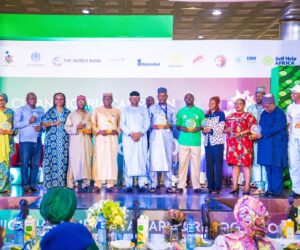


The National Council on Climate Change (NCCC) has described the establishment of the climate-smart electric vehicle (EV) recharge hub as a timely and strategic step toward implementing Nigeria’s commitments at the 2025 United Nations Climate Change Conference (COP-30).
The Director-General of the NCCC, Mrs Omotenioye Majekodunmi, said the initiative reflected the kind of private-sector leadership needed to accelerate Nigeria’s green transition.
She said this recharge hub accelerates Nigeria’s transition to low-emissions transport systems and supports the goals of the Global Transport Effort, a critical push to reduce energy demand and integrate renewable energy into mobility.
“It reinforces President Bola Tinubu’s Renewed Hope Agenda by driving green industrialisation, creating the ‘Green Jobs’ necessary for a just transition, and building resilience into our national infrastructure,” she said.
Majekodunmi reiterated NCCC’s commitment towards sustained collaboration with BYD Motors Nigeria to advance Nigeria’s position as a leader in Africa’s low-carbon, resilient mobility future.
On his part, Chief Moses Ayom, Chief Executive Officer and Chairman of Haitong International Nigeria Ltd, said a two-day post-COP-30 follow up action event was organised by BYD Nigeria and Haitong Ltd in partnership with Grassroots Center for Rights and Civic Orientation (GRACO).
Ayom, who is also the Vice Chairman of BYD Motor Nigeria limited, said as concerned and socially responsible organisations, committed to environmental sustainability, BYD, Haitong and GRACO felt compelled to take practical action after the latest global climate discussions.
“Our practical action takes the form of the Climate Smart Electric Vehicle Recharge Hub, which we launched today. For us at BYD, Haitong and GRACO, practical action speaks louder than words.
“We are resolute about investing in the structures and infrastructure, which will transform mobility and empower our people,” he said.
Ayom explained that with the increasingly important role of electric vehicles in the transportation sector all over the world, Nigeria should not be left behind.
He noted that the climate smart electric vehicle recharge hub would serve as an important support system for government agencies, individuals, and corporate bodies with electric vehicles in their fleets.
“This is so practical that if you visit the hub with your EV right now, in another 40 minutes, your electric car will be fully charged while you are having a cup of coffee. You can drive around our beautiful city of Abuja without the problem of polluting it with fossil fuels,” he said.
Ayom said the hub would be an avenue for the training on EV maintenance skills to feed the automobile market.
According to him, for the organisation, one of COP-30’s most consequential outcomes, is the creation of a just transition mechanism in line with the Sustainable Development Goals (SDGs), focusing on the idea that climate action should not leave anyone behind.
He said the post-COP 30 action BYD, Haitong and GRACO have taken by launching this climate smart EV recharge Hub would inspire further actions to make Nigerian cities climate smart and resilient.
Also speaking, the Chief Route Commander, Federal Road Safety Corps, Christopher Eya, commended the initiative adding that it would reduce automobile emissions and enhance green environmental for all.