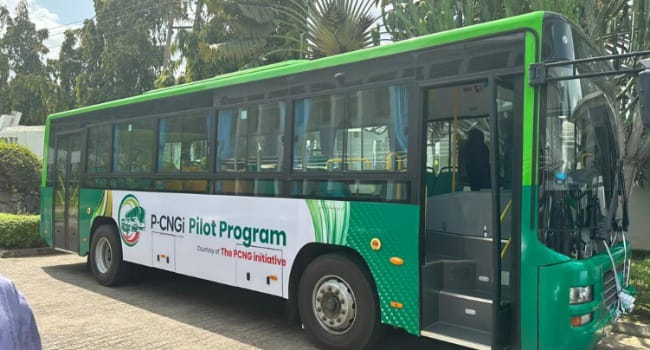
Kaduna State’s free CNG bus service has conveyed more than 1.4 million commuters across four major routes between July and November 2025, saving residents over ₦1.39 billion out of pocket expenses in transport fares.
According to the State’s Commissioner for Information, Malam Ahmed Maiyaki, during a media engagement on Thursday, the assessment was conducted to determine the real impact of the free-ride policy introduced by Governor Uba Sani, stressing that the numbers showed a strong uptake that has far exceeded initial projections.
Maiyaki said the scheme, which started as a targeted intervention for state civil servants and students, was later expanded to accommodate all commuters moving along its designated routes. “From July 7 to the end of November, the buses have moved an impressive number of our people at zero cost,” he stated.
A breakdown of the assessment showed that in Q3 2025, covering July, August and September, the buses lifted 683,650 passengers, representing the first wave of commuter response to the state’s transport subsidy. The estimated fare value of those trips stood at ₦738.8 million, amounting to direct savings for citizens.
Ridership surged even higher in the following two months. Between October and November, the service recorded 626,710 passengers, equivalent to an avoided fare cost of ₦667.2 million. October alone accounted for 339,530 passengers due to the reopening of schools and increasing intra-city movements.
“In total, Kaduna residents who rely on these four routes have saved ₦1.39 billion in just five months,” Maiyaki said, adding that the figures reaffirmed the governor’s commitment to easing the economic pressure on households.
He highlighted that the buses operate across 200 bus stops in Kaduna, Zaria and Kafanchan, with 30 CNG buses running daily from 7:00am to 6:00pm. The routes include Tudun Wada–Kawo–Rigachikun, Rigachikun–Yakowa–Maraban Rido, Rigachikun–Kasuwa–Maraban Rido, and Rigasa–NEPA Roundabout.
According to the Commissioner, the average daily passenger ride stands at 18,426 commuters, translating to about 294,824 passengers monthly. He added that each bus runs eight trips daily, reflecting both high demand and operational consistency.
Maiyaki said the economic benefits go beyond free rides. He argued that the scheme has stimulated microeconomic activity, especially for small roadside traders previously displaced by past urban policies. “Kaduna’s economy suffered when thousands of small operators were pushed out. This intervention is gradually restoring mobility and livelihoods,” he explained.
He also emphasised that Governor Uba Sani introduced the policy out of compassion, mindful of the harsh national economic climate. “His Excellency is concerned about the well-being of everyone—civil servants, students, market women and ordinary citizens who move daily to survive,” he told reporters.
Despite offering free rides, Maiyaki noted that the system has shown strong financial viability, with projections indicating that the scheme could generate surplus revenue if fares were reintroduced in the future. He said the government will continue to evaluate sustainability options while keeping citizens’ welfare at the centre.
The commissioner assured that the administration remains committed to maintaining safe, clean and reliable public transportation. He said updated ridership figures beyond November will be released in due course, as the buses continued to witness heavy patronage.