
The high rate of sudden deaths arising from heart attacks, high/low BP, among others, is raising alarms. Could it be as a result of negligence or reckless lifestyles? PAUL OKAH examines the risks, frequent cases and experts’ advice.
“Something must kill a man or a man must die of something” is a common social parlance summarising the end of one’s life. On this account, eyebrows are not raised if a man dies at a ripe old age; however, questions are readily asked if a man dies at a relatively young age, especially if the death is a sudden one.
Indeed, as a result of reckless and sedentary lifestyles, many Nigerians hardly exercise, especially after eating junks, thereby succumbing to sudden but avoidable deaths from cardiac arrests, heart attacks, high/low BP, diabetes, sugar levels, etc, sometimes while asleep.
Just last week, a popular Nollywood actor and social media influencer with millions of followers, Odira Nwobu, died in his sleep in South Africa as a result of cardiac arrest attributed to neglected high blood pressure. However, he is not the only case as many Nigerians have been dying from BP related ailments, often out of ignorance.
I almost died from high BP – Patient
Speaking with our reporter, a civil servant in Abuja, Mr. Hyacinth Orji, said he almost died from high BP, but was held at the hospital as it was an emergency that needed a critical medical examination.
“My BP was 240/150, and I was driving without knowing. I was lucky. Our family doctor didn’t even believe my BP was up to that when he asked me to visit another hospital, which I did, and it was the same result.
“They told me they won’t let me go, that it’s an emergency. They admitted me. From time to time, it got to 200/117 or 203/120, but I thank God as of today, it’s 144 over 87. Normal BP for our age should be 120/80 or 110/70.
“One thing about this BP thing is that many people don’t really understand it, especially those who haven’t experienced it. I mean how do you tell that someone who’s still very much active is actually a step away from death?
People may never understand, except those that have experienced it or have an understanding of how high BP works. High BP isn’t called the silent killer for nothing. I think people should get more enlightened on this medical condition early enough,” he said.
Also speaking with our reporter, a secondary school teacher, Mrs. Helen Adeyemo, said she became a BP patient as a result of pregnancy, advising Nigerians to check their BP regularly.
She said: “I’ve been a high BP patient (pregnancy induced) for the past 5 years. I don’t skip my medications and I try to rest. There was a time my BP got to 220/160 because I wasn’t getting enough sleep.
“I had to start seeing a cardiologist who changed my drugs like 2 times before we got the perfect one that works for me. My BP is now stable at 120/78 or even lower, but I still don’t overstretch myself to do things.
“If you know you have BP, just try and see a cardiologist and get the appropriate medications that work for you. Some people, especially men, are very carefree and careless about their health. I have seen a young guy, known to be hypertensive, but wasn’t taking his medication.
“On presenting himself at the hospital, it was high and the doctor was scolding him, because it can predispose him to stroke at that young age, but he wasn’t taking the medicine as prescribed.
“So, I want to encourage everyone, whether young or old, from age 20 upwards, to check their blood pressure, at least, twice a month for non-hypertensive, thrice every week for hypertensive patients. It’s really a common illness in our society now, irrespective of age.”
Over 40 % of Nigerian adults is hypertensive – Doctor
In an interview with our reporter, the CEO, Medxlearn Ltd, Timilehin Seyi Ogunsakin, said millions of Nigerians are walking around seemingly healthy, but are at serious risk of irreversible heart disease, stroke or sudden death, saying over 40 per cent of Nigerian adults is hypertensive.
He said: “In Nigeria, a growing, but little publicised health crisis is claiming lives silently, abruptly, often without warning. Many Nigerians push blood pressure checks to the back burner, unaware that hidden within their arteries is a ticking time bomb.
“Recent data show that in 2021 alone, nearly 191,000 Nigerians died from cardiovascular disease (CVD). High blood pressure (hypertension), already widespread, is at the center of this crisis. According to national cardiovascular experts, as many as 40% of Nigerian adults is hypertensive. In certain regional studies, up to half of adults were found to have high blood pressure.
“Alarmingly, many of those living with hypertension do not know they have it. A recent systematic review found only 29% is aware of their condition. Even fewer were on treatment, and only 3% had their blood pressure under control.
“These statistics are moral-and-public-health wake-up calls: millions may be walking around seemingly healthy, but are at serious risk of irreversible heart disease, stroke or sudden death.
“Hypertension is often called a silent killer because it may cause no symptoms until an acute and fatal event occurs: a heart attack, a stroke, or sudden cardiac arrest. Autopsy-based research shows this happens frequently. For example, in a study from Ile-Ife, hypertensive heart disease accounted for 83.5% of sudden cardiac deaths, and most had never been diagnosed.
“Out-of-hospital mortality is particularly concerning. Research from Lagos revealed that among brought-in-dead cases due to cardiovascular causes, nearly half (48.9%) were hypertensive heart disease and stroke accounted for another quarter.
“Because many deaths occur outside health facilities – often at home, work or on the road, they may never be properly recorded or studied. For every reported cardiovascular death, there may be many more unreported or misclassified, especially in rural or underserved areas.”
He added: “Several factors combine to raise the risk of sudden death, even among the young, including poor awareness and lack of routine BP checks. Many people never measure their blood pressure unless they feel unwell. Lifestyle changes, urbanization, sedentary jobs, unhealthy diets (high salt, processed foods), increasing obesity and low physical activity are also factors.
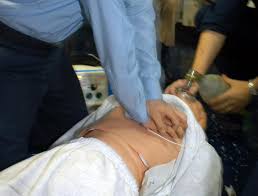
“Other factors are limited access to quality healthcare, especially preventive care – few get regular blood pressure monitoring, and even fewer receive long-term management. There is also poor emergency response infrastructure – limited availability of automated external defibrillators (AEDs), few trained first-responders or bystanders who know how to respond to a collapse, delayed access to emergency services.
“As noted by heart experts, many sudden deaths occur outside hospitals and are unwitnessed. Comorbid conditions -hypertension often coexists with other risk factors such as diabetes, dyslipidaemia, obesity and kidney disease – all escalating the risk of cardiovascular collapse.
“Therefore, know your blood pressure, get checked regularly (at least every 6 -12 months), even if you feel healthy. Adopt a heart-healthy lifestyle, eat a balanced diet (low salt, low saturated/trans fats, plenty of fruits/vegetables), engage in regular physical activity (150 minutes/week moderate exercise), avoid smoking and excessive alcohol, and manage stress.”
Expert’s warnings, admonitions
On his part, a medical doctor/consultant radiologist and author of The Boy who Built a Titanic Raft, Dr. Dave Okorafor, said 5 out of every 8 black adults are hypertensive, advising that everyone should be checking their BP and religiously complying with medications.”
He said: “Causes of sudden death in young people, especially during exercise, is rarely BP related. It’s often due to a cardiac anomaly known as hypertrophic cardiomyopathy, a genetically inherited disorder.
”Heart attack or myocardial infarction is caused by coronary artery disease caused by excessive narrowing of the heart’s own blood vessels due to accumulation of cholesterol, bad fats, etc. We call this effect on the small blood vessels of the heart atherosclerosis.
“It’s mostly in the older adults and the elderly. Excessive narrowing of the vessels means the heart muscle isn’t getting enough oxygen during increased activity. Sustained insufficiency of oxygen or total blockade of blood supply causes the heart muscles to die. This is myocardial infarction known as heart attack.
“Sustained insufficiency of oxygen or total blockade of blood supply causes the heart muscles to die. This is myocardial infarction known as a heart attack. Stroke causes sudden death too, caused by poorly managed hypertension.
“Hypertension causes atherosclerosis in the brain blood vessels leading to brain infarction due to cut-off of blood supply, which is the commonest type of stroke. This type of stroke is called ischaemic, literally meaning ‘no blood supply’.
“The second type of stroke is ‘haemorrhagic’ meaning caused by bleeding. This is the second way hypertension causes stroke and death – bursting brain blood vessels and causing bleeding within the brain. This is far more severe and rarely survives.
“The other commoner way hypertension kills is by heart failure – the heart gets tired of pumping against enormous pressure. Another is kidney failure. Sudden death in relatively young people is caused by hypertrophic cardiomyopathy and hypertension.
“5 out of every 8 black adults are hypertensive. There’s a familial disposition. So everyone should be checking their BP. When diagnosed, don’t just casually attribute it to stress or worry, it is familial. Hypertension can be mitigated by exercise and weight loss, diet modification, cessation of smoking and religious compliance with medications.”