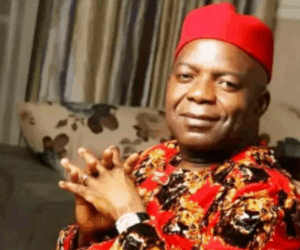
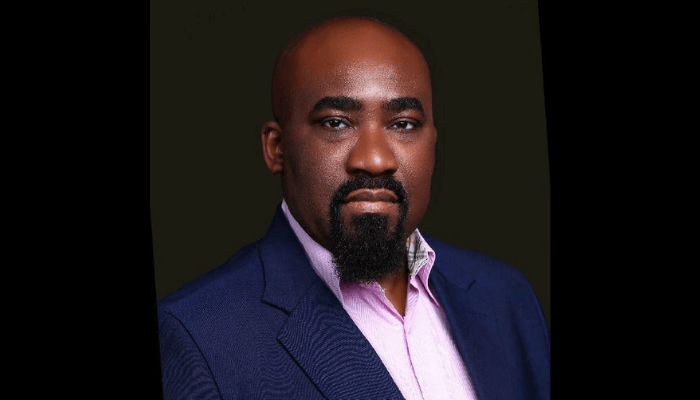
Obinna Ike is the Managing Director and CEO of NigerBev, a beverage alcohol manufacturing multinational. An experienced business executive with over 20 years in the private sector across different industries in Europe, the USA and Africa. In this interview, Ike speaks on his vision and how his background is helping him in repositioning the company as the ultimate leader in its sector. Daniel Obi brings the excerpts.
“Bringing global experience to local markets starts with deep listening and contextual understanding. While strategy and brand principles can be universal, execution must always be local.”
For a start, can you give us an insight into how you found yourself in brand management and marketing and the road that led you to this point?
My career began with a deep fascination for how strong brands shape consumer behaviour and unlock business growth. Starting in brand management allowed me to immerse myself in the fundamentals of marketing – understanding consumers, managing P&Ls, and aligning commercial and creative levers to deliver impact. Working with globally admired FMCG companies like The Goodyear Tire and Rubber Company, Diageo and LVMH provided the opportunity to learn how disciplined execution and strategic brand stewardship drive both equity and profitability across diverse markets.
Transitioning to leadership roles at LVMH and later as Vice President of eCommerce and Digital at WPP broadened my perspective on how technology, data, and creativity can converge to transform traditional business models. At LVMH, I saw firsthand how brand aspiration and storytelling create enduring value, while at WPP, I focused on helping multinational clients modernise their marketing and go-to-market systems through digital acceleration, performance marketing, and omnichannel strategies.
That journey, from managing individual brands to leading complex organisations through transformation, has grounded my philosophy of leadership around growth through clarity, innovation, and people. Each role reinforced that success in FMCG is not only about great products but about aligning the organisation behind a clear vision, empowering teams to execute with excellence, and continuously adapting to the evolving consumer and market realities.
Your career has taken you through what one can call brand development and business re-engineering and transformation. How does this run off on local initiatives and market engagement and businesses?
Bringing global experience to local markets starts with deep listening and contextual understanding. While strategy and brand principles can be universal, execution must always be local. In every market I’ve led, from Europe to the USA to Africa, I’ve learnt that success depends on respecting local consumer insights, culture, and behaviour while applying global best practices in systems, governance, and brand building. It’s about translating strategy, not transplanting it.
I typically begin by aligning teams around a shared ambition and building the right capability frameworks, which ensure local teams have the structure and autonomy to innovate within a consistent strategic direction without losing the integrity of the brand or business model.
Ultimately, the value of global experience lies in the ability to connect dots, applying global lessons in efficiency, innovation, and talent development to solve local challenges creatively. Whether it’s modernising trade execution in emerging markets or evolving brand portfolios to meet changing consumer aspirations, I focus on building scalable, repeatable playbooks that elevate local performance while positioning the business for sustainable, long-term growth.
Going by your career, what key pillars do you prioritise to ensure transformation is both sustainable and impactful?
For me, every sustainable change must start with a clear strategic north star – the shared reason why the transformation is necessary and what success will look like. Once that clarity is established, I focus on translating strategy into measurable goals, cascading accountability across teams, and embedding governance rhythms that keep everyone aligned and focused on delivery. Without alignment, transformation risks becoming a series of disconnected initiatives rather than a cohesive movement.
The second pillar is people and culture. Systems and structures matter, but people drive transformation. I invest heavily in building leadership capability, instilling performance discipline, and creating a culture of ownership and agility. This often means resetting how we work and celebrating quick wins to build belief and momentum. Sustained change requires both structural reform and emotional commitment from teams who understand their role in the bigger picture.
Finally, transformation must be data-driven and commercially grounded. I prioritise strong performance management systems, digital visibility tools, and financial discipline to ensure that progress is measured, outcomes are visible, and decisions are fact-based. Transformation succeeds when it improves business performance in measurable ways, from better efficiency and stronger brands to healthier margins and more engaged teams.
Read also: Nigerbev rebrands products, unveils new look for BEST portfolio
Coming to Nigerbev, How has the experience been, and how do these three pillars help your leadership style?
Those pillars – clarity, people, and performance – have fundamentally shaped how we are repositioning NigerBev for sustainable growth. We articulated a simple but powerful ambition, which now serves as the compass for every initiative.
On the people front, I’ve worked closely with my team to foster a performance-driven, accountable environment where managers own outcomes and teams are empowered to deliver – reorganising structures and roles, embedding new rhythms of collaboration and review, and ensuring transformation is not top-down but owned across the business. These have not been easy, but we’ve managed to get over the bumps.
Finally, we’ve grounded everything in data, performance visibility, and financial rigour. We’ve introduced clear KPIs across functions, improved planning and forecasting, and invested in systems that provide real-time visibility into operations and sales. That way, transformation is continuous, measurable, and sustainable.
Speaking about transformation, your flagship BEST Premium Spirits witnessed a new look. What drove the refresh of the BEST portfolio packaging?
Our decision to refresh the BEST Premium Spirits portfolio packaging was driven by a clear need to modernise the brand and make it more relevant to today’s consumer. While the BEST portfolio has strong heritage and equity, consumer behaviour and competitive dynamics in the category have evolved significantly. We wanted to ensure the brand reflected contemporary quality cues, stood out on the shelf, and aligned with the aspirations of our savvy consumers.
The packaging refresh also signalled the start of a broader brand transformation journey that ties innovation, communication, and execution together under a unified identity. We are reasserting BEST Premium Spirits’ leadership in mainstream spirits, improving consumer recruitment, and giving our commercial teams a renewed tool for growth. The results are already visible in improved on-shelf standout and stronger distributor confidence in the brand’s future.
How does this refresh fit within the longer-term vision for Nigerbev and the BEST Premium Spirits brand?
The refresh of the BEST Premium Spirits portfolio is a cornerstone of our long-term ambition to build enduring, consumer-loved brands that define the mainstream spirits category in West Africa. It represents our shift to brand-led growth, where equity, distinctiveness, and consumer connection drive commercial performance. By modernising the brand, BEST Premium Spirits becomes a symbol of quality, progress, and pride for our consumers.
In the broader company context, the refresh aligns with our transformation agenda. BEST Premium Spirits, as our flagship brand, sets the tone for the rest of the portfolio. The new identity gives us a consistent platform from which to innovate, extend into new formats, and activate across multiple channels with sharper consumer relevance.
Definitely, there is a possibility that consumers might be excited and want to know more. Should we expect more innovations or extensions in the pipeline?
The renewed consumer excitement around BEST Premium Spirits is something we’re deeply proud of, and our focus now is on sustaining that momentum through consistency, visibility, and deeper consumer connection. The refreshed identity has given us a strong foundation for in-market execution that ensures our consumers encounter BEST Premium Spirits wherever and however they choose to enjoy it.
While I won’t pre-empt specific initiatives, what I can say is that NigerBev is fully committed to building on this energy. The work underway across our marketing, innovation, and commercial teams reflects an exciting phase of evolution. Consumers can remain confident that the BEST Premium Spirits brand they love will continue to surprise and delight them in new ways.
As Nigerbev continues to evolve, what key milestones define the next phase of the company? What should the market expect from Nigerbev in the coming year?
The next phase for NigerBev is about deepening the transformation we’ve begun. Several key milestones will define this phase, especially strengthening our customer and consumer experiences with sharper commercial execution. Internally, we’re also investing in talent and talent for the next stage of growth.
As for what the market should expect: an ambitious NigerBev, exciting brands for our consumers, and competitive confidence in every segment we play in – a reference point in the next decade for what a modern, proudly African beverage company can achieve.