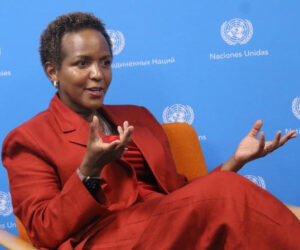
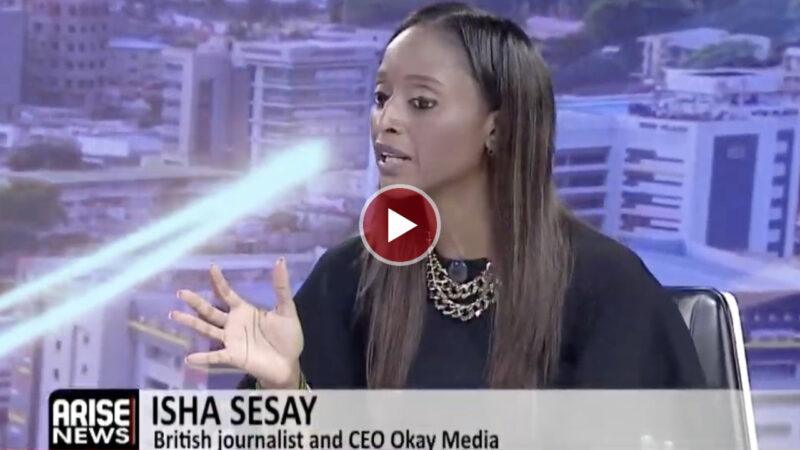

British journalist and CEO of Okay Media, Isha Sesay, has highlighted the structural challenges facing African media, warning that too many outlets on the continent are owned by oligarchs or wealthy individuals who use them for personal gain rather than public accountability, emphasising that this ownership pattern leaves a vacuum that allows Western narratives to dominate coverage of Africa.
In an interview with ARISE NEWS on Wednesday, Sesay explained that her 13-and-a-half-year experience at CNN shaped her understanding of how global media filters African stories through external perspectives, noting that while stories from the continent are reported, they are often moderated, formulated, or influenced by Western perceptions, leaving local voices marginalised.
“Because the only way that Western narrative is able to stand is because it doesn’t have a counter force. To balance it out, to challenge it. Because here on the continent, in too many countries, our media is owned by oligarchs. Or individuals who are using the media for their own personal gains. And not necessarily dedicated to using media for what it should be. Which is accountability, transparency, strengthening governance.”
She stressed that independent media is crucial for citizens to receive credible information and for governments to be held accountable. “Just informing the people, so they’re able to move in this world fully informed.”
Highlighting her work with OK Media, the parent company of OK African and OK Player, Sesay explained that her focus is on identifying and supporting African voices and platforms that reflect authentic narratives. “What I do now in that seat is look to see who are the voices on the continent that I can get behind. What are the podcasts, what are the outlets, what are the events that we can do. Which ultimately the goal is to elevate African voices.”
On the role of social media, Sesay pointed to its potential to democratize media and give emerging journalists a platform to report critical issues. “Social media is that gateway to allowing new voices, people who have the journalistic background, the training and the mission to do this work that is important to hold our governments accountable, to expose corruption, to investigate what we’re doing.”
However, she acknowledged the challenges of misinformation and the difficulty of verifying credibility without institutional support. “When you’re not sometimes backed by a large organisation, the quality of information you’re getting can be challenging and not advised. But it is a way that individuals who have that mission, who are mission-minded, can get involved in strengthening our efforts to hold our leaders accountable, can expose what we’re doing.”
She further noted the challenges facing pan-African media platforms, particularly the perception of being propagandist when presenting African-centered narratives. Sesay said overcoming these barriers requires strategic investment and infrastructure. “Do I believe, do I hope? Yes. When we get to that point, it’s going to come down to investment. More and more individuals who put their money into large-scale operations, or into building up robust recruiting groups, All of those are very credible platforms for journalists to take on, to tell their personal stories. There will always be that pushback from establishment, to say that anything that shines a light on what’s coming is propaganda.”
She also drew parallels with global trends, highlighting that challenging established narratives is not unique to Africa. “live in a country where the person who sits in the Oval Office responds automatically, reflexively to any challenge as it being false, as it being fake news. I mean, that is the same thing in effect. It’s basically like denigrating anyone who challenges the establishment. It’s not that different in many other parts of the world.”
Sesay concluded by stressing that the future of African media depends on a combination of credible journalism, strategic investment, and the courage to present authentic stories. “The ability to tell African stories authentically, and hold leaders accountable, requires investment, courage, and the commitment to truth.”
Erizia Rubyjeana
Follow us on: