
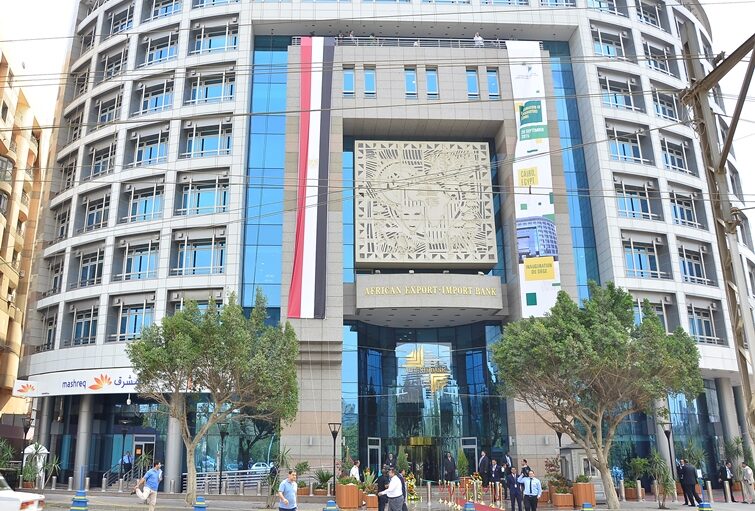
The African Export Import Bank has called for an urgent push to modernise Africa’s trading systems through digital technology, warning that the continent will struggle to meet the promise of the African Continental Free Trade Area (AfCFTA) unless it tackles long-standing barriers that weaken regional commerce.
The bank’s Group Chief Economist and Managing Director of Research and Trade Intelligence, Yemi Kale, made the call on Thursday at a forum on trade intelligence and digital innovation in Abuja.


He said Africa was at “a defining inflection point” and must decide whether it would merely react to global economic shifts or “actively shape the future of international trade”.
AfCFTA has been in force since 2021, but implementation across Africa has been slow, with trade still conducted under older national or regional rules. Businesses continue to face bureaucratic delays, inconsistent documentation, high port costs and fragmented trade processes, issues Nigeria is only beginning to address more decisively.
According to Mr Kale, intra-African trade has remained stubbornly low for years, hovering around 15 to 18 per cent, far below the levels seen in Europe and Asia.
“Despite its transformative potential, intra-African trade remains between 15 and 18 per cent compared to 60 per cent in Europe and about 40 per cent in Asia,” he said, describing the figure as a sign of the fragmented markets, high logistics costs and “persistent cross-border payment frictions” that slow down the movement of goods and services.


Mr Kale stressed that digital innovation offered the strongest lever to reverse this trend.
“Digital innovation is the engine that will enable [AfCFTA] to deliver measurable, continent-wide impact,” he said, adding that the question was no longer whether Africa should embrace digital trade but “how strategically and collaboratively we can lead it”.
He cited examples from across the continent, such as Rwanda’s digital single window, which cut export-processing time by more than 90 per centþt Africa’s mobile-money systems, which now process over $800bn a year; and Afreximbank’s own payments platform, the Pan-African Payments and Settlement System (PAPSS), which he said would save the continent billions by enabling cross-border transactions in local currencies.
Beyond reducing costs, Mr Kale said digital technology was “Africa’s great equaliser”, enabling small businesses to compete in markets previously beyond their reach.
He referenced the story of Fatima, a leather-goods entrepreneur in Kano who expanded her exports to Rwanda, Côte d’Ivoire and parts of Europe after adopting digital trade tools.
Her experience, he said, showed how digital platforms could “turn local ambition into continental and global opportunity”.
Innovation ecosystem
Mr Kale also argued that Nigeria had the potential to lead Africa’s digital trade shift, describing the country’s young population and thriving technology scene as “one of the continent’s greatest strategic assets”.
For these gains to be sustained, he said, policymakers needed to strengthen the ecosystem around innovation, including skills development, financing, regulation and infrastructure.
He said the new Africa Trade Centre in Abuja was designed to support this shift by creating a one-stop hub for trade facilitation.
“It is not just another building; it is the first in a network of one-stop trade centres that Afreximbank is developing across Africa and the diaspora,” he said. The centre includes exhibition and conference facilities, a tech and SME incubation hub, trade-intelligence services, meeting spaces and access to the Africa Trade Gateway, Afreximbank’s integrated digital platform for trade information, payments, due diligence and market insights.
According to him, the ATC would allow visitors to “arrive in Nigeria, work from the centre, obtain information, meet clients, access financial tools and conclude transactions” without leaving the building.
Mr Kale said the wider plan was to establish similar centres across the continent to support cross-border collaboration, investment flows and SME growth.
“Imagine entrepreneurs in Abuja collaborating seamlessly with counterparts in Cairo, Nairobi or Bridgetown,” he said, adding that such connections would help build a continent “where borders no longer limit ambition”.
READ ALSO: Tinubu seeks stronger support for Afreximbank
ATC details
Also in his presentation, manager of real estate and administration at Afreximbank, Oluwaseun Alabi, highlighted the ATC as a key tool for transforming trade across the continent.
“We are looking at how to transform this ecosystem without having some enabling physical infrastructure to deal with this. This initiative is now beyond just building physical spaces. It’s not just an accommodation to host the African bank regional office across the continent, but a catalyst to promote trade within the ecosystem,” he said.
Mr Alabi described the ATC as a comprehensive hub, “where businesses cohabit and thrive together. When you come into a trade center, you don’t need to go out, you don’t need to look for where to stay.