The National Automotive Design and Development Council (NADDC) has partnered with Japan’s Kaiho Industry Co. Ltd. to establish Nigeria’s first modern End-of-Life Vehicle (ELV) recycling plant, aiming to drive sustainable automotive practices, create jobs, and reduce environmental pollution.
According to a post on the council’s X handle, the agreement followed a visit by Oluwemimo Joseph Osanipin, Director General, NADDC and his delegation to Kaiho’s headquarters in Japan on Tuesday. Kaiho Industry is globally renowned for its expertise in ELV recycling, environmentally responsible dismantling, and automotive resource recovery.
The mission builds on the momentum of Nigeria’s newly launched ELV Regulations in Lagos and the ongoing national sensitisation campaigns in Abuja and Kano. It also followed an initial engagement in Accra, where NADDC and Kaiho representatives laid the groundwork for deeper technical cooperation.
During the visit, NADDC officials were received by Makoto Tokuda, Kaiho Industry’s President, who led the team through the company’s internationally certified recycling processes.
Read also: Why West Africa’s biggest battery manufacturing plant lies idle
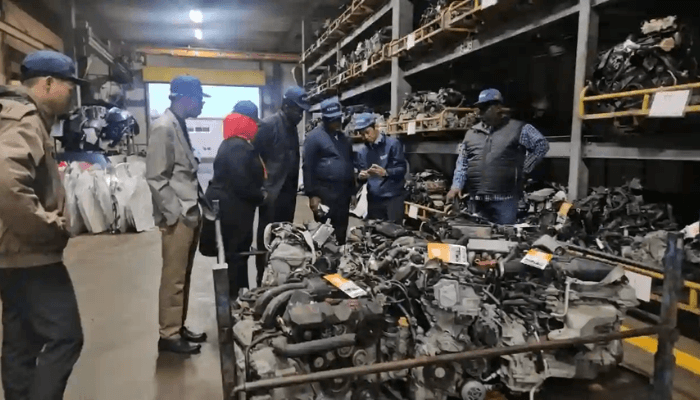
The delegation toured dismantling lines, reusable parts facilities, material recovery systems and environmentally friendly waste management units, components that are central to Kaiho’s globally recognised ELV model.
According to NADDC, the partnership marks a significant milestone in Nigeria’s journey toward a circular automotive economy, one that promises reduced environmental pollution, expanded automotive recycling capacity, new jobs and enhanced industrial competitiveness.
During the engagement, Taishi Suzuki, Kaiho’s Executive Officer and Manager of Business Development, noted Kaiho’s commitment to supporting Nigeria in building a transparent, safe, and efficient ELV recycling ecosystem. He outlined a multi-phase support plan for Nigeria, beginning with a pre-feasibility study scheduled for Q1.
The phased programme includes factory design, equipment and heavy machinery installation, as well as comprehensive capacity building through training in Japan and on-site technical support in Nigeria.
Suzuki noted that Kaiho’s track record in helping countries transition to circular automotive systems positions the company as a strategic partner for Nigeria’s environmental and industrial goals.
Both parties formally signed an Expression of Interest (EOI) to collaborate from pre-feasibility to full deployment, including mobilising additional investors to accelerate the establishment of a world-class ELV recycling plant.