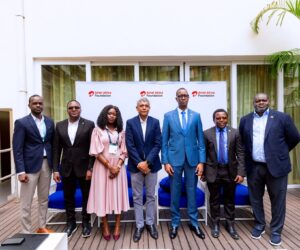

By Gerald Umeh
In 2022, I applied for a UK visit visa and received a refusal from the Home Office. The refusal came with detailed reasons and, in hindsight, everything they pointed out made sense. I corrected my application and reapplied, only to receive a second refusal that later turned out to be a case-working error. It wasn’t until my third attempt that my visa was finally approved.
By then, I had paid visa fees three times, made transportation and documentation trips three times, and invested weeks of emotional stress all just to access a country I genuinely intended to visit. That experience didn’t just lead to a visa; it was the catalyst for the product I am now building.
My experience with the French Schengen visa was similar. My first application was refused, and only my second attempt was approved. Yet I consider myself fortunate. Most people give up after a single refusal. Others simply do not have the financial capacity to try multiple times, especially African travellers, for whom visa fees represent a significant portion of their monthly or annual income.
These experiences formed the foundation for the No Agent Travel Guide (NATG). As I interacted with thousands of applicants, the scale of the problem became impossible to ignore. The number one challenge is the lack of accurate, actionable information. This is compounded by traditional travel agents who use a one-size-fits-all approach. When your strategy is generic, your results will depend on luck. I often see comments on my social media pages where people confidently state that visa approval is based on luck. That belief is one of the biggest myths holding applicants back.
In reality, every visa application must reflect the applicant’s unique circumstances. Embassies evaluate applications based on individual differences in financial capacity, home ties, personal history, and purpose of travel.
A Case Study in an Inevitable Refusal
I once interacted with a lady applying for a UK visa whose case highlighted the most common reasons for refusal. In her application, she declared that she planned to personally spend 500,000 naira on her trip. Her annual income was 1 million naira (about 84,000 naira monthly), yet she claimed she spent 120,000 naira monthly. Her bank balance showed 65,000 naira.
She also had a sponsor in the UK contributing 700,000 naira. On the surface, this appeared helpful, but the numbers did not align. She claimed she would personally bring 500,000 naira despite having only 65,000. Her declared monthly spending exceeded her income. The combined resources amounted to 1.2 million naira, yet the return flight from Lagos to London alone costs about 1.5 million naira.
No visa officer would look beyond the application form in such a case. The refusal was inevitable and justified. I see cases like this repeatedly: sloppy applications, inconsistent financial evidence, unrealistic budgets, and a complete lack of strategic guidance.
The Rising Cost of Guesswork
Visa refusal rates for many African and Asian countries are rising. For example, Schengen refusals have increased significantly. Nigeria’s rate increased from 35.3% in 2023 to 43% in 2025. Data from the UK Home Office and the U.S. Department of State show similar trends.

The most common reason is the visa officer’s doubt about the applicant’s intention to return, usually tied to weak documentation or inconsistencies. To make matters worse, visa fees are non-refundable. Every refusal is money permanently lost. For travellers from lower-income nations, a single refusal can be devastating.
This is where innovation becomes urgent. This is why I firmly believe that the future of visa applications for Africans will be built by Africans who understand the problem and have lived through it.
An AI Engine, Augmented by Human Expertise
To reverse this trend, the solution must be scalable, data-driven, and capable of guiding millions of applicants with precision. This is where artificial intelligence becomes transformative.
The AI we are building at NATG uses Natural Language Processing (NLP) to analyse thousands of refusal letters and case success stories, identifying critical patterns. It then performs a multi-layered analysis on an applicant’s documentation and form responses, cross-referencing financial statements against declared income, checking for consistency in travel history, and flagging narrative gaps. This isn’t a simple checklist; it’s a dynamic risk-assessment engine that provides a data-driven confidence score and actionable, personalised recommendations.
But technology alone is not the full answer. The final, crucial layer is human expertise. Our system is designed to augment, not replace, expert guidance. Once the AI has completed its analysis, the applicant’s case is reviewed by our highly trained visa experts who provide an essential “second eye,” adding nuanced understanding and strategic counsel. This human-in-the-loop model combines the scalability and precision of AI with the empathy and strategic depth of lived experience.
Why This Matters
The potential impact of this technology extends beyond individual applicants. For a country like the UK, which aims to be a global leader in both technology and equitable international engagement, a system like NATG represents a valuable innovation. It can streamline the front-end of the immigration process, reducing the administrative burden on Entry Clearance Officers by ensuring only well-prepared, complete applications reach them.
Furthermore, it aligns perfectly with the UK’s goal of attracting global talent and fostering trade by ensuring that genuine visitors and businesspeople from key African economies are not unfairly hindered by a preventable administrative process. We are building this not just for Africa, but as a model for fairer global mobility that we believe the UK’s tech ecosystem is the perfect place to scale and develop further.
Replacing Confusion with Intelligence
We are not building a travel agency. We are building the future of visa preparation technology that empowers travellers, reduces refusal rates, and restores confidence.
Our goal is simple but ambitious: to ensure that Africans no longer approach visa applications with guesswork or luck but with clarity, accuracy, and a strategy tailored to their unique profile. For the first time, Africans will have a system engineered by people who have faced the same barriers, overcome them, and are determined to replace confusion with intelligence.
See also: “Nigeria’s hustle culture is its biggest strength”: Onafriq CEO