
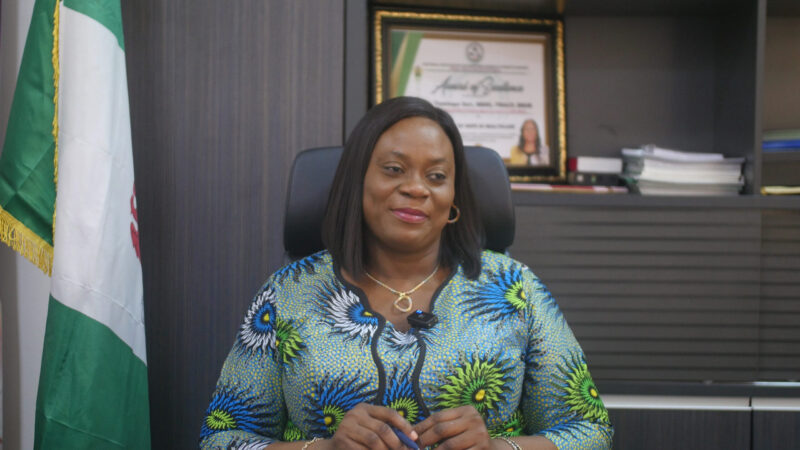
The Director General of the National Agency for the Control of AIDS (NACA), Temitope Ilori, has assured that Nigeria is committed to ensuring access to the new $40 twice-yearly HIV prevention injections for its people.
Mrs Ilori made the statement on Monday during the 2025 World AIDS Day commemoration in Abuja, where she highlighted progress, emerging challenges, and Nigeria’s push for a more self-reliant national HIV programme.


This follows the rollout of the drug, known as lenacapavir, in South Africa, Eswatini, and Zambia, marking the first public use of the twice-yearly injectable in Africa.
Data shows the drug reduces HIV transmission by 99.9 per cent, making it one of the most effective prevention tools to date.
Lenacapavir, developed by Gilead Sciences, costs about $28,000 per person per year in the United States, but through partnerships with Unitaid and the Gates Foundation, generic versions are expected to be available at $40 annually in low- and middle-income countries.
The new injection is expected to expand the impact of pre-exposure prophylaxis (PrEP), which, for more than a decade, has relied primarily on daily pills that have had limited uptake globally.


Nigeria’s readiness
Mrs Ilori described the new injection as part of a “remarkable scientific evolution” in HIV prevention and treatment, tracing the journey from multiple daily pills to long-acting injectables.
She recalled being on stage with former US President Bill Clinton at the UN General Assembly when the $40 pricing announcement was made.
“Through the tireless efforts of The Clinton Health Access Initiative, UNITAID, the Gates Foundation, the price of this groundbreaking prevention tool has been reduced from $28,000 USD to as little as $40 USD per person per year, making it accessible to millions who need it most,” she said
“This is what global solidarity looks like. This is what innovation in the service of humanity achieves. And Nigeria is committed to ensuring our people benefit from these life-saving advances.”
Nigeria’s HIV Response
Mrs Ilori further reflected on Nigeria’s journey in addressing HIV/AIDS since the first reported case in 1986.
“Over the past few years, Nigeria—like the rest of the world—has faced unprecedented disruptions: a global pandemic, economic uncertainty, fluctuating donor support, and shifts in the global health financing landscape,” she said.
“These disruptions were real. They had implications. But they did not break us. Instead, they strengthened our resolve to build a more self-reliant, sustainable, and home-grown HIV response.”
She highlighted Nigeria’s progress, noting that HIV prevalence among adults aged 15–49 now stands at 1.3 per cent, with approximately 1.9 million Nigerians living with the virus. Prevention campaigns, expanded testing, and treatment scale-up have enabled more Nigerians to live healthy and productive lives.
The country has maintained an 87–98–95 performance toward the global targets for HIV diagnosis, treatment, and viral suppression.
“In the last decade, Nigeria has recorded a 46 per cent decline in new HIV infections, and more Nigerians living with HIV are enrolled and retained in care than ever before,” Mrs Ilori added.
Protecting mothers, children
Mrs Ilori noted that Nigeria’s achievements extend to preventing mother-to-child transmission.
She said in 2024, over five million pregnant women were tested for HIV, with 26,566 testing positive and immediately placed on treatment.
Similarly, 23,561 HIV-exposed infants received early diagnosis within two months of birth.
Despite these gains, she said challenges remain. HIV Testing Services coverage among pregnant women stands at 65 per cent, national PMTCT coverage at 63 per cent, and early infant diagnosis at 56 per cent.
“We are working tirelessly to close these gaps,” Mrs Ilori said.
“Importantly, 100 per cent of pregnant women tested for syphilis in the last year received treatment, and 13 per cent were tested for Hepatitis B Virus, demonstrating our commitment to comprehensive maternal health.”
Domestic investment, leadership
Mrs Ilori highlighted Nigeria’s commitment to sustaining its HIV response amid global funding uncertainties.
The federal government recently approved $200 million to ensure the uninterrupted delivery of HIV prevention, testing, and treatment services.
She said Nigeria has also strengthened domestic resource mobilisation, building innovative partnerships to ensure long-term programme sustainability.
READ ALSO: WHO warns of shrinking HIV funding, urges African govts to boost investment
Earlier this year, a multi-ministerial committee and a Technical Working Group were inaugurated to mobilise financial support for AIDS, Tuberculosis, and Malaria programmes, ensuring coherent national strategies.
She also highlighted that the Free to Shine campaign, launched by the Office of African First Ladies for Development and championed by First Lady Oluremi Tinubu, targets the triple elimination of HIV, hepatitis, and syphilis among adolescent girls and women of reproductive age.
Renewed commitment
In her address at the event, First Lady Oluremi Tinubu called for intensified national action and emphasised confronting stigma.
“Ending the epidemic requires sustained advocacy, innovation, and especially compassion, including confronting stigma and discrimination. Every Nigerian deserves to live free from judgment and exclusion,” she said.
Mrs Tinubu urged collective action under the Renewed Hope Agenda, advocating open dialogue and an end to HIV stigma.
“To parents, guardians, and teachers, HIV/AIDS is no longer a disease of shame, but must be openly discussed for prevention and support. Our communities must foster love, acceptance, and support for people living with HIV,” she said..