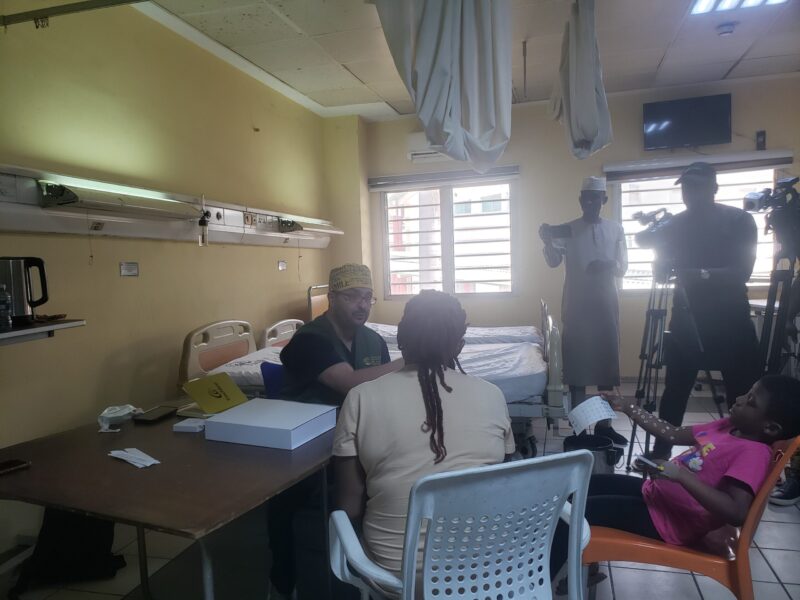
The Kingdom of Saudi Arabia, through the King Salman Humanitarian Aid and Relief Centre (KSRelief), has launched a specialised cochlear implant and hearing-rehabilitation programme in Nigeria.
The programme offers free surgeries to Nigerian children living with severe hearing loss.


The initiative, inaugurated at the National Hospital, Abuja on Wednesday, aims to carry out 30 cochlear implant procedures, providing surgery and a full continuum of care including diagnosis, activation, follow-up, auditory training, and speech rehabilitation.
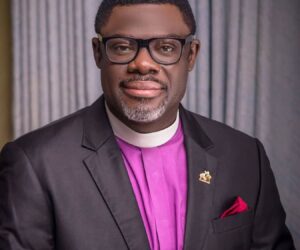
In a press release shared during the launch, the Chargé d’Affaires of the Embassy of Saudi Arabia in Nigeria, Saad bin Fahd Al-Marri, said the intervention demonstrates the Kingdom’s commitment to supporting vulnerable groups and strengthening health systems in friendly nations.
Mr Al-Marri said the programme represents one of Saudi Arabia’s major humanitarian health interventions in Nigeria and could transform the lives of affected children and their families.

“This programme reflects the Kingdom’s dedication to supporting vulnerable communities and strengthening health systems in friendly nations,” he said.


He added that through KSRelief, they are committed to delivering tangible solutions that restore hope, transform lives, and deepen the long-standing partnership between Saudi Arabia and Nigeria.
He also said that the initiative builds on a wide range of KSRelief’s humanitarian interventions across Africa, including medical outreach, disease-control campaigns and emergency relief efforts.
Parents share emotional journeys
For many families whose children received the implants, the programme has brought long-awaited relief after years of emotional and financial struggle. Speaking with PREMIUM TIMES, Oluchi Olanipekun, mother of five-year-old Feyikumi, said the procedure marked a turning point after years of uncertainty.
Mrs Olanipekun said the implant is a dream come true while fighting back emotions.
“She had not heard since she was a child, and it’s been a back-and-forth exercise. When this opportunity came, it was a chance to give her a better life to hear, to speak, to communicate,” she said.
She added that she noticed something was wrong when her daughter was about one year old.
“When we called her or a door slammed, she wouldn’t turn. We kept hoping she would respond with time, but when nothing changed, we began moving from one audiology test to another and it was confirmed she couldn’t hear.”
Though Feyikumi’s implant was activated only on the day of the interview, her mother expressed optimism that after the activation, they can start seeing the difference.
She noted that her daughter’s hearing loss affected her schooling and social life, adding that she can write alphabets and numbers but the speech part – hearing what people are saying and converting it to speech – she couldn’t do that.
“She’s in a regular school but she couldn’t communicate verbally. At home, the family adapted by using improvised sign language.
“Everybody knew her signs, when she wanted water or needed to sleep. We just understood her. But the emotional torture… it hasn’t been easy.”
She described the free surgery as a blessing beyond what her family could afford, noting that it has brought laughter, relief, comfort, and succour to their families.
Hearing loss is a significant issue in Nigeria, with an estimated 8.5 million people affected and a prevalence rate of six out of 1,000 newborns children having congenital hearing loss.
The problem is exacerbated by preventable causes like infections and noise, as well as a lack of accessible infrastructure and awareness.

From Lagos to Abuja for hope
Another parent, Tajudeen Ismail, whose four-year-old daughter Nadia received an implant, said the support came after years of searching for help.
Mr Ismail said it was a nice development to relieve people from deafness to healthy living.
“We need more support like this from private and public organisations, even internationally.”
He recalled the difficulty of raising a child who could not hear.
READ ALSO: Kano, Katsina, Jigawa have 16% of Nigeria’s 10.2 million out-of-school children UNICEF
“It was not very okay. But now that the cochlear implant has been activated, she can pick sounds. From here, with gradual process, it will lead to a normal, healthy life.”
“We have written to the state government for support. We thank God for the Arabians and the team that brought this opportunity for Nigerians. We appreciate them,” he said while expressing gratitude to the Saudi government for stepping in where other avenues had failed.