

Legal experts have continued to raise serious questions about the conviction of the leader of Indigenous People of Biafra (IPOB), Mazi Nnamdi Kanu, following his trial under a law that has since been repealed.
According to Barrister Christopher Chidera, a public affairs analyst, the court’s reliance on the Terrorism Prevention (Amendment) Act 2013 (TPAA 2013) to prosecute Kanu is legally indefensible, as the statute was repealed by the Terrorism Prevention and Prohibition Act 2022 (TPPA 2022).
Chidera explained that once a law is repealed, it becomes “dead, extinct, and of no legal effect,” and cannot serve as the foundation for any charge, trial, or conviction.
This principle, he said in a legal note shared with journalism on Monday, is black-letter law and has been consistently upheld by the Supreme Court for over four decades.
Citing landmark cases, Chidera noted that in AG Lagos State v. Dosunmu (1989), the Supreme Court ruled that when a statute is repealed, it is as if it never existed. No trial, liability, or right can be founded on a repealed law unless it is expressly preserved by a savings clause.
TPAA 2013, he added, was not preserved for criminal trials, yet Justice Omotosho proceeded to try Kanu under it.
Similarly, he said, in Uwaifo v. Attorney-General of Bendel State, the Supreme Court emphasized that a repealed statute cannot confer jurisdiction, and any proceeding conducted under such a law is a nullity.
Judges are required to take judicial notice of the extant law, Chidera stressed, and in Kanu’s case, TPPA 2022 was the current law while TPAA 2013 was extinct. This, he argued, constitutes a jurisdictional defect.
Kanu himself repeatedly questioned the legal basis of his trial, famously asking the court: “My Lord, show me the law.”
His legal team contends that no judge can prosecute a case under a repealed law, just as no Nigerian court today could try a case under the 1979 Constitution, revive military decrees, or apply the old Criminal Procedure Act where the Administration of Criminal Justice Act (ACJA) now governs.
Chidera described the Justice the court’s reliance on the TPAA 2013 as not just wrong, but impossible. By refusing to apply TPPA 2022, the judge acted without a legal foundation, ignored statutory transition clauses, violated Section 122 of the Evidence Act regarding judicial notice, contradicted Supreme Court authority, and operated ultra vires, without jurisdiction.
He added that once a trial is conducted under a repealed statute, the foundation is gone, jurisdiction evaporates, and the entire proceeding becomes a nullity.
“The conviction cannot stand, and appellate courts have no choice but to set it aside,” Chidera said. “This is not a technicality; it is the very spine of criminal jurisprudence.”
Kanu’s ordeal began with his extraordinary rendition from Kenya in 2021, a move that sparked international condemnation.
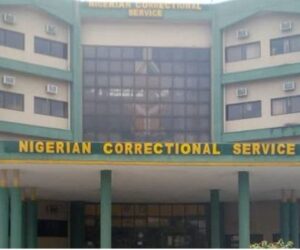
He was flown back to Nigeria to face charges relating to treasonable felony and terrorism. Following his conviction, he was sentenced to prison and is currently held at the Sokoto Correctional Centre.
“The only question that mattered,” Chidera added, “was when Kanu asked, ‘Show me the law”.” The court, he said, “could not, because the statute had been repealed.
“No judge today can revive a dead law, and that is why the entire trial cannot stand,” the lawyer explained.