At the 2025 National Health Dialogue, the Kaduna State government highlighted what it described as major strides in rebuilding the state’s health sector, citing improvements in primary healthcare, expanded workforce capacity, and strengthened emergency response systems.
Despite these claims, PREMIUM TIMES reports published between 2023 and 2025 show persistent gaps across the state’s health system, raising questions about whether the government’s reforms are translating into real improvements for communities.


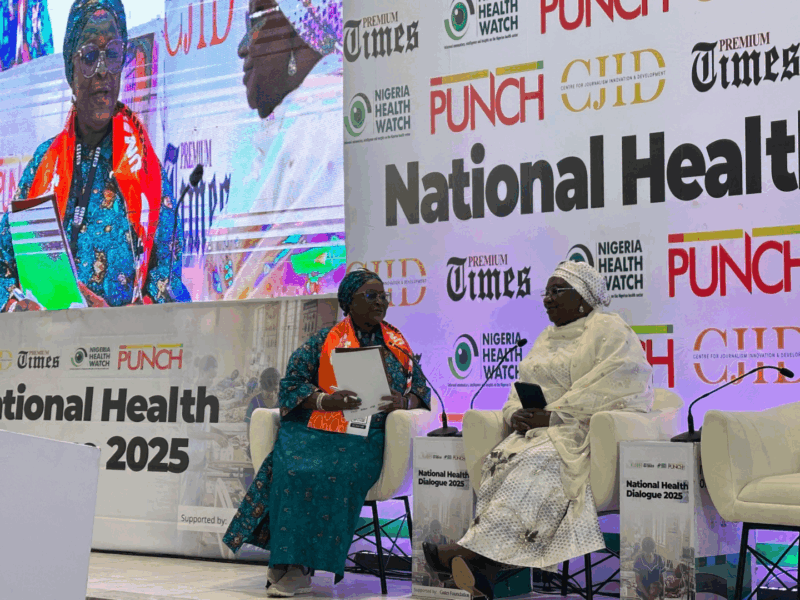
Speaking during a fireside conversation at the dialogue, the State’s Deputy Governor, Hadiza Balarabe, highlighted the administration’s commitment to strengthening the health sector, noting that health has consistently received 15 per cent of the state’s total budget since the current administration assumed office in 2023.
Ms Balarabe said the sustained allocation reflects the government’s intention to expand access to quality care while improving outcomes, particularly for mothers and children.
She emphasised the importance of involving young people in governance, arguing that the future of leadership and development depends on the opportunities they are provided today.
According to her, Kaduna is adopting a multi-sectoral approach to health by linking education, nutrition and healthcare to build resilience across communities.


She added that the state is also improving emergency care systems and upgrading health facilities to deliver more reliable services.
Health improvement
Speaking on infrastructure development, Ms Balarabe said Kaduna State has been strengthening its primary healthcare system by upgrading facilities, increasing its ambulance fleet and implementing digital monitoring and tracking systems.
She explained that the state has recruited and trained 1,800 healthcare workers and forged partnerships with organisations, including the Gates Foundation, to expand financing and improve service delivery in rural communities.
Regarding maternal and newborn health, she acknowledged that Kaduna has yet to achieve a breakthrough in reducing maternal mortality. However, she noted progress in neonatal outcomes and said the government is focused on improving emergency support for pregnant women.
“We cannot continue to have children while mothers are lost,” she said, emphasising the government’s efforts to build a stronger referral system and expand access to high-quality maternal and child health services.
What the reports say
Despite the assurances presented by Kaduna State at the dialogue, PREMIUM TIMES reports published between 2023 and 2025 reveal persistent weaknesses across the state’s health sector.
In March 2025, the Kaduna government approved the recruitment of 1,800 health workers and promised upgrades across 255 primary healthcare centres, insisting that the reforms would strengthen rural service delivery.
Meanwhile, PREMIUM TIMES’ reporting shows that key challenges remain unaddressed.
A July 2025 investigative report revealed that a preventable diphtheria outbreak killed children in several Kaduna communities due to failures in routine immunisation and poor cold-chain maintenance.
Many PHCs lacked essential vaccines, admission capacity and follow-up mechanisms, conditions that contradict the state’s claims of a strengthened PHC system.
Another July 2025 report documented a diarrhoea outbreak affecting 81 students at a secondary school in Kaduna. Although the Ministry of Health intervened, the incident highlighted gaps in preventive care, water safety and surveillance systems, raising additional concerns about the effectiveness of PHCs in the state.
Workforce instability has also been a recurring problem. In June 2025, resident doctors protested the dismissal of colleagues at a major state hospital, describing the decision as unfair and indicative of broader labour tensions.
The doctors cited inadequate training oversight and staffing shortages, which contradict government claims of improved workforce capacity.
By August 2025, resident doctors issued a 12-day ultimatum to the government, demanding the implementation of the 2024 salary adjustment, payment of arrears and better working conditions.
They warned that sustained burnout and the migration of clinicians to other states and federal institutions were crippling service delivery.
Taken together, the reports suggest that despite increased budgetary allocation and policy commitments, Kaduna’s health system continues to face significant gaps in immunisation, disease surveillance, emergency response and workforce stability.
These inconsistencies raise questions about whether the reforms outlined by the state are translating into meaningful improvements for communities.
About National Health Dialogue
The 2025 National Health Dialogue, organised by PREMIUM TIMES in partnership with the Centre for Journalism Innovation and Development (CJID), was supported by the Gates Foundation.
The dialogue was themed “Evidence, Innovation, and Financing for a Healthier Nigeria.”
The dialogue brought together policymakers, health experts, civil society groups and innovators for a full-day discussion on the state of Nigeria’s health sector.