2
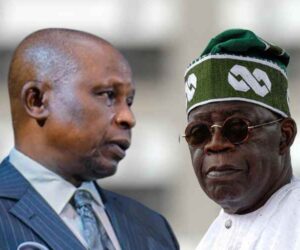
Yemi Cardoso, Governor of Central Bank of Nigeria, appears to be on a road show to tell the world that a mix of fiscal and monetary policies is in place to position Nigeria’s economy for top performance, and maybe to achieve the $1 trillion economy dream of President Bola Tinubu.
In October 2025, Governor Cardoso made a fundamental, if also conciliatory, remark at the “In Conversation With the Governor of the Central Bank of Nigeria” dialogue, hosted by the Wheeler Institute for Business and Development of London Business School.
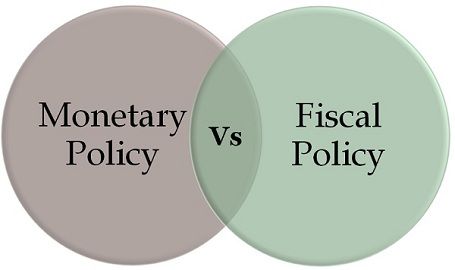
He appreciated that “No central bank can stabilise an economy in isolation. Fiscal and monetary authorities must constantly shake hands, speaking the same language and heading in the same direction. When fiscal and monetary policies reinforce each other, you get predictability. And predictability is what investors price,” or prefer.
Mayokun Ajibade, his Special Adviser on Financial Markets and Economic Policy, emphasised that “Macro stability… is achieved in the daily dialogue between institutions. Today, we have real-time data sharing between the CBN and fiscal authorities, joint scenario planning and synchronised messages to markets.” In pointing out how dialogue is helping Nigeria’s economy to cope with global volatility of energy prices, Ajibade added, “That conference is… working… Because the fiscal and monetary sides are now aligned, external shocks translate less violently into domestic prices.”
While noting that lack of coherent policy implementation and emphasis on fiscal policies with little consideration for monetary policies undermined CBN’s ability to control inflation and stabilise the naira in the past, Prof Ken Ife, Chief Economic Strategist of the ECOWAS Commission, commended recent harmonization to restore price stability, reduce inflation, strengthen the financial system and improve debt management.
Even though we are not completely convinced that the economy has achieved price stability, or significantly improved its ability to manage the national debt, we are prepared to wager that the harmonisation of fiscal and monetary policies will ultimately help the Nigerian economy.
While the fiscal and monetary authorities do not have to dictate policies to each other, they should at least share data and perspectives and know each other’s policy thrusts and strategies. As the Ministry of Finance uses government spending and taxation to direct the economy, CBN monetary policies should control money supply, interest rate, inflation and foreign exchange.
We note that, as far back as March 2025, Governor Cardoso and Wale Edun, Minister of Finance and Coordinating Minister of the Economy, met “to create a unified policy direction capable of addressing inflation, exchange rate volatility, fiscal deficits and other pressing economic issues.”
According to Mohammed Manga, Director, Information and Public Relations of Federal Ministry of Finance, the meeting was a gesture to reciprocate Governor Cardoso’s call for further deepening of fiscal-monetary policy alignment and collaborative economic management of the Tinubu administration.
The two men agreed to sustain and accelerate the momentum, which they both considered to be essential to stabilising prices, boosting investor confidence and empowering private sector-led growth that is crucial to the economy and well-being of Nigerians.
We have observed that the Federal Government recently decided to take more loans from the domestic lending market and reduce foreign loans that balloon as the naira weakens. Foreign loans must be serviced and repaid in foreign currency.
That decision certainly advances the stability of the naira and directly contributes to the slowing down of inflation, even though it does have the negative impact of crowding out the private sector from accessing loans from the domestic lending markets.
We suggest that the Ministry of Finance should not work in isolation from the Ministries of Industry, Trade and Investment; Power; and Agriculture. After all, the Minister of Finance is the Coordinating Minister of the Economy.
These ministries have major contributions to make in increasing agricultural output and industrial production.
If these ministries can step up their performances, the resulting increase in productivity should considerably assist the CBN to tame inflation and curb foreign exchange instability.
We dare say that when economic policies lead to surge in investments, the CBN would be encouraged to take a more critical second look at its interest rate regime that some operators in the Organised Private Sector currently regard as somewhat “punitive.”
Mr. President may wish to empanel the Ministers of Finance; Industry, Trade and Investment; Power; Agriculture and Food Security; Transportation; Works and Housing; CBN Governor; and National Security Adviser, into a tactical committee.
The brief of this tactical committee should be to plan the hard and soft strategies to realign fiscal, monetary and macroeconomic policies, the nation’s economic wheels, for speedy economic progress.