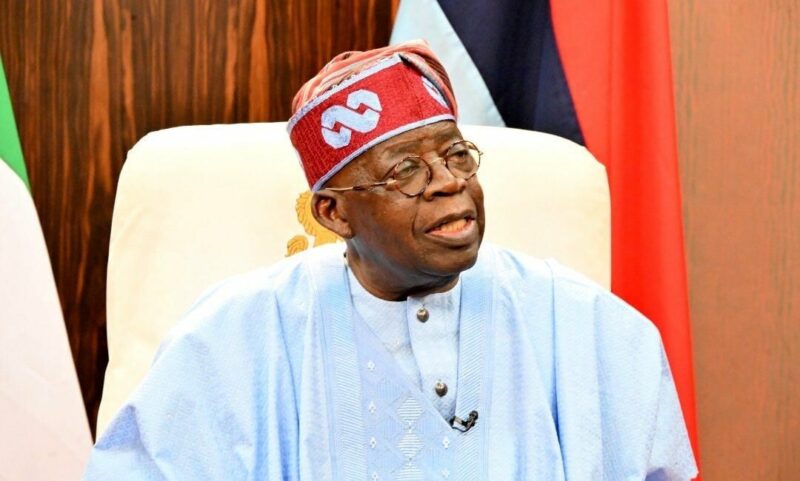
President Bola Tinubu has reaffirmed that restoring peace, strengthening national security, and expanding economic opportunities remained the foremost priorities of his administration.
Speaking on behalf of the President at the memorial of former Kogi State governor, Prince Abubakar Audu, in Lokoja on Sunday, the Minister of Information and National Orientation, Mohammed Idris, said the Federal Government was fully mobilised to confront enemies of the state and restore lasting peace nationwide.
“Yet, we are under no illusions about the recent setbacks and security challenges that have tested our nation’s resolve,” Idris said. “Let me be unequivocal: the security and welfare of every Nigerian remain the sacred priority of my government. We have therefore taken decisive action.”
He reiterated that the State of Emergency declared recently on national security was not a symbolic gesture but a renewed commitment to expanding security manpower, modernising intelligence systems, and implementing strategic reforms—including the advancement of State Police as a community-sensitive response to local threats.
“The recent Declaration of a State of Emergency on national security underscores the gravity with which we view this challenge,” he said. “This is not a mere proclamation; it is a declaration of war against all forms of insecurity.
“We have begun expanding the capacity of the armed forces and security agencies—in personnel, advanced weaponry, and intelligence capabilities. We will hunt the enemies of our state wherever they may be and restore the peace that is the rightful inheritance of every Nigerian.”
He added that permanent security required structural reform, hence the administration’s bold push for State Police, which he described as essential for grassroots security and increased local employment.
The minister also disclosed that the government is scaling up diplomatic engagement to counter false narratives that distort Nigeria’s image, especially regarding religious harmony and coexistence.
Reflecting on the legacy of Prince Abubakar Audu, President Tinubu described the late statesman as a pivotal figure in Nigeria’s democratic evolution, noting that his leadership helped shape Kogi State and contributed significantly to Nigeria’s transition to stable civilian rule.
“We are gathered to honour a giant,” Tinubu said. “Prince Abubakar Audu was not just a politician; he was a pathfinder. As the first democratically elected Governor of Kogi State—first in 1992 and again in 1999—he carved out a vision for the state and laid the foundations of our enduring democracy. His legacy is a living template of bold leadership and transformative governance.”
On ongoing reforms, Tinubu said the administration is modernising the livestock industry to transform age-long areas of tension into hubs of economic opportunity and peaceful coexistence.
“We are launching a comprehensive initiative to modernise the livestock industry,” he said. “This includes large-scale ranching schemes, improved animal husbandry, and full integration of the livestock value chain into the national economy. Our goal is to turn this critical sector into a bastion of prosperity—creating jobs, ensuring food security, and fostering lasting peace between farming and herding communities.”
The President also highlighted expansions in the Social Investment Programmes aimed at supporting vulnerable Nigerians, boosting small and medium enterprises, and empowering youth with globally competitive skills.
Additionally, he said his administration was undertaking an unprecedented expansion of national infrastructure—from modernising road and rail networks to enhancing electricity supply.
“We are building the arteries that will connect our markets, power our industries, and unite our people,” he said. “The legacy of development Prince Audu began in Kogi is a model we are determined to replicate and scale across the nation.”