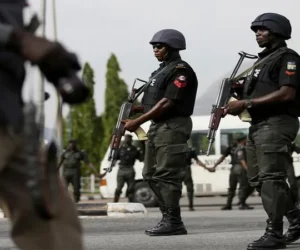

Across international news headlines, Nigeria is sometimes depicted as a country stuck in never-ending religious crises; the message is often that Christians are under siege and Muslims are radicalised, and the country is divided by belief. It is a story that travels fast because it is dramatic. But it is not the truth.
The trajectory of Nigeria’s insecurity is far deeper than a single administration. The violence seen today did not begin with the current administration; rather, it is the painful outcome of years and decades of failures in governance, corruption, inequity, and institutional rot that preceded this government. The Nigerian conflict is not a creation of the moment but rather an accumulation that resulted from sustained neglect. Following years of study, fieldwork, and international engagement, I found out that the Nigerian violence is not strictly a religious war; it emanates as a byproduct of deprivation.


What fuels bloodshed in Nigeria is not theology, but injustice. The chronic failure of governance that breeds anger, despair, and rebellion. if there were good governance, the issue of religious extremism would be curtailed at its embryonic stage. Accordingly, unless we confront this reality, we will keep misdiagnosing the disease and misdirecting the cure. Between 2011 and 2012, as Nigeria faced its most violent years of insurgency and militancy, I travelled across the country to understand why.
I interviewed two former Presidents of Nigeria, several state governors, senior policymakers, militant leaders, and ordinary citizens. In all, I conducted more than fifty in-depth interviews that formed the empirical foundation of my PhD research titled: “Governance, Petrodollars and the Upsurge of Militancy in Nigeria: The Case of the Movement for the Niger Delta and The Jama’atu Ahlus Sunnah Lid Da’awatil Wal Jihad (AKA BOKO HARAM).”
From the creeks of the Niger Delta to the plains of Borno, they voiced out one immutable fact: The crises in Nigeria have nothing to do with Christians and Muslims. It has everything to do with the governed and the governors. The findings became the foundation for two of my published works:
•Cycle of Bad Governance and Corruption: The Rise of Boko Haram in Nigeria>. SAGE Open. 2015


•The Multiple Jeopardies of Oil Producing Communities and the Incessant Militancy in the Niger Delta Region of Nigeria” (Journal of Social Sciences, Taylor & Francis, 2013).
Although the two papers were written years apart, the conclusions revealed a direct correlation: it is corruption and exclusion, rather than religion, that have made Nigeria unstable.
In my thesis, I used Ted Gurr’s Relative Deprivation Theory, which states that perceived injustice, and not mere ideology, breeds rebellion. In a region where Boko Haram sprang up, I saw a generation bred more in despondency than in extremism. There was over 45 per cent youth unemployment. Schools and hospitals had broken down. As one local government official said, “Boko Haram did not originate from the Mosque; it started from the stomach. Before there was ideology, there was hunger.” That sentence captures the tragedy of modern Nigeria. Faith is just the mask; deprivation is the engine. As I wrote then: “The Nigerian ruling elite created deprivation through the mismanagement and theft of petro-dollars, fuelling militancy and eroding public trust.” Thus, religion is the language of rebellion; injustice was its cause.
In my article about the Niger Delta, published in the Journal of Social Sciences in 2013, the findings reveal that the region, which fuels Nigeria’s economy, remains impoverished and abandoned. Finding reveals that more than 70 per cent of people from this place live below the poverty line. Pipelines are passing through houses in villages with no electricity. Rivers glisten with oil but yield no fish. This situation validates Paul Collier’s perspective as presented through his “Greed and Grievance” theory, whereby he explains how civil wars emerge out of states that possess resources, but those resources are managed poorly. As one militant suggests, “We see oil ships every day, but our people drink dirty water.. That is why we fight.”
The North and the South wear one garb: governance failure. During my PhD defence, I had the privilege of being examined by the late Professor Ian Taylor from the University of St Andrews, a scholar whose work transformed how Africa understands governance. In his books The International Relations of Sub-Saharan Africa (2010) and Africa Rising? BRICS: Diversifying Dependency (2014), Mr Taylor described African states as “gatekeeper states” controlling access to wealth rather than creating it. Furthermore, when Mr Taylor and I met again in Cape Town after my graduation, he re-echoed to me words that have stayed with me: “The crisis of governance is the crisis of Africa itself. Until leaders govern for people, not for profit, rebellion will remain the people’s only language.” His insight captured Nigeria perfectly: our violence is not about faith, but about failed leadership.
Ironically, this also amplifies Robert Rotberg’s “Failed States” model that when governments have lost their capacity to ensure basic security or welfare provision. This is what accurately depicts Nigeria. According to ACLED statistics, more than 9,300 deaths related to conflicts and above 2,100 incidents targeting civilians were recorded in Nigeria between December 2023 and November 2024. The Global Terrorism Index (2025) still places Nigeria as one of the five most terror-stricken countries in the world.
The pattern is simple: violence takes root where governance pulls back. The victims, be they Christian, Muslim, or traditional believer, share only vulnerability, not creed. This insecurity did not start with the Tinubu administration. It is a long chain of policy neglect going back decades; it is a systemic failure that no government can fix overnight, but which every government must confront honestly and with vision. However, the state governors have greater responsibility now than the central government; this is because they currently hold the financial wherewithal as a result of oil subsidy removal.
United States President Donald Trump recently referred to Nigeria as a “country of concern” and levelled an allegation of “genocide against Christians.” Most of us read that caption with mixed disbelief and dismay. To me, it was more than mere political rhetoric; rather, it struck a chord at that particular moment to reveal how extremely ironic such an allegation could be. I received the message while at work, sharing lunch, as usual, with my Christian colleague and friend. Just the previous day, another friend, this time a Muslim, had called to inform me about his Christian uncle’s death. He was travelling for the burial, which is a mere custom in our communities where family ties and human compassion cross over lines of creed.
There could not have been a clearer juxtaposition. As international voices painted Nigeria with such stark shades of religious conflict, Nigerians themselves went on living together, mourning together, celebrating together. Religion in Nigeria is both simple and complex; deeply individual yet highly communal; tied to our identities but not bound by them. There are a few adults in this country of whom it can be said that they do not have a friend, a colleague, or a relative of another faith. Interfaith relationships are common here, socially, professionally, and yes, even romantically.
This reality is evidenced by my very own experience. Having studied in a Unity School, I grew up with friends from all the states and religious denominations of the country. Those relationships are still alive today as better proof of pluralism existing in Nigeria than any foreign-instigated division narrative could propagate. This explains why such messages of genocide coming out from overseas mostly speak volumes about where those outsiders come from rather than telling anything meaningful about Nigeria. In a much truer sense, despite the strife, Nigerians still live together; they negotiate their differences and sustain, against all odds, however flimsy it appears to the outsider, that spirit of unity.
While Mr Trump’s concern for human rights is commendable, his statement is simplistic. The genocide narrative does not in any way describe what is happening in Nigeria. Boko Haram has been bombing both mosques and churches. The bandits kill Muslim farmers and Christian villagers just as indiscriminately. As another interviewee, also a former President, put it to me in 2012: “Our biggest killer is not religion. It is corruption.” To characterise Nigeria’s complex insecurity problem as religious genocide is to fall into all the classic stereotypes and thereby undermine diplomatic cooperation that could help address certain aspects of this problem.
To entrench good governance, we must confront our fears and take bold steps that many shy away from. Some radical measures must be revisited, including the long-avoided issue of capital punishment. My position on this matter has remained firm, a view I defended even during my PhD research, despite criticism from one of my supervisors. The truth is that there are criminals and terrorists in Nigeria whose cases have been fully determined by the Supreme Court, and whose crimes, by law, are punishable by death. Yet, these individuals continue to live comfortably in our correctional facilities, funded by the state, simply because no governor is willing to sign their death warrants. This political hesitation weakens justice and emboldens crime. It sends a dangerous message that one can commit atrocities and still be guaranteed safety, food, and shelter in prison.
There must be deterrence. Justice delayed is not only denied to the victim but also to society; indeed, until justice is seen to be done, relief will not permeate the whole national psyche. Capital punishment, when lawfully imposed by a competent court, should be carried out without fear or favour. This principle does not originate from Nigeria alone. In the United States, 27 states still retain the death penalty. Once all appeals have been completed in many of these states where capital punishment is permitted, executions are carried out swiftly, which will reinforce both the public confidence in the rule of law and its supposed deterrent effect.
In 2018, I was selected by the Ryoichi Sasakawa Young Leaders Fellowship Program in Japan. It was an eye-opener experience in life. Japan has almost successfully dismantled crimes and violent syndicates not through fear or militarisation but rather with trust, efficiency, and integrity. Every punctual train, every transparent system, every citizen’s confidence in the law reminded me that good governance eradicates existential fear. Where institutions function, violence becomes unnecessary. Governance is not a slogan; it is a social covenant. Japan reminded me that peace is not a miracle; it is the outcome of responsible leadership.. Also in 2018, I joined my boss at the United Nations General Assembly (UNGA) in New York, where we co-hosted a high-level side event on Illicit Financial Flows (IFFs) from Africa. We called for the unconditional repatriation of stolen assets, arguing that corruption is a global injustice, a moral betrayal as much as a financial one. The programme gained wide attention and helped push IFFs onto the UN’s front burner, where it remains today. That experience confirmed my conviction that good governance and transparency are the first steps toward lasting peace
In 2025, I travelled on the International Visitor Leadership Program (IVLP) through Washington D.C., Mississippi, Milwaukee, and Atlanta at the invitation of the US Department of State. There, I saw a system of governance as a continuous conversation; citizens perpetually holding their leaders to account while those same leaders vigorously fulfil their responsibilities, and transparency operating as an element within the culture rather than just part of someone’s campaign. That place was democracy in action. It convinced me that cross-fertilisation and diplomacy can remake nations. Nigeria can thrive if it chooses governance that serves, not rules; leadership that listens, not lectures.
If there is any genocide in Nigeria, it is not of Christians or Muslims; rather, it is the genocide of governance. It is the slow, systematic killing of accountability, fairness, and trust. Every embezzled education fund, every looted hospital project, every stolen oil dollar is an act of violence against the people. A fisherman in the Niger Delta reaffirmed to me a statement that, “They take our oil and call us rebels when we ask for water.” Also, a teacher in Borno said: “When schools are destroyed, and no one rebuilds them, that is also killings, not of bodies, but of futures.” Those words reveal what our statistics hide: corruption is not abstract; it kills.
READ ALSO: Insecurity: North-west summit proposes new regional security architecture
To the international community, including Mr Trump and Western policymakers: Engage Nigeria through diplomacy, not denunciation. Support governance reform, capacity building, and transparency initiatives. Invest in solutions that unite, not narratives that divide. To all leaders across Nigeria, I say: Governance must become service, not survival. Leadership must mean accountability, not authority. The legacy of this administration and those to come will not be judged by speeches but by systems that work.
To the United Nations, I say: do not stop. Continue with the global campaign against illicit financial flows. Every single dollar repatriated shall be a brick in the foundation of peace. This is what has guided my journey from the dusty roads of my village to the corridors of the United Nations. Good governance eliminates existential fear. I saw it in Japan, where trust replaced fear. I saw it in the USA, where accountability gave communities strength. And I still believe I will see it in Nigeria when leadership is a responsibility and not a privilege to hold.
Nigeria’s violence is not between Muslims and Christians. It is between justice and greed, truth and corruption, service and selfishness. When governance works, peace follows. When there is justice, extremism dies. Nigeria will rise when leadership serves, not divided by faith but united by fairness.