2
…as CJID MDC 2025 Opens with Push to Reimagine Africa’s Democracy, Development
Torkwase Nyiekaa
Nigeria’s push toward Universal Health Coverage (UHC) took centre stage on Monday at the National Health Dialogue held on the sidelines of the 2025 Media and Development Conference (MDC), organised by the Centre for Journalism Innovation and Development (CJID) in Abuja. Stakeholders, led by the World Health Organisation (WHO) and the National Primary Health Care Development Agency (NPHCDA), reaffirmed that evidence, innovation, and sustainable financing remain essential for transforming the country’s health system.
WHO: Nigeria Is at a Defining Moment for Health Reform
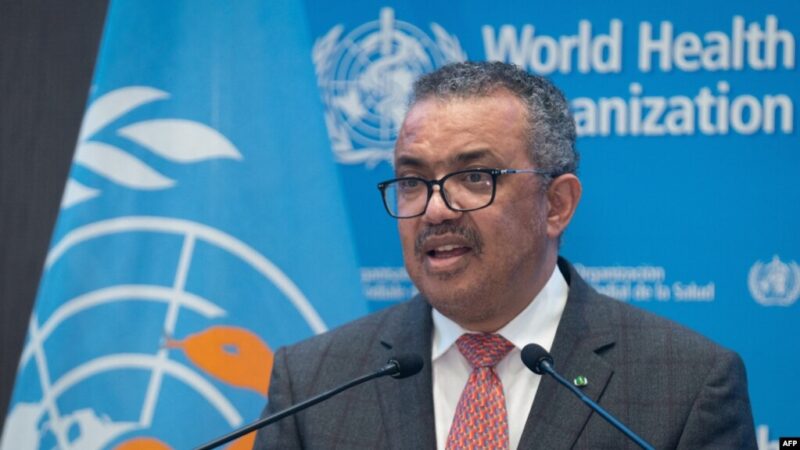
Speaking at the Dialogue, the WHO Representative and Country Director to Nigeria, Dr. Pavel Ursu, said the organisation remains fully committed to supporting Nigeria’s health-sector reforms, describing the current phase as a defining moment that demands deliberate, evidence-driven action.
He stressed that “evidence-driven policymaking, context-appropriate innovation, and predictable financing” are non-negotiable for improving population health. To demonstrate the impact of ongoing reforms, he shared the story of a young mother in a rural community who now uses a digital immunisation tracking system to monitor her newborn’s vaccines—a transformation made possible by PHC upgrades.
“Before this upgrade, mothers often missed follow-ups due to distance, paperwork, or lack of information,” he explained. “Now, with digital tracking and better-equipped facilities, she can ensure her child receives all vaccines on time.” The example, he noted, illustrates how innovation is already turning policy reforms into real benefits for ordinary Nigerians.
Dr. Ursu emphasised that credible data is indispensable for shaping health policies, ensuring efficient resource allocation, and driving accountability. He also highlighted the growing relevance of digital tools, from electronic medical records to AI-enabled diagnostics, stressing that they must be scalable, context-appropriate, and focused on community-level results.
On financing, he warned that reforms cannot be sustained without predictable investment in primary healthcare, health security, and human resources for health.
“No health system can thrive without sustainable financing. Investment in health is not an expense; it is a driver of national development,” he said.
He pledged WHO’s continued technical support as Nigeria works to strengthen governance, expand routine immunisation, improve maternal and child health, and enhance public health preparedness. He commended the Federal Ministry of Health and Social Welfare for its leadership and urged state governments, civil society, the private sector, and development partners to collaborate more closely to achieve measurable improvements in health outcomes.
PHC Renewal Gains Momentum — NPHCDA
Speaking also, the Executive Director of the NPHCDA, Dr. Muyi Aina, presented new data showing rapid progress in primary healthcare renewal nationwide. According to him, more than 2,125 PHC facilities have now been upgraded across the country, leading to significant increases in community utilisation.
“We are seeing nearly 47 million service-delivery contacts every quarter, almost double the number from two years ago. Nigerians are returning to the PHC system,” he said.
He explained that digital platforms are improving transparency, efficiency, and health outcomes. Fraud has reduced due to digitised funding mechanisms, e-learning platforms have trained thousands of frontline workers, and digital maternal and newborn tools are already improving pregnancy and postnatal care.
However, he noted persisting challenges, including manpower shortages, uneven distribution of health workers, and variations in PHC functionality across states.
Stakeholders Push for Predictable Financing and Stronger Accountability
Speakers at the Dialogue emphasized that predictable financing remains the backbone of any successful health system.
“No health system can function without sustainable, predictable investment. Spending on health is spending on national development,” one senior official said.
Others emphasised accountability, insisting that evidence must guide decision-making and that citizens must be able to monitor how funds are used and how services improve. Civil society representatives underscored the critical oversight role of journalists, noting that strong journalism is indispensable for transparency in the health sector.
MDC 2025 Opens With Call to Rethink Africa’s Democracy and Development
Earlier in the day, the 2025 edition of CJID’s flagship Media and Development Conference opened with a powerful call for Africa to rethink the future of its democracy, development, and digital governance.
Delivering the keynote address, CJID Chief Executive Officer and Publisher of PREMIUM TIMES, Mr. Dapo Olorunyomi, said the continent has entered “a moment of profound transformation” that demands institutional courage and renewed civic responsibility.
He warned that Africa faces rising civic anxieties, shrinking civic spaces, and resurging coups, even as opportunities for renewal abound. He described independent media as the “oxygen of democracy” and called for innovative business models, ethical deployment of artificial intelligence, and investments in a new generation of journalists.
Olorunyomi also cautioned against “data colonialism,” urging African governments to protect sovereign data, strengthen digital rights legislation, and work collaboratively on regional AI governance.
The conference, which runs from November 24–27, has attracted more than 300 participants from ECOWAS, Central and Southern Africa, civil society, academia, and the private sector.
A Defining Period Ahead
As Nigeria advances its health-system renewal, Dr. Ursu noted that the next few years will be critical for consolidating gains. He reaffirmed WHO’s support for expanding immunisation coverage, strengthening PHC governance, improving maternal and child health, and enhancing public health readiness.
He commended the Federal Ministry of Health and Social Welfare for its leadership and called for deeper collaboration among government institutions, civil society, development partners, and the private sector.
The conference continues with high-level panels, investigative dialogues, research presentations, and training sessions aimed at strengthening policymaking, accountability, and evidence-based storytelling across the continent.