1
…Says Nation Has Moved From Crisis To Confidence
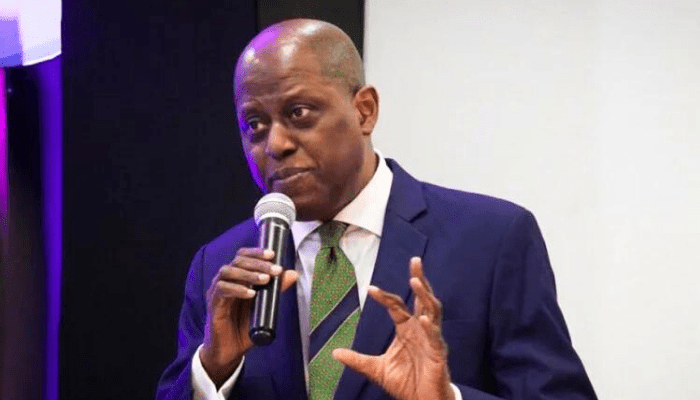
LAGOS – Nigeria’s economic recovery entered a new chapter on Friday night as Central Bank of Nigeria (CBN), Governor Olayemi Cardoso delivered a sweeping and assertive address at the Chartered Institute of Bankers of Nigeria (CIBN) Annual Bankers’ Dinner, declaring that the country has “moved firmly from crisis management to rebuilding confidence, stability, and global credibility.”Speaking before industry leaders in Lagos, Cardoso outlined a reform-driven turnaround that he said has shifted Nigeria from the brink of macroeconomic collapse to one of the strongest trajectories among African economies. Blending candour with data-rich analysis, the CBN Governor warned that recovery remains fragile but insisted that the results recorded over the last 12 months mark “a decisive break from the instability we inherited.”
Nigeria’s Deep Crisis: “We Did Not Arrive At This Point By Accident”
Cardoso began by situating recent progress within the scale of the challenges inherited. When the current leadership took office, he recalled, Nigeria’s economy was facing severe structural distortions:
Inflation is at a 28-year high of 34.6%.A paralysed forex market with over US$7 billion in unmet obligations. A 60% gap between official and parallel exchange rates. External reserves are at precarious levels. Businesses are unable to plan due to violent price swings. Broken monetary policy credibility after years of unorthodox financing.
“This was not a Nigeria standing at the edge of a precipice,” he said. “It had already gone over the cliff.”
Cardoso stressed that the nation’s recovery cannot be understood without acknowledging this starting point.
Inflation Falls Sharply, CBN Targets Single Digits
One of the most significant indicators of change, the Governor said, is inflation. The CBN’s return to data-driven, orthodox monetary policy has produced seven consecutive months of disinflation.
Inflation fell from 34.6% in November 2024 to 16.05% in October 2025.
Food inflation dropped from 21.87% in August to 13.12% in October.
“We will not rest until price stability is firmly secured. Double-digit inflation is unacceptable,” Cardoso declared, promising continued tightening and a full transition to inflation-targeting.
FX Market Reforms: From Paralysis To Stability
The CBN Governor highlighted the foreign exchange market as the clearest symbol of renewed investor confidence:
FX backlog of over US$7 billion fully cleared. Exchange-rate windows unified.
Gap between official and parallel market rates reduced from 60% to under 2%.
Capital inflows surged to US$20.98 billion in the first 10 months of 2025 — a 428% jump compared to 2023.
The deployment of EFEMS, powered by Bloomberg BMatch, and the Nigerian FX Code, he said, has introduced unprecedented transparency and orderliness.
“Opacity is giving way to discipline,” Cardoso said. “Price discovery is now real.”
Reserves Rebound To Seven-Year High
Nigeria’s external sector has undergone a dramatic strengthening:
Current account surplus rose to US$5.28 billion in Q2 2025.
Foreign reserves climbed to US$46.7 billion by mid-November — the highest in nearly seven years.
Diaspora remittances grew by 12% in 2025.
Non-oil exports expanded by more than 18%.
Crucially, Cardoso noted, “reserves are being rebuilt organically, not through borrowing.”
Rating Upgrades, Eurobond Success Boost Global Credibility
The Governor pointed to renewed international confidence: Fitch upgraded Nigeria from B- to B (stable).
Moody’s raised its rating from Caa1 to B3.
S&P revised Nigeria’s outlook to positive.
“These decisions reflect increasing reform credibility,” he said.
Nigeria’s US$2.35 billion Eurobond issuance, which attracted US$13 billion in orders — a record for the country — was cited as a powerful signal that markets are responding positively.
Banking Sector: Recapitalisation On Track, Stability Strengthened
Cardoso delivered an update on the banking recapitalisation programme scheduled to conclude on March 31, 2026:
27 banks have raised capital through public offers and rights issues.
16 banks have already met or exceeded the new capital requirements.
Stress-test results for 2025, he noted, show that the banking system remains fundamentally sound.
The CBN has also tightened discipline across cash distribution channels, ATM deployment, and POS operations, after a full internal review of the cash lifecycle.
Digital Finance: Nigeria Consolidates Its Lead In Africa
Nigeria’s fintech and digital payments ecosystem has strengthened further:
12 million contactless cards in circulation.
Over 40 fintech innovators are active in the CBN’s sandbox.
Leading fintech apps surpassed 10 million downloads each, with one exceeding 50 million.