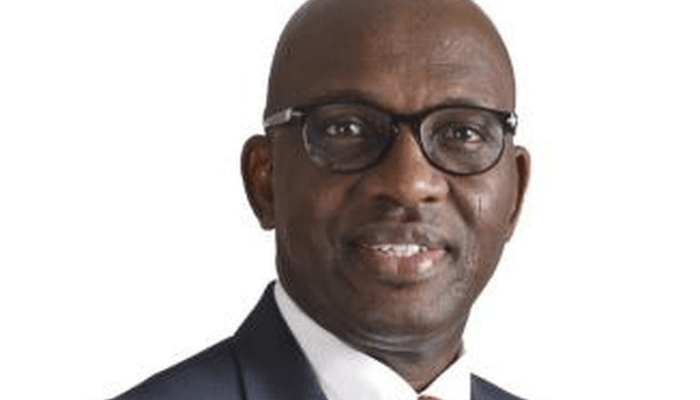
Nigeria must invest at least $10 billion every year for the next decade to close its crippling power deficit and unlock meaningful economic growth, according to Tony Attah, managing director and CEO of Renaissance Africa Energy Co. Ltd.
Speaking at the University of Ibadan Alumni Association Worldwide Annual Lecture & Homecoming on Friday, Attah warned that Nigeria’s chronic energy shortages have become a “developmental emergency” that threatens national competitiveness, industrialisation, and human capital progress.
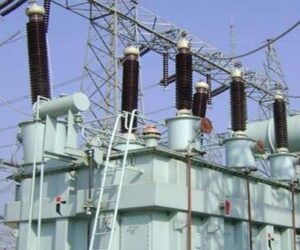
“Nigeria requires a minimum of 200,000 megawatts of power-generating capacity to meet its developmental needs,” Attah said, noting that the country currently manages to supply less than 5,000 MW to more than 200 million people. “To have a fighting chance, we need to invest over $10 billion per year for the next 10 years.”
Read also: Savannah Energy Nigeria earns Great Place to Work recognition
The event, held at the University of Ibadan and attended by top government officials, industry leaders, and academics, focused on the theme “Energy Security and Economic Sustainability: The Role of Nigeria’s Oil & Gas Sector in National Development.”
Despite abundant energy resources, including 37 billion barrels of crude oil, 210 trillion cubic feet of natural gas, and some of the world’s best solar radiation, Nigeria remains “energy poor,” Attah said.
More than 85 million Nigerians lack access to electricity, while unreliable supply costs Africa’s largest economy an estimated $29 billion annually in lost productivity.
“Nigeria is a land of energy abundance, but we are energy poor,” Attah stated. “This is not just a technical failure; it is a developmental emergency.”
He underscored the human cost of the energy crisis, recounting stories of midwives delivering babies under phone torchlight, rural communities living in perpetual darkness, and over 100,000 deaths annually from indoor air pollution caused by firewood and kerosene.
“Energy is not a commodity. It is the oxygen of modern life,” he said. “Without reliable and affordable energy, no nation can truly prosper.”
With global energy markets stabilising and the energy transition timeline becoming more pragmatic, Attah argued that natural gas represents Nigeria’s best near-term opportunity for industrialisation.
He described gas as both “a transition and destination fuel”, calling it Nigeria’s clearest pathway to energy security and long-term economic resilience.
The country currently produces around 8 billion standard cubic feet of gas per day, but Attah believes this figure must nearly double to 14 billion scf/d to substantially energise industries and reduce manufacturing costs by up to 50%.
“Scaling domestic gas development is the fastest way to stabilise the economy, increase forex inflows, and create jobs,” Attah said. He credited the Tinubu administration for accelerating long-delayed oil and gas investments, including recent divestment approvals and new incentives for upstream players.
Referencing Qatar’s transformation into one of the world’s wealthiest nations, with a GDP per capita above $70,000, Attah said Nigeria must adopt an energy-led development model.
“History has shown that no country has achieved sustainable economic growth without first securing its energy base,” he said. “Qatar built a $450 billion sovereign wealth fund on the back of gas. Nigeria can achieve the same with the right policies and leadership commitment.”
Attah outlined Renaissance Africa Energy’s strategy to become a leading player in domestic gas supply, citing multibillion-dollar projects such as Opukushi and Assa North–Ohaji South aimed at delivering 1 billion scf/d of gas by 2030, enough to power over 5 million homes daily.
He said the company is prioritising sustainability by reducing gas flaring and supporting Nigeria’s gas commercialisation programme. Renaissance has also begun investing strategically across the domestic gas value chain to stimulate industrial growth.
“Our mission is simple: to catalyse the energy emancipation of Nigeria and Africa,” Attah said. “Not through charity, but through collaboration and African-led solutions.”
Read also: Bellazir Energy, NCDMB train youths on gas detection, others
Attah urged the University of Ibadan, and academic institutions across Nigeria to position themselves as engines of innovation for the country’s energy transition.
“There is no reason why the energy solutions this university needs should not be engineered here,” he said, calling for student-led innovation hubs, expanded engineering research, and talent partnerships with industry.
“The next generation of energy leaders, policymakers, and entrepreneurs are here on this campus today. They must not be observers.”
Attah closed the lecture with a call for a nationally coordinated, multi-stakeholder approach to energy reform, including policy coherence across ministries, investment-friendly regulations, and community-driven renewable solutions.
“Let us build a Nigeria where energy is no longer a bottleneck, but a bridge to survival and prosperity,” he said. “The future is not something we enter; it is something we create. Let the true African renaissance begin.”