The week of 17–23 November unfolded like a familiar Nigerian script — politically charged, economically tense, socially restless, and yet marked by flashes of hope and resilience. It was a week that revealed both the country’s structural weaknesses and the enduring capacity of its people to adapt.
Between November 17 and 23, 2025, Nigeria experienced several significant events marked by violence, abductions, and political engagements. Notably, gunmen attacked a high school in northwestern Nigeria on November 17, abducting 25 schoolgirls and killing a staff member. There was also a large-scale abduction at St. Mary’s Catholic School in north-central Nigeria, where gunmen took 303 students and 12 teachers.
Some of the abducted students managed to escape, and the government subsequently closed 47 educational institutions for safety. President Bola Tinubu cancelled his planned attendance at the G20 summit to address these security issues, with Vice President Kashim Shettima representing Nigeria instead.
Additionally, the week featured the Global Entrepreneurship Week Nigeria 2025 from November 17 to 23, themed “Together We Build,” celebrating entrepreneurship, innovation, and resilience across the country. Furthermore, Prince Edward, Duke of Edinburgh, visited Nigeria and met with President Tinubu in Abuja ahead of youth-focused engagements in Lagos planned for that week, promoting the Duke of Edinburgh’s International Award.
1. Politics: Fractures Deepen, Alliances Shift
Nigeria’s political temperature rose another notch as parties struggled to maintain cohesion.
• Tensions within the ruling party grew, as internal critics called for a reassessment of government policies amidst public frustration.
• Opposition parties fared no better, as infighting, leadership disputes, and factional alignments hinted at a possible major reshuffle before the 2025 election cycle enters full gear.
• Political rhetoric intensified on national security, fuel prices, and electoral reforms, but substantive policy clarity remained elusive.
The overall impression was of a political class preoccupied with positioning rather than governance.
2. Economy: From Hardship to Harder Choices
The economic reality for most Nigerians worsened this week.
• Inflation continued its climb, driven largely by skyrocketing food prices.
• The naira stumbled, triggering higher import costs and reduced purchasing power.
• Businesses faced rising operational costs, while SMEs, the backbone of the economy, reported difficulty accessing credit and retaining staff.
Government officials reiterated reform commitments, but the immediate hardship on households overshadowed long-term optimism. Many Nigerians recalibrated spending habits, prioritising survival over comfort.
3. Governance: Visible Action, Uneven Outcomes
Governance this week delivered a mix of progress and contradictions.
• Several state governments pushed forward with infrastructure projects—roads, markets, ICT hubs—showcasing pockets of innovation and responsiveness.
• At the federal level, a series of committee meetings and policy announcements dominated headlines, though citizens expressed concern about slow implementation timelines.
• Questions around transparency, efficiency, and accountability resurfaced, with civil society groups calling for clearer communication of the reform benefits.
Governance remained a patchwork: promising in places, stagnant in others, uncertain in the aggregate.
4. Security: Persistent Fault Lines, Limited Relief
Security challenges remained entrenched.
• Banditry in the North-West continued with intermittent attacks on communities and travellers.
• Communal tensions in the Middle Belt simmered, with sporadic clashes.
Security agencies announced several successful operations, but Nigerians still confronted the daily reality of vulnerability. Confidence in the state’s ability to protect citizens remained lukewarm.
5. Society & Social Media: A Theatre of Anger, Wit, and Noise
This week’s social media landscape oscillated between outrage and comic relief.
• Viral videos sparked debates about governance lapses, social inequality, and public morality.
• A scandal or two dominated timelines before being overtaken by the next sensational story.
• Yet, the humour never dried up: satirical takes emerged instantly, reinforcing the uniquely Nigerian ability to laugh through hardship.
Public sentiment remained a blend of fatigue, frustration, and dark humour.
6. Culture, Entertainment & Sports: Where Nigerians Find Escape
Nigerians leaned heavily on culture to soften the week’s hard edges.
• Afrobeats artists released new projects and announced international milestones, keeping the global spotlight on Nigerian creativity.
• Nollywood maintained its output, delivering films that provided both escape and reflection.
• In sports, however, the Super Eagles generated more concern than confidence, triggering renewed conversations about team management and leadership.
Culture continued to be one of Nigeria’s most reliable exports—and emotional relief valves.
7. Public Mood: A People Pushed, Yet Still Standing
The dominant national mood was one of resigned endurance mixed with quiet determination.
• Many Nigerians adjusted their routines to cope with rising costs.
• Community cooperation increased in some areas, with neighbours sharing resources or pooling transport.
• Despite frustrations, there was a noticeable insistence on hope — a stubborn belief that things must eventually improve.
It was a week that reaffirmed Nigerians’ extraordinary resilience, even as the system strains.
Conclusion: A Country in Motion, Not Always Forward
The week of 17–23 November showed a nation caught between competing realities:
• Political actors are locked in self-interest.
• Economic pressures are stretching citizens thin.
• Governance reporting incremental progress without a transformative impact.
• Security challenges are testing national stability.
• Cultural vibrancy provides psychological refuge.
Nigeria moved — not always forward, not always backward, but undeniably in motion.
How it channels this motion into momentum remains the fundamental national question.
2. Security remains top burner
Security issues dominated the news.
• On 17 November, gunmen attacked a school in Kebbi State. They abducted 25 schoolgirls and killed a staff member.
• A large abduction occurred at St Mary’s Catholic School in Niger State, where gunmen kidnapped 303 students and 12 teachers. Some students managed to escape.
• In response to the attacks, the Federal Government reportedly closed 47 unity schools. However, in other news, the Federal Ministry of Education denied the closures.
• President Bola Tinubu cancelled his trip to South Africa for the G20 Summit.
3. The G20 Summit in South Africa
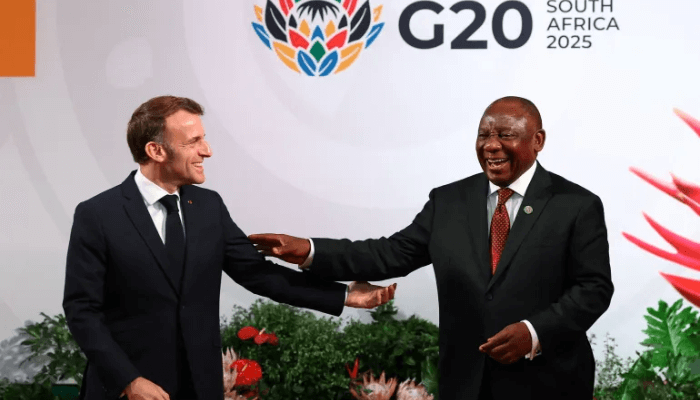
President Donald Trump led the United States to boycott it, but the G20 Summit was held successfully in South Africa.
Key Facts & Context
1. First G20 on African Soil
o The 2025 G20 Leaders’ Summit is being held in Johannesburg, South Africa (at the Nasrec Expo Centre) on 22–23 November 2025.
o This is the first time a G20 summit has been hosted in Africa.
2. Theme: Solidarity, Equality, Sustainability
o Under South Africa’s presidency, these are the guiding principles.
o Their agenda emphasises inclusive growth, climate justice, addressing inequality, and bolstering multilateral cooperation.
3. G20 Social Summit
o Before the leaders’ summit, a Social Summit took place from 18 to 20 November 2025.
o This brought together civil society, including youth groups, women’s organisations, faith-based groups, and people with disabilities, among others.
o The goal: ensuring the voices of everyday people (especially in the Global South) are part of the G20 process.
4. Key Priorities / Agenda Items
o Debt sustainability: A big focus is on reducing debt burdens for low- and middle-income countries.
o Climate change & energy transition: Supporting a just transition to clean energy, especially in developing economies.
o Critical minerals: There’s a strong push to develop Africa’s critical-mineral value chains, which are key for green energy and technology.
o Disaster resilience: Improving global responses to climate disasters.
o Inclusive economic growth and multilateralism: Framed as “no one left behind.”
5. Boycott by the United States
o The U.S., under Donald Trump, did not attend.
o Trump alleges mistreatment of South Africa’s white Afrikaner minority — claims widely discredited by South African authorities.
o The boycott caused a diplomatic wrinkle: South Africa refused to hand over the gavel (symbolic of G20 presidency) to a low-level U.S. diplomat, citing protocol.
6. Summit Outcome
o Despite the U.S. absence, the leaders issued a joint declaration on the first day, which is unusual (normally it’s at the end).
o The declaration emphasised climate action, gender equality, peace, and debt relief for developing nations.
o In closing, President Cyril Ramaphosa called it a “turning point,” centring Africa’s development and arguing for strong partnerships between Africa and the G20.
7. Parliamentary (P20) Summit
o Alongside the leaders’ meeting, there was a Parliamentary Summit (P20) in Cape Town from 29 Sept – 3 Oct 2025.
o Its theme: “Harnessing Parliamentary Diplomacy for the Realisation of Global Solidarity, Equality and Sustainability.”
o It’s meant to boost the legislature’s role in shaping global cooperation.
8. Economic Impact for South Africa
o The summit is expected to stimulate the local economy, increasing demand for infrastructure, tourism, and services.
o Hosting such a global event is also symbolic: positioning South Africa (and more broadly, Africa) as a major player in global governance.
Significance
• Geopolitical: Hosting the first-ever African G20 summit gives South Africa and the continent a louder voice on global issues — especially around development and climate.
• Multilateralism vs. Unilateral Tensions: The U.S. boycott highlights fractures in global cooperation, but South Africa seems determined to push the Global South’s agenda.
• Economic Forecast: If the summit’s debt relief and green energy priorities gain traction, it could lead to meaningful investments in developing economies.
• Symbolic Milestone: For many, this G20 is not just a diplomatic event — it’s a signal that Africa is taking a more central role in shaping global policy.