By Emmanuel Yashim, News Agency of Nigeria (NAN)
Violent extremist groups in and around Nigeria deliberately weaponise information – from doctored videos to hate-filled sermons and viral social media rumours – to radicalise youths, intimidate communities and undermine confidence in government.
Scholars of counterterrorism and strategic communication agree that these narratives, if left unchecked, can be as damaging as physical attacks because they legitimise violence and keep recruitment pipelines flowing.
A recent study on strategic communication in North-East Nigeria found that well-designed counter‑narratives aired through radio and television significantly improved the fight against terrorism by challenging extremist justifications and giving communities credible alternative voices.
The researchers stressed that the choice of channel is as important as the message itself, because a message that does not reach the right audience at the right time is simply lost.
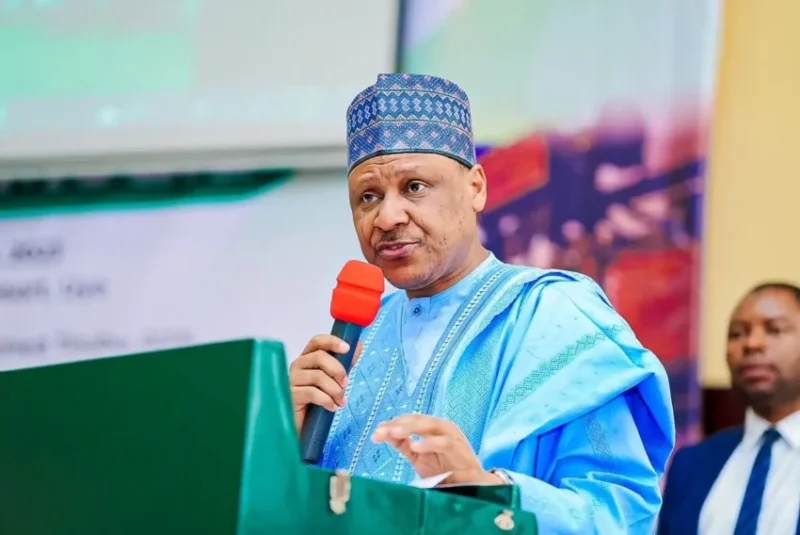
Nigeria’s Minister of Information and National Orientation, Mohammed Idris, has framed the information space as “a frontline defender of information sovereignty, national cohesion and digital security,” emphasising truthful and transparent communication as a national security imperative.
At recent engagements with broadcasters and information officers, he has repeatedly called for stronger newsroom verification systems, more investment in fact‑checking and a united front against fake news, deepfakes and digital manipulation that could inflame tensions or aid extremist propaganda.
At a training workshop for public information officers organised with the National Counter Terrorism Centre (NCTC) and the Nigerian Union of Journalists, the minister warned against divisive narratives.
He urged media and government communicators to work closely with security agencies to combat hate speech and misinformation.
He praised NCTC’s role in countering extremist propaganda and pledged continued collaboration to “safeguard both the minds and lives of citizens,” signalling that communication policy is being deliberately woven into Nigeria’s wider counter‑terrorism strategy.
Security and communication experts consistently argue that prudence – not secrecy for its own sake, but disciplined, responsible information management – is key to preserving both security and democratic freedoms.
A recent critical assessment of Nigeria’s intelligence system concluded that intelligence gathering and analysis remain “crucial tools” in tackling current security challenges, but warned that institutional weaknesses and poor coordination waste valuable information that could otherwise prevent attacks.
Worthy of note, the Director Defence Information (DDI), Brig.-Gen. Samaila Uba, has identified the growing threat of misinformation and cyber propaganda as a major challenge to national security.
He warned that adversaries were increasingly exploiting the digital environment to distort facts and erode public trust in the Armed Forces, while calling for collective action to safeguard Nigeria’s information space.
Uba said the Directorate under his watch would strengthen the country’s defence communication architecture through a four-point strategic agenda anchored on Unity of Purpose, Timeliness and Transparency, Digital Innovation, and Effective Media Relations.
“In an era defined by rapid information exchange and digital influence, strategic communication is not merely a tool, it is a force multiplier.
“Adversaries exploit vulnerabilities in our information ecosystem to divide us; we will not cede ground,” he said.
Uba said plans were underway to establish a rapid-response team for countering false narratives, enhance fact-checking collaboration with the media, and deploy digital tools for real-time monitoring of emerging threats.
He said that credible communication was vital to sustaining public confidence in the Armed Forces, noting that proactive information management would help deter misinformation and strengthen national unity.
Uba called for synergy among the public relations units of the Army, Navy and Air Force, as well as other security agencies, to ensure a coherent and credible national defence narrative.
Scholars examining the Freedom of Information Act also caution that while transparency is essential in a democracy, unrestricted access to sensitive operational details can expose security personnel, derail investigations and give terrorists a tactical advantage.
One study noted that specific sections of the Act were deliberately crafted to check the release of information when national security is at stake, and urged the public to be prudent in their demands so as not to compromise ongoing operations.
Several Nigerian and international experts have outlined how smarter information management could directly strengthen the country’s resilience against violent extremism.
Their views converge on a few central themes.
A team of researchers writing on “the effect of strategic communications on the fight against terrorism in North‑East Nigeria” argued that counter‑narratives must be carefully designed to address the specific grievances and ideological claims used by extremist groups; otherwise, they will fail to persuade at‑risk youths.
They recommend creating a dedicated strategic communication unit within counter‑violent extremism programmes and expanding the communication infrastructure to reach vulnerable communities in remote areas.
In a separate work on Nigeria’s international cooperation and strategic communications framework against terrorism, African Leadership Organisation’s Chief Executive Officer, Kpobari Ken Giami, and colleagues emphasised that extremists and states alike relied on targeted messaging.
They said that audience targeting, content choice and channel selection were decisive factors in whether communication reduced or fueled radicalisation.
They concluded that strategic communication should be treated as a central line of effort – not an afterthought – in national security planning.
A recent analysis of advanced technologies and national security in Nigeria noted that artificial intelligence, cybersecurity tools and digital platforms can transform intelligence gathering and deployment if properly integrated into security architecture.
The author urged the government to use machine‑learning tools for predictive threat analysis, strengthen cybersecurity training for officials and institutionalise rapid‑response systems that can act on verified information before threats materialise.
The critical assessment of intelligence gathering and national security highlighted that the entire intelligence cycle – from collection to analysis to dissemination – needs reform so that information reaches decision‑makers in time to shape policy and operations.
The study stressed that without robust structures for sharing accurate intelligence between agencies and with trusted partners, Nigeria risks “flying blind” in a rapidly evolving threat environment.
Nigeria’s challenge is to move from ad‑hoc responses to a culture in which every actor – from newsroom editor to village head, from security analyst to social media user – recognises the security implications of the information they share or withhold.
That culture rests on three pillars: reliable intelligence systems that feed decision‑making; clear legal and ethical frameworks that balance openness with safety; and strategic communication that gives citizens timely, truthful narratives stronger than those offered by violent extremists.
Communication experts believe that the current posture of the information ministry, with its emphasis on responsible broadcasting, collaboration with security institutions and active resistance to divisive and deceptive content, is an important step in that direction.
They say if matched by sustained investment in intelligence, technology and public education on media literacy, prudent information management could become one of Nigeria’s most powerful assets in turning the tide against violent extremism.(NANFeatures)
***If used, please credit the writer and the News Agency of Nigeria.