By Ibironke Ariyo
Stakeholders in the human rights sector have urged Nigerian authorities to adopt rights-based approaches in managing public protests across the 36 states and Federal Capital Territory (FCT).
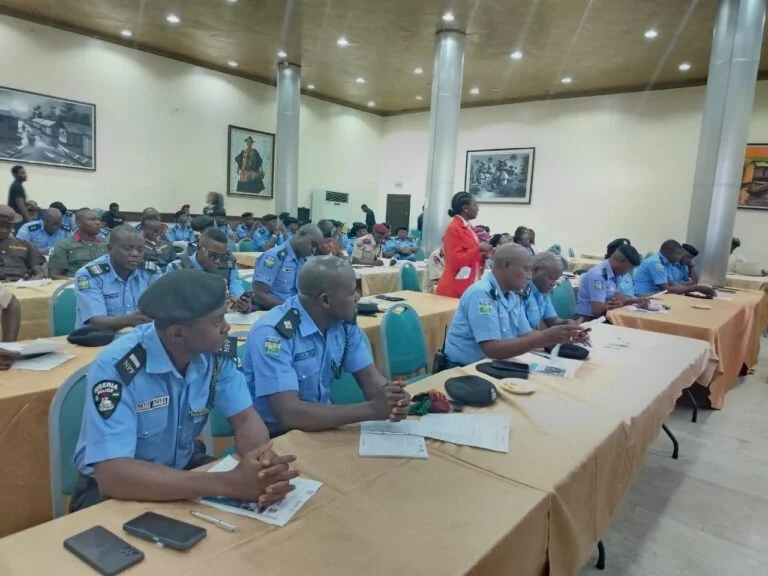
They stated this in Abuja at a one-day sensitisation workshop on the promotion and protection of the right to peaceful assembly in Nigeria.
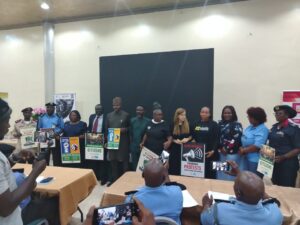
The News Agency of Nigeria (NAN) reports that the workshop was organised by an NGO, PRAWA, in collaboration with Legend Golden Care Foundation (LGCF), and funded by the International Rehabilitation Council for Torture Victims (IRCT).
In her opening remarks, Dr Uju Agomoh, PRAWA President, and Member of the United Nations Subcommittee on the Prevention of Torture, warned that effective policing depends on trust, dialogue, and compliance with legal frameworks.
Agomoh highlighted findings from the 2024 National Protest Perception Survey, which examined Nigerians’ views on public demonstrations and the role of law enforcement.
She commended Dahiru Muhammed, PRAWA’s Manager, Research and Documentation, for leading the survey and coordinating weekly analyses in partnership with the Institute for Peace and Conflict Resolution.
She said that the initiative included webinars to discuss results and generate insights for policymakers and security agencies.
“The workshop would present multiple outputs from the survey, including comprehensive reports, policy briefs, information, education and communication materials.
“There will also be a documentary, and a training manual aimed at equipping law enforcement officers with the skills to manage protests professionally and in line with human rights standards.
“The purpose is not to assign blame but to empower participants with knowledge and tools that ensure citizens’ rights to peaceful assembly are protected while maintaining order,” she said.
Agomoh said the initiative aimed to foster constructive dialogue between security agencies and civil society, promote nationwide sensitisation on rights-compliant protest management, and translate survey findings into actionable recommendations for law enforcement.
She emphasised that participants must extend the impact of the workshop beyond the room, identifying and documenting the number of people they could influence within their offices, commands, or networks, thereby creating a multiplier effect for the project.
“The work does not stop here. Every participant is expected to take deliberate actions to educate, sensitise, and reform practices in their spheres of influence,” she maintained.
Agomoh said that the future of protest management in Nigeria rests on human rights, accountability, empathy, and professionalism, and stressed that trust between citizens and security agencies was essential for effective policing.
She urged attendees to leverage the knowledge gained, implement best practices, and contribute to building a culture of rights-respecting law enforcement nationwide.
In her welcome address, the LGCF Executive Director, Mrs Kanayo Olisa-Metuh, also called for stronger adherence to human-rights-based policing during public demonstrations.
Olisa-Metuh said that professional conduct, accountability and empathy were essential to restoring public trust in law enforcement while expressing gratitude to IRCT for funding the workshop and for sending a representative to provide moral support.
She said that Nigeria had witnessed several instances where peaceful protests escalated because of mistrust between citizens and the police.
She noted that excessive force, intimidation and torture had resulted in physical harm and contributed to the erosion of public confidence in law enforcement institutions.
Conversely, she said situations that could have turned violent were often managed peacefully when officers applied human-rights-compliant techniques, including de-escalation and communication skills.
“Protesters place high value on procedural justice and expect to be heard, understood and treated within the bounds of their fundamental rights, including the right to peaceful assembly,” she maintained.
Olisa-Metuh stressed that the workshop was not designed to criticise individuals or institutions, but to equip participants, particularly law enforcement personnel, with human rights skills required to manage demonstrations professionally.
She said the goal was to promote policing practices that preserve and uphold citizens’ rights rather than violate them.
The LGCF director noted that both her organisation and PRAWA had documented several cases where excessive force and torture damaged trust and undermined security.
“Torture does not create stability, professionalism or safety; rather trust, not force, is the foundation of effective policing.
“Trust cannot be demanded or coerced but must be earned through consistent respect for human rights and professional conduct,” she said.
Olisa-Metuh said policing that earns citizens’ respect makes it easier to carry out crowd control and maintain order during assemblies.
She urged participants to recognise that the future of policing in Nigeria, particularly during demonstrations, must be grounded in human rights principles, accountability, empathy and skill.
She reminded participants that security and human rights were not opposing concepts, and that police officers who treated citizens with dignity were more likely to receive respect in return.
Declaring the workshop open, the UN Resident Coordinator in Nigeria, Mr Mohamed Fall, called on relevant authorities to strengthen the protection of the right to peaceful assembly, describing it as a fundamental element of democracy and everyday human dignity.
Fall, who was represented by Adwoa Kuffour-Owusu, Office of the UN High Commissioner for Human Rights, praised the continued openness of the police and the unwavering commitment of civil society to human rights protection.
Speaking on Human Rights Day 2025, themed “Our Everyday Essentials”, Fall stressed that human rights were not abstract ideals but integral to daily life, enabling citizens to live in dignity, safety, and freedom.
He highlighted the right to peaceful assembly as a core everyday essential, allowing citizens to gather, raise concerns, celebrate, mourn, or protest peacefully.
“When governments, police, and civil society share a clear understanding of this right, protests become opportunities to strengthen democracy rather than challenges to be managed.
“When they understand and respect this right together, everyone wins: protests stay peaceful, officers perform their duties confidently, and citizens feel protected instead of afraid,” he said.
In attendance were representatives from the Nigeria Police Force, Federal Road Safety Corps, Nigerian Security and Civil Defence Corps, Nigerian Correctional Service, Embassy of Switzerland, National Human Rights Commission, among others.
Highpoints of the event were survivors’ voices, panel discussions, paper presentations, documentary screening, group works, post-workshop and assessment. (NAN)(www.nannews.ng)
Edited by Yakubu Uba