
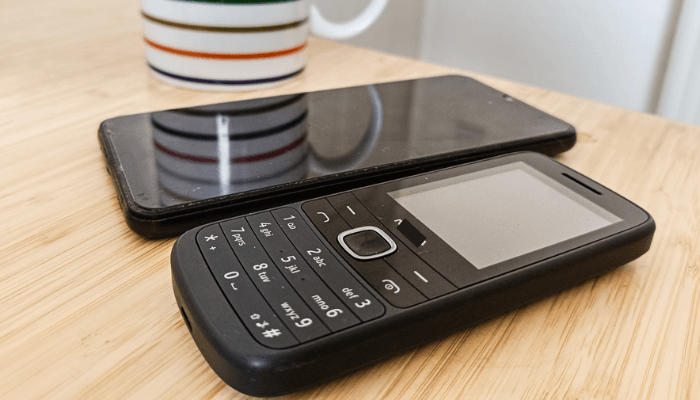
At a busy bus stop in Ojota, a man pulls out two phones. One is a small, rugged device with long battery life. The other is a sleek smartphone with a cracked screen and a power bank attached. He switches between them with muscle memory. The small phone is for calls and urgent needs. The smartphone is for apps, transfers, and browsing.
If you are observant, you will see this pattern across Nigeria. Students, traders, artisans, corporate staff, and even retirees juggle two devices. The phones do not replace each other. They complement each other. Each device carries a specific behavioural purpose shaped by trust, control, and survival instincts in an unpredictable system.
This is what I termed: The Two Phone Theory.
Redundancy as Stability
At the heart of this theory is the desire for backup. The second phone is insurance against failure. Nigerians learned to protect communication lines long before smartphones arrived. Power cuts, network outages, stolen phones, and unreliable repairs shaped the behaviour.
A report by GSMA Sub-Saharan Africa (2023) notes that Nigeria ranks among the highest multi-SIM markets globally, driven by network variability and cost sensitivity. Multi-device ownership is a natural extension of that habit. People want assurance that one line will work when the other fails.
Behavioural economists call this the redundancy instinct. It is the same logic behind keeping a generator at home even when the estate claims to have steady power.
Split Identities, Split Devices
The Two Phone Theory goes beyond backup. It organises roles. Nigerians assign emotional functions to each device.
The small phone handles essential communication. It is for parents, children, close friends, and business-critical calls. The smartphone handles the rest. It carries apps, financial tools, social media, entertainment, and searches.
A study published in the Journal of African Media Studies (2022) found that Nigerians use multiple devices to manage identity boundaries, switching phones as a way to control their availability. The small phone becomes the “hot line” while the other becomes the “leisure and everything-else line.”
The devices create psychological compartments. When one rings, the person already knows the type of attention required.
Power as the Real Constraint
Nigeria’s power instability reinforces the Two Phone Theory. A device with long battery life is a lifeline when power is unreliable. The smartphone drains quickly. The small phone survives the day.
Multiple surveys confirm this. A 2019 NOIPolls report revealed that over 75% of Nigerians experience at least two outages daily. A second phone becomes a survival tool in this environment.
Technology adapts to the energy ecosystem. People manage battery life the way others manage bank accounts. They ration brightness, switch off data, disable apps, and move SIMs across devices to maximise uptime.
Control Through Separation
The Two Phone Theory also reflects how Nigerians manage social pressure. Calls from colleagues, strangers, relatives, coworkers, church groups, and customers carry different emotional weight. Splitting phones creates choice.
One device becomes the “contact me anytime” line. The other becomes a filter. People protect their mental space through this separation. They take the small phone to a quiet evening walk to avoid internet noise. They hide the smartphone during stressful days to limit requests.
In a Lagos State University study on communication stress, respondents described the second phone as “a shield”, “a breathing space”, and “a valve for pressure.”
The second phone is infrastructure created for boundaries.
Money Movement and Device Hierarchy
Digital payments changed the role of smartphones. Transfers, USSD, betting, shopping, ride-hailing, freelance work, and side hustles revolve around the smart device. The more financially active someone becomes, the more the smartphone becomes the “transaction engine.”
The simpler phone stays clean. No banking apps. No distractions. No temptation.
This device hierarchy is strategic. By separating money activities from communication activities, Nigerians protect themselves from fraud, battery drain, and emotional overload.
Social Perception and Reputation
Owning two phones carries subtle social meaning. It signals preparedness. It signals stability. It signals that the person has “options.”
People size others up by their devices. A phone combination serves as a small biography. Someone carrying a basic phone and an older smartphone may be viewed as practical. Someone carrying two high-end smartphones may signal high economic confidence. Someone carrying a small phone alone signals minimalism or financial strain.
In the Nigerian system, phones send constant micro-signals that shape perception.
Business Implications
1. Design for dual-device flow. Apps should recognise multi-device logins and allow quick switching without friction.
2. Build for low power conditions. Light modes, offline modes, and battery-efficient features match actual Nigerian usage.
3. Mirror the separation of roles. Payment tools should offer dual-layer security to fit the behavioural split between communication and transactions.
4. Respect attention boundaries. Brands that overload smartphones with notifications risk being muted or uninstalled.
5. Optimise for small screens. Many Nigerians use low-cost smartphones as their primary data device. Interfaces should reflect this reality.
Conclusion
The Two Phone Theory captures something larger than communication. It reflects a nation that has learned to build resilience through duplication. The second phone is a strategy for power, identity, trust, and mental balance.
It is not extravagance, it is adaptation. The phones operate like two lanes on a busy road. One carries heavy traffic. The other carries the essentials.
In Nigeria, anything can fail without warning, therefore, Nigerians create their own reliability.
The second phone is certainty in a country that provides very little of it.