3
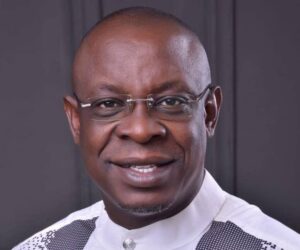
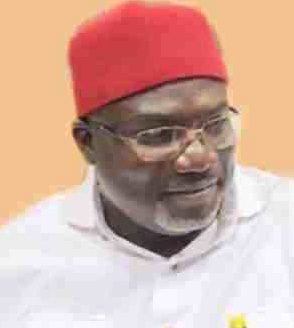
Chief Emeka Charles Kalu, a former chieftain of the Peoples Democratic Party (PDP) and President of Eck Foundation, is an aspirant to the Abia North Senatorial Seat. Dr. Kalu, a power engineer, and the Director-General, Global Initiatives for Good Governance (GIGG), in this interview with EJIKEME OMENAZU, speaks on current issues in the polity. Excerpt:
How do you see President Bola Tinubu’s recent declaration of a State of Emergency on Security?
I can say that this declaration is a necessary political signal: it acknowledges the scale of the crisis and gives the president room to order rapid measures (recruitments, redeployments, new guard units) that the normal tempo of government might slow down. If it is to matter, it must be followed immediately by clear operational plans, money, transparent oversight and measurable milestones — otherwise it risks being a symbolic gesture.
What is your take on the items listed by Presidency during the declaration of State of Emergency on Security?
The presidency listed concrete steps — mass recruitment into the Police and Army, redeployment of personnel away from VIP duties, use of NYSC camps for training, forest-guard deployments and calls for state police law changes. Those are sensible building blocks, but recruitment and rhetoric alone will not work without rapid training, logistics, intelligence-sharing and accountability for forces on the ground.
Critics have been wondering why it took external pressure like U.S President Donald Trump’s intervention threat for the Nigerian government to act on this issue of insecurity which has with the country for several years?
International attention — including threats and the U.S. labelling/actions — raise reputational and diplomatic costs that can accelerate government response. That said, insecurity has been worsening for years; external pressure appears to have concentrated political will and media attention, forcing quicker public action than previous, lower-profile waves of violence.
Why do you think the terror groups have been targeting soft targets like churches and schools after U.S President Donald Trump’s threat to intervene in resolving insecurity issues in Nigeria?
There are probably multiple drivers: opportunistic criminal gangs aiming for high-profile kidnappings to extract ransom and gain leverage; some groups exploit the publicity to amplify fear; and the timing may reflect a tactical choice by perpetrators who know global attention will follow. Coverage of the U.S. statements and the government’s perceived scramble can create incentives for copycat or escalatory attacks.
What is your reaction to the early recovery of abducted school children and worshippers in different states?
Relief and praise for the security personnel and communities involved — but cautious optimism is appropriate. Rapid recoveries are encouraging, yet the pattern of repeated kidnappings shows these rescues must be matched with prevention: stronger local intelligence, safer school practices, rapid-response units and long-term disruption of kidnap financing.
Would you say there are elements of truths to allegations that the governments, federal or states, negotiate with terrorists and may be paying ransoms for the abducted citizens to be released?
Officially the government denies paying ransoms; however, multiple independent analyses and reporting over years show that ransom payments are a persistent feature of Nigeria’s kidnap economy and that many releases follow opaque negotiations. That reality complicates public policy: while pragmatic payments save lives, they also fund and incentivise further kidnappings — which is why transparency and a national strategy are essential.
Why would you say it has been difficult to arrest and dismantle the terrorist groups and bandits responsible for the abduction and killing of Nigerians in the difeent states, especially in the North?
The obstacles are structural: large, difficult terrain (forests and remote rural areas), under-resourced and sometimes poorly-coordinated security services, corruption and weak criminal-justice follow-through, and local grievances that provide recruits. Until those root problems — intelligence capacity, force welfare, prosecution, and community engagement — are fixed, kinetic operations alone will have limited, short-term effect.
President Bola Tinubu has been running the country without Ambassadors across the world. Why do you think President Tinubu delayed ambassadorial appointments for so long?
The delay reflected competing priorities and constraints: the administration has pointed to economic reforms, exhaustive vetting and the challenge of producing a balanced list; analysts also flagged funding concerns and political bargaining. The recent transmission of 32 names (more has been named) signals a pivot back to rebuilding diplomatic presence — but, the long gap has cost Nigeria diplomatic bandwidth.
Could you please take a critical look at some of the Ambassadorial nominees? What is your advice to Senate and security agencies on their clearance?
The mix submitted (career diplomats and high-profile non-career names) is predictable and politically balanced. However, the Senate should fast-track professional clearances for career envoys, while subjecting high-profile non-career nominees to rigorous security and competence vetting. Security agencies must ensure nominees posted to sensitive missions meet background checks and that diplomatic postings serve Nigeria’s strategic economic and security interests, not only political patronage.
What is your take on the renewed call for State Police by both the Northern and Southern political leadrs?
State police can make sense as part of a decentralised law-enforcement architecture — local policing improves responsiveness and community trust — but it must be designed with strong federal-state standards, funding formulas, oversight mechanisms, and professional training to avoid politicisation. The debate should move from slogan to statute: clear legal frameworks, phased rollout, and performance metrics before full implementation.
The PDP’s crisis has continued to deepen with the dwindling of its states and its split into two factions. Would you say that the party is fast moving to extinction?
No, I wouldn’t say extinction, but there is certainly a need for urgent reform and internal reconciliation. The PDP remains one of the most experienced political parties in Nigeria. However, unless unity, discipline, and ideological focus are restored, it risks losing relevance. I believe strong leadership and genuine dialogue can still revive the party.
With the continued defections from PDP to the APC, the ruling party now controls two-thirds majority in the National Assembly. What are the implications of this?
That development threatens the strength of democracy because effective governance thrives on a vibrant opposition. A dominant ruling party without constructive opposition risks sliding into authoritarianism. Nigeria needs political balance to ensure checks and accountability. I urge politicians to stay loyal to ideology rather than personal gain.
With the current state of the APC, do you think that the opposition coalition under ADC will make much impact on the 2027 general elections?
Yes, there is growing public disenchantment with the ruling class, and Nigerians are yearning for credible alternatives. If the opposition can unite under a common vision—putting the people first—there’s a real chance to reshape Nigeria’s political landscape by 2027. The key is unity, strategy, and sincerity of purpose.
Considering the suffering of Nigerians under the APC rule, do you still think that President Bola Tinubu and the party deserve another chance in 2027?
“He who wears the shoes knows where it pinches.” This adage reflects the feelings of the majority of the citizens on the state of things in Nigeria. The people are in a position to decide whether the present government deserves a return in 2027 or not. They should allow their current state of suffering, hunger, poverty, insecurity and abuse of their human rights to decide the right path ahead of the 2027 general elections. I only have one vote that counts, but the greater population of Nigerians whose families have been displaced in numerous terrorist attacks; those who could not afford three square meals daily; those parents who could not afford to pay their children’s school fees due to inflation; those whose lives were jeopardised in various public hospitals due to poor facilities and those under paid workers are in a better position to use their voter cards to decide who govern them in 2027. I think I have done justice to your ques¬tion.
Would you say your ambition for the Abia North Senatorial seat is still on course? What have you been doing in this regard and under what platform would you achieve it?
Yes, I am actively on course to actualising my Senatorial ambition and I continue to confide in the people of my zone to have the vision successful. I can’t do it alone simply because democracy thrives with the majority. By God’s grace, I sincerely appreciate my constituents for their unalloyed support to ensure this ambition is not defeated. In Abia State, Governor Alex Otti has proven to the world that leadership is all about com¬mitment to service not by having an inordinate desire to enrich one’s pocket. He demonstrated this excellent leadership in the way and manner he sanitised the state’s civil service and revenue system, thereby exposing the lapses of the previous adminis¬trations that ended up squaring trillions of Naira from the state purse without meaningful projects. Therefore, under Gov. Otti’s platform that enjoys the love of Abians, I am sure the project of working to represent my people in the Red Chamber come 2027 will be actualised.