1) Introduction
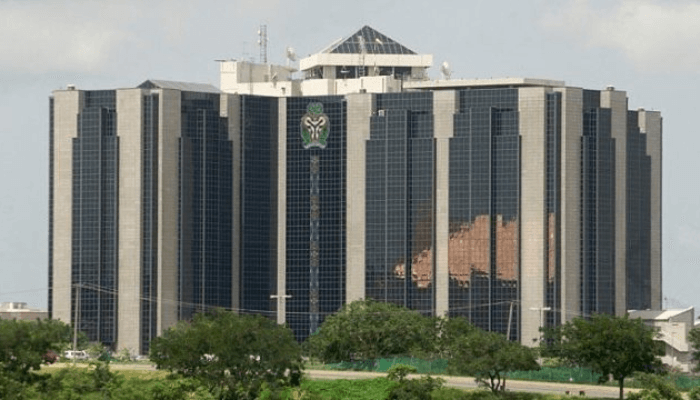
Since 2020, the Central Bank of Nigeria (CBN) has maintained a hawkish stance aimed at curbing inflation, stabilising the naira, and restoring market confidence amid recurring macroeconomic uncertainties. In the most recent Monetary Policy Committee (MPC) meeting in November 2025, CBN retained the benchmark monetary policy rate (MPR) at 27.0%, following the first rate cut since 2020 in September 2025, a decisive shift toward monetary easing at a time when inflationary pressures showed signs of moderation at 16.05% in October 2025, and growth momentum had strengthened to 4.23% in Q2 2025. According to the International Monetary Fund (IMF)’s 2025 Outlook, Nigeria’s economy is projected to expand to 4.2% by 2026, supported by modest recovery in oil output, improved agricultural productivity, and a resilient services sector. Thus, investor confidence remains sensitive to CBN’s policy consistency and price stability.
This brief examines the rationale behind the rate retention, the CBN’s policy measures, including the adjustment of the Standing Facility corridor to enhance banks’ liquidity management flexibility while maintaining policy credibility, the ripple effects, and policy recommendations for sustaining macroeconomic stability.
2) Global trends and local signals shaped the CBN move
In recent months, major central banks have become more cautious, with some turning dovish amid easing inflation, while others have held rates steady to monitor economic conditions. In the United States, the Federal Reserve (FED) cut the benchmark interest rate by 25 basis points to a range of 3.75%-4.00% in October 2025. This second consecutive cut this year signals the Fed’s pivot towards supporting a softer labour market, despite US Consumer Price Index (CPI) data rising to 3.0% in September 2025. Similarly, the Bank of Canada lowered the policy rate to 2.25% in October, marking a second consecutive dovish stance, driven by subdued domestic demand and a fragile job market. In contrast, the European Central Bank (ECB), Bank of England (BoE), and Bank of Japan (BoJ) retained policy rates.
Domestically, headline inflation in Nigeria has shown sustained moderation, dropping for seven consecutive months to 16.05% in October 2025, supported by stable exchange rates, improved food supply, and controlled fuel prices. This positive trend has been reinforced by continued expansion in the Purchasing Managers’ Index (PMI), which grew for the tenth consecutive month. Additionally, the surplus current account balance and robust foreign reserve have also contributed to macroeconomic stability. Against this backdrop, CBN retained the MPR to allow previous tight policy measures to fully transmit to the real economy while managing lingering global uncertainties.
3) The policy stance toward macroeconomic growth and stability
During the 303rd Monetary Policy Committee (MPC) meeting, the CBN retained the MPR at 27.0%, kept the Cash Reserve Ratio (CRR) at 45% for commercial banks and 16% for merchant banks, and maintained a 75% CRR for non-TSA public sector deposits. The liquidity ratio was also left unchanged at 30%. In addition, the MPC adjusted the Standing Facility corridor around the MPR to +50/-450 basis points, creating an asymmetric range that slightly raises the ceiling to 27.50% while significantly lowering the floor to 22.50%. This adjustment provides banks with greater flexibility in managing liquidity without undermining the CBN’s cautious stance on inflation and growth. This decision signals a continuation of a cautious policy aimed at sustaining disinflation while supporting real-sector growth.
4) Growth prospects under the current monetary stance
Nigeria’s economic fundamentals have strengthened, supporting the rationale for a steady policy stance. According to the National Bureau of Statistics (NBS, 2025), real GDP expanded by 4.23% year-on-year in Q2 2025, up from 3.19% in Q2 2024 and 3.13% in Q1 2025.

Source: National Bureau of Statistics, NBS (2025)
Growth was driven largely by a rebound in the oil sector, where production rose to 1.68 million barrels per day (mbpd), compared with 1.41 mbpd in Q2 2024 and 1.62 mbpd in Q1 2025. The non-oil sector remained the dominant contributor to GDP, accounting for 95.95% of total output and expanding by 3.64%. Within this segment, agriculture contributed 26.17% and grew by 2.82%, while the ICT sector accounted for 6.61%, finance and insurance contributed 16.13%, and transport 22.09%. Manufacturing, however, slowed to 1.60%, reflecting persistent high input costs, foreign exchange constraints and limited access to affordable credit.

Source: National Bureau of Statistics, NBS (2025)
Business sentiment remains positive, as reflected by a Stanbic IBTC Bank Nigeria Purchasing Managers’ Index (PMI), which stood at 54.0 in October 2025, remaining above the neutral 50.0 threshold, signalling sustained expansion in private-sector activity. However, credit to the private sector, a key driver of employment and productivity, remained tight. Credit to the private sector declined to N72.5 trillion in September 2025 from N75.9 trillion in August, signalling structural bottlenecks in the banking sector and high borrowing costs for SMEs. Also, government borrowing continues to rise, creating a “crowding-out” effect where banks favour low-risk government securities over private-sector lending. The retention of the MPR, together with the adjusted asymmetric Standing Facility corridor, is designed to allow the lagged effects of previous policy tightening to stabilise prices while providing banks with greater liquidity management flexibility to support real-sector growth.
5) Scenario projection and forward-looking insights
In the box below, the earlier rate cut in September 2025 and the subsequent retention of the MPR in November 2025 may both influence Nigeria’s economic trajectory across three plausible scenarios. The indicators and thresholds presented here provide policymakers with benchmarks to monitor the economy’s response to previous monetary easing while considering the effects of the current steady policy stance and the asymmetric liquidity corridor adjustment.

N.B.:
Base Case = Moderate growth with stable naira; Policy Focus: maintain fiscal discipline and monitor credit flows.
Best Case = Strong growth and FX gains; Policy Focus: reinforce incentives and structural reforms.
Worst Case: Stagnant growth, weaker naira; Policy Focus: provide liquidity support and stabilise FX.
Monitoring these indicators in real time allows CBN to fine-tune interventions and ensure that the policy stance supports sustainable growth without undermining price or exchange rate stability.
6) Implication of the rate cut and recommendation
The CBN’s decision to retain the MPR signals confidence in macroeconomic recovery while emphasising caution against inflationary risks. To maximise the benefits of this policy stance, credit expansion should target productive sectors, including manufacturing, agriculture, and MSMEs. Fiscal discipline must be maintained to avoid crowding out private credit, and greater coordination between fiscal and monetary authorities is crucial to ensure that growth momentum translates into real-sector development. Without these complementary measures, the retention of the MPR may sustain price stability in the short term but limit the policy’s impact on private-sector credit, real GDP growth, and naira stability. The success of the current stance depends on the transmission of previous tight monetary measures, the effective mobilisation of credit to productive sectors, and the flexibility provided by the adjusted Standing Facility corridor. It is this economist’s view that without the growth, currency effects may remain limited, and risks of inflation and/or naira depreciation may likely persist.
Prof. Joseph Nnanna; Chief Economist, Development Bank of Nigeria Plc.