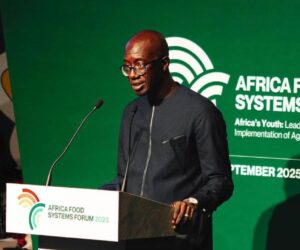

Femi Egbesola, the National President of the Association of Small Business Owners of Nigeria (ASBON), has urged entrepreneurs across the country to take advantage of emerging government-backed initiatives designed to improve access to finance, strengthen business credibility, and position local enterprises for global success.
He stated this at the BusinessDay Top 100 Fastest Growing SMEs in Nigeria Awards where he said to compete globally, SMEs must meet global standards and the competitiveness goes beyond ambition and requires SMEs to align with international benchmarks in quality, pricing, consistency, reliability, branding, and integrity.
Read also: Data, storytelling, digital tools usage top keys defining SMEs competitiveness
Egbesola outlined several new policy instruments and financial interventions rolled out by the government and regulatory bodies to help MSMEs scale:
Newly approved crowdfunding platforms
Egbesola revealed that the Securities and Exchange Commission (SEC) recently approved three crowdfunding platforms, enabling businesses to raise capital from multiple investors with minimal documentation and flexible terms.
Nigerian Stock Exchange (NSE) Growth Board
To expand access to international investors, Egbesola highlighted the NSE Growth Board, which allows limited liability companies not only PLCs to list and raise funds.
National Credit Guarantee Company
Launched mid-2025, the company guarantees up to 70 percent of bank loans, reducing collateral requirements for MSMEs.
Factoring companies
These firms now help businesses receive immediate payment for invoices, eliminating delays of 30–60 days from big corporations and government contracts.
Leasing providers
More equipment-leasing firms are offering machinery, vehicles, and generators on long-term payment plans, reducing dependence on high-interest bank loans.
AfCFTA Support for Export Expansion
The government has identified specific export-ready products that will receive full funding and grants beginning 2026. Egbesola urged entrepreneurs to research these sectors and position their businesses accordingly.
Trademark and IP Protection
He warned that failure to trademark brands could lead to losses in international markets, citing a Nigerian pepper brand that was hijacked by a foreign competitor.
National Single Window Portal
The portal now enables seamless customs, immigration, and certification processes online, reducing corruption and delays in export documentation.
New Specialised Funding Windows
Egbesola listed targeted intervention funds recently launched for specific demographic and sectoral groups:Qd cd
Rural Area Program on Investment for Development
This gives up to N10 million at 5 percent interest.
WomenGLOBE
Guaranteed loans up to N50 million for women-led businesses at 7 percent interest.
Youth Entrepreneurship Program Fund
This is for youth-owned startups.
AgriFund
This is for agricultural and agri-processing ventures, supported by international NGOs.
He stated the upcoming policies SMEs must pay attention to and encouraged small businesses to study the two key policies currently being finalised.
He stated National Industrial Policy, which prioritises value addition, automation, pharmaceuticals, pesticides, agriprocessing, and garment manufacturing.
Egbesola also noted National MSME Policy (2026–2030) which is expected to shape funding and regulatory frameworks for small businesses.
He stated that business integrity certification is now essential and also urged entrepreneurs to take advantage of the free window between now and March 2026 to obtain the new Business Integrity Certification from the Financial Reporting Council.
“From next year, bigger corporations will require this certificate before adding you to their supply chain,” he warned.
While speaking about other support systems, he cited additional government-backed structures such as Small Claims Courts, which settle business-related financial disputes within 14 days for as low as N5,000, shared industrial centers and incubators and Government procurement gazettes, which now reserve 40 percent of contracts for SMEs.
Read also: LASG targets 3,000 MSMEs in City Trade Fair
Egbesola urged SMEs to be intentional in understanding emerging opportunities rather than waiting for general or oversubscribed funds.
“Competitiveness is about following the order of the day. Study government policies, find the gaps, and position your business.”
Egbesola said Nigerian SMEs have the capacity to scale globally once they embrace structure, innovation, and the numerous support programs now available.